Nanotyrannus skeleton auction in New York fetches £4.5m – why the fossil market matters in 2026
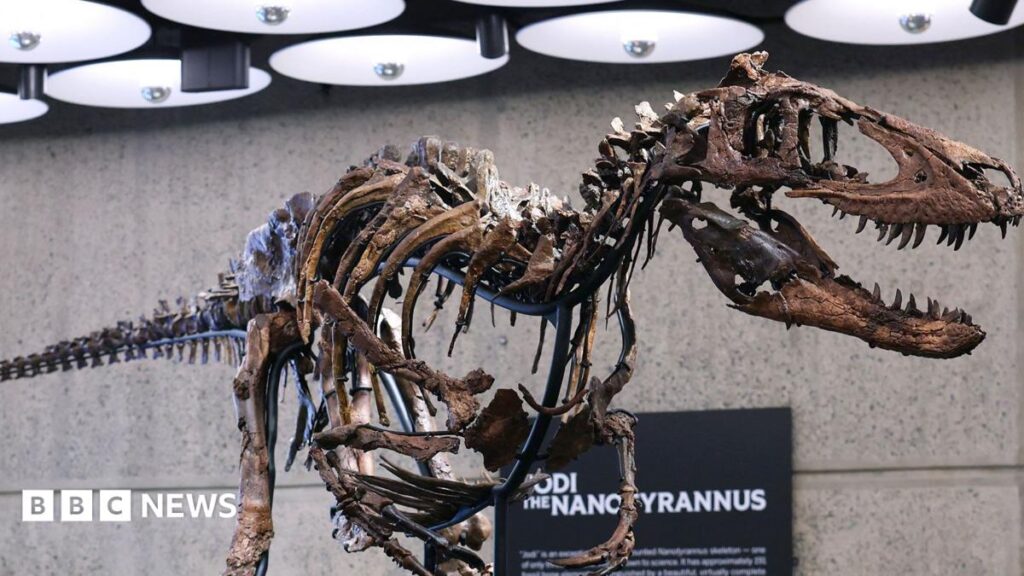
The Nanotyrannus find and its New York auction
The specimen up for sale is a near‑complete skeleton of a creature long debated as either a distinct dwarf tyrannosaur, Nanotyrannus, or simply a juvenile Tyrannosaurus rex. Discovered in the late 1990s in the Hell Creek Formation of Montana, the fossil was excavated by a private collector and has since bounced between private hands and museum displays. This week, the skeleton will be offered at a high‑profile auction house in New York, with a hammer price projected at £4.5 million (about $5.8 million). The sale has attracted attention not only from wealthy collectors but also from paleontologists who fear the specimen could disappear from scientific study.
Auction houses justify such sales by arguing that private owners can provide the capital needed to preserve fragile fossils, especially when museums lack funds. However, the transaction raises a familiar dilemma: once a fossil is locked behind a private collection, access for research can become limited, and the public loses a tangible link to Earth’s deep past. The New York sale is the latest high‑value case that spotlights the tension between commerce and curiosity.
Who owns the past? The global fossil trade debate
The fossil market has exploded over the past decade, driven by a mix of affluent hobbyists, investment funds, and pop‑culture fascination with dinosaurs. According to a 2024 report by the International Association of Paleontological Museums, sales of vertebrate fossils above $1 million have risen by 38 % since 2018. Critics argue that this trend encourages looting, especially in regions with weak heritage laws, because high prices create a lucrative black market for illegally extracted specimens.
Scientific bodies such as the Society of Vertebrate Paleontology have repeatedly called for stricter regulations, warning that private ownership can impede peer‑reviewed research and skew scientific narratives. In a recent statement, the society’s president noted that “when iconic specimens disappear into private vaults, we lose the ability to test hypotheses about evolution, ecology, and climate change” (SVP, 2026). The Nanotyrannus auction is therefore more than a headline‑grabbing sale; it is a flashpoint in an ongoing battle over who gets to decide the fate of Earth’s ancient record.
Implications for African paleontology and the diaspora
While the Nanotyrannus skeleton hails from North America, the reverberations of its sale are felt across the African continent, where fossil sites are often underfunded and under‑protected. Countries such as Madagascar, Morocco, and South Africa host some of the world’s most significant dinosaur and early mammal remains, yet many of these finds remain in local museums with limited conservation budgets. The high prices fetched in Western auctions set market expectations that can lure African dealers and smugglers into the same profit‑driven pipelines.
Diaspora scientists and entrepreneurs are watching the auction closely. A growing cohort of African‑born paleontologists based abroad has been lobbying for collaborative agreements that guarantee shared access to fossils discovered on the continent. If the Nanotyrannus sale leads to stricter export controls or inspires new funding models for African institutions, it could help shift the balance toward public stewardship. Conversely, an unchecked market may encourage the illegal export of African fossils, further depleting the continent’s scientific heritage.
What the £4.5 million price tag reveals about the market
The projected £4.5 million figure is not an arbitrary number; it reflects a confluence of rarity, scientific intrigue, and pop‑culture cachet. A complete, articulated dinosaur skeleton is a rarity in any auction house’s catalogue, and the Nanotyrannus debate adds a layer of scholarly controversy that can drive up bids. Moreover, recent high‑profile sales—such as the 2022 $7 million Triceratops skull—have shown that wealthy buyers view fossils as alternative assets, comparable to fine art or vintage cars.
Financial analysts note that the fossil market’s growth mirrors broader trends in collectible assets, where scarcity and narrative value boost prices. The auction’s outcome could set a benchmark for future sales, influencing how museums price donations, how governments negotiate repatriation, and how private collectors justify purchases as “investment” rather than “curiosity.” In short, the price tag is a barometer for the commodification of deep time.
Future pathways: public stewardship versus private ownership
Looking ahead, the fate of the Nanotyrannus skeleton could shape policy discussions in both the United States and abroad. If a private buyer wins the lot, the scientific community will likely negotiate access agreements, a practice that has worked for a handful of high‑profile specimens but remains ad‑hoc. Some experts propose a hybrid model: a “public‑private partnership” where the buyer retains ownership but loans the fossil to museums for rotating exhibitions and research, similar to the arrangement for the famous T. rex “Sue” at the Field Museum.
Alternatively, the auction could catalyze legislative action. In 2025, the U.S. Congress introduced the Fossil Preservation Act, aiming to tighten export permits and incentivize donation to accredited institutions. While the bill stalled, the high‑visibility Nanotyrannus sale may reignite political will. For African nations, the lesson is clear: establishing robust legal frameworks and funding mechanisms now could prevent future losses of their own prehistoric treasures to the same market that is now eyeing a North American tyrannosaur.
Quick Answers
What is Nanotyrannus and why is its skeleton valuable?
Nanotyrannus is a disputed dwarf tyrannosaur species; its near‑complete skeleton is rare, scientifically contentious, and fetches high prices at auction.
Why is the auction of a dinosaur fossil controversial?
Because private sales can restrict scientific access, encourage illegal fossil trading, and set market precedents that threaten public stewardship of heritage.
How could this auction affect African fossil research?
High auction prices raise global demand, potentially spurring illegal export of African fossils while also prompting calls for stronger protection and collaborative funding.
Source: www.bbc.co.uk




💬 Comments 0