Nigerian Army boosts security on Sokoto‑Kebbi border amid Lakurawa threat, 2026
Background: Who are the Lakurawa and why the border matters
The Lakurawa group first emerged in northern Nigeria in 2022, positioning itself as a splinter of the broader Boko Haram insurgency but with a distinct focus on cross‑border raids and livestock theft. Their tactics blend guerrilla ambushes with criminal activities such as kidnapping for ransom and smuggling of weapons. Over the past two years the group has leveraged the porous Sokoto‑Kebbi frontier, a stretch of desert and savanna that historically sees little state presence, to evade security forces and to funnel illicit goods into neighboring Niger and Chad.
The Sokoto‑Kebbi axis is more than a line on a map; it links the agricultural heartland of north‑west Nigeria with the Sahelian trade routes that feed markets in Kano, Abuja, and even across the Gulf of Guinea. Communities along the border depend on seasonal cattle drives and informal cross‑border trade for their livelihoods. When groups like Lakurawa disrupt these flows, they not only create insecurity but also threaten food‑security and revenue streams that sustain millions of Nigerians.
In recent months, intelligence reports from the Department of State Services (DSS) and the Nigerian Army indicated a spike in Lakurawa‑linked attacks on villages in Kebbe Local Government Area. According to local officials, at least three villages reported loss of livestock and a handful of abductions in July 2026, prompting heightened alarm among state authorities and traditional leaders.
The Army’s latest operation: what the deployment looks like
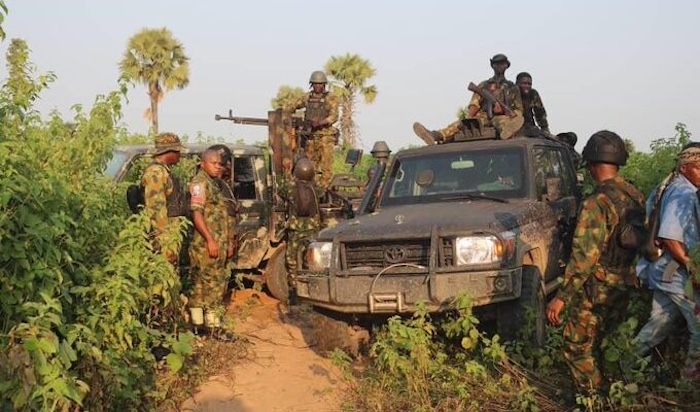
During an operational assessment visit on August 15, 2026, Major General Bemgha Paul Koughna, the General Officer Commanding of the 8th Division, announced the deployment of an additional 1,200 infantry troops, supported by two armored reconnaissance units and a contingent of military engineers tasked with constructing observation posts along the border. The troops were positioned in strategic towns such as Birnin Kebbi, Gummi, and the border outpost of Gashaka, where they can monitor movement along the main highway that runs from Sokoto to the Niger frontier.
The operation also introduced a joint task force that pairs army units with the Nigeria Police Force’s Special Anti‑Robbery Squad (SARS) and the Niger State Civil Defence Corps. This multi‑agency approach is designed to improve intelligence sharing and to enable rapid response to any incursions. Sources say the task force will use drone surveillance and mobile communication intercepts to track Lakurawa’s supply lines, a capability that was limited before the recent budget allocation for counter‑terrorism in 2025.
In addition to the kinetic elements, the army is rolling out a community‑engagement program that includes medical outreach, food distribution, and the establishment of a grievance‑redress hotline for residents. The aim is to win hearts and minds, a tactic that security experts argue is essential for isolating insurgent groups that rely on local support or acquiescence.
Why the move matters for Nigerians and the wider region
Strengthening security on the Sokoto‑Kebbi frontier directly addresses a critical gap in Nigeria’s counter‑terrorism architecture. While the northeast has long been the focus of anti‑Boko Haram campaigns, the northwest has received comparatively less attention despite its growing exposure to spill‑over violence. By allocating resources to this corridor, the federal government signals a shift toward a more balanced, nationwide security posture.
The deployment also carries significant economic implications. The border corridor supports an estimated $350 million in informal trade annually, according to a 2024 study by the Nigerian Institute of Social and Economic Research (NISER). A reduction in raids and theft could translate into steadier market prices for livestock and agricultural produce, benefitting both smallholder farmers and urban consumers. Moreover, improved security may attract private investors looking to develop agro‑processing hubs in the Sokoto‑Kebbi region, a sector earmarked for expansion under the 2026 National Agricultural Transformation Plan.
Humanitarian concerns are equally pressing. Displacement caused by Lakurawa attacks has forced over 12,000 people into temporary shelters in Kebbe and neighboring localities. By establishing a more robust security presence, the army hopes to create a safer environment for internally displaced persons (IDPs) to return home, thereby reducing the strain on humanitarian agencies already stretched thin across Nigeria’s multiple crisis zones.
Regional ripple effects: Sahel dynamics and cross‑border cooperation
The Lakurawa threat is not confined to Nigeria; its members maintain loose affiliations with outlawed militias operating in Niger’s Tillabéri region and Burkina Faso’s Sahelian belt. The intensified Nigerian presence along the Sokoto‑Kebbi line could therefore influence the broader security calculus of the G5 Sahel and the Lake Chad Basin Commission, both of which have struggled with coordination among member states.
In a recent meeting in Niamey, Niger’s Minister of Defense praised Nigeria’s “proactive stance” and suggested the formation of a joint border patrol that would rotate personnel from both countries. If realized, such a mechanism could serve as a template for other porous frontiers across West Africa, where criminal networks exploit jurisdictional gaps. Analysts caution, however, that success will depend on sustained political will and adequate funding, areas where past initiatives have faltered.
For the African diaspora, especially Nigerians living in the UK, US, and Europe, the security upgrade offers a mixed picture. On one hand, a safer home front may ease concerns of families abroad and encourage remittance flows. On the other, heightened military activity could lead to temporary disruptions in cross‑border trade routes that many diaspora‑owned businesses rely upon. Community leaders in the diaspora are therefore monitoring the situation closely, preparing contingency plans for supply‑chain adjustments.
What’s next: policy, community response, and long‑term outlook
The army’s current operation is slated to run for an initial 90‑day period, after which a joint review with the Ministry of Defence and the Office of the National Security Adviser will assess its effectiveness. If the security metrics—such as reduced incident reports and increased community confidence—show improvement, officials have hinted at making the task force a permanent fixture, potentially expanding its mandate to include anti‑human‑trafficking operations.
Local leaders in Kebbe have welcomed the troops but also urged the government to address underlying grievances that fuel insurgency, such as chronic under‑development, lack of education, and inadequate water infrastructure. NGOs operating in the area are calling for a parallel investment in youth vocational training, arguing that economic opportunity is the most durable antidote to radicalisation.
Looking ahead, the Sokoto‑Kebbi deployment may become a case study for how Nigeria balances hard‑security measures with soft‑power initiatives. Success could encourage similar models in other border states like Adamawa and Borno, where insurgent groups continue to exploit terrain and governance gaps. Conversely, any missteps—excessive force, civilian casualties, or failure to deliver promised services—could erode trust and embolden militants. The coming months will thus be a litmus test for Nigeria’s broader counter‑insurgency strategy.
Quick Answers
What is the Lakurawa group?
Lakurawa is a splinter insurgent outfit that emerged in 2022, combining Boko Haram‑style tactics with cross‑border criminal activities in north‑west Nigeria.
How many troops did the Nigerian Army deploy to the Sokoto‑Kebbi border in August 2026?
About 1,200 infantry soldiers, along with two armored reconnaissance units and a contingent of military engineers.
What impact could the security boost have on local trade?
Stabilising the border could protect an estimated $350 million in informal trade, lower livestock theft, and encourage investment in agro‑processing in the region.
Source: dailypost.ng


💬 Comments 0