NY protests as RSS chief Mohan Bhagwat speaks, raising US‑India and diaspora concerns
Background: The RSS and its global reach
The Rashtriya Swayamsevak Sangh (RSS) is a right‑wing, Hindu nationalist organisation founded in 1925. Over the decades it has grown into a massive volunteer network that feeds into India’s ruling Bharatiya Janata Party (BJP) and shapes policy on everything from education to foreign affairs. Its chief, Mohan Bhagwat, a retired veterinary surgeon, has become the public face of the movement, regularly delivering speeches that blend cultural revivalism with political strategy.
In recent years the RSS has stepped beyond India’s borders, establishing branches in the United States, Canada, the United Kingdom and several African nations. These overseas chapters serve as cultural hubs for the Indian diaspora but also act as conduits for the organisation’s ideological agenda. According to a 2024 report by the Brookings Institution, the RSS’s diaspora outreach has intensified as the BJP seeks to mobilise overseas Indians as a political constituency.
Mohan Bhagwat’s visits abroad are therefore not merely ceremonial. They are used to rally supporters, fundraise, and signal the RSS’s confidence in its growing international footprint. The New York event, organised by a coalition of Indian cultural groups, was billed as a “celebration of Indian heritage” but quickly became a flashpoint for critics who see the RSS’s brand of Hindu nationalism as exclusionary.
The New York event and the street protests
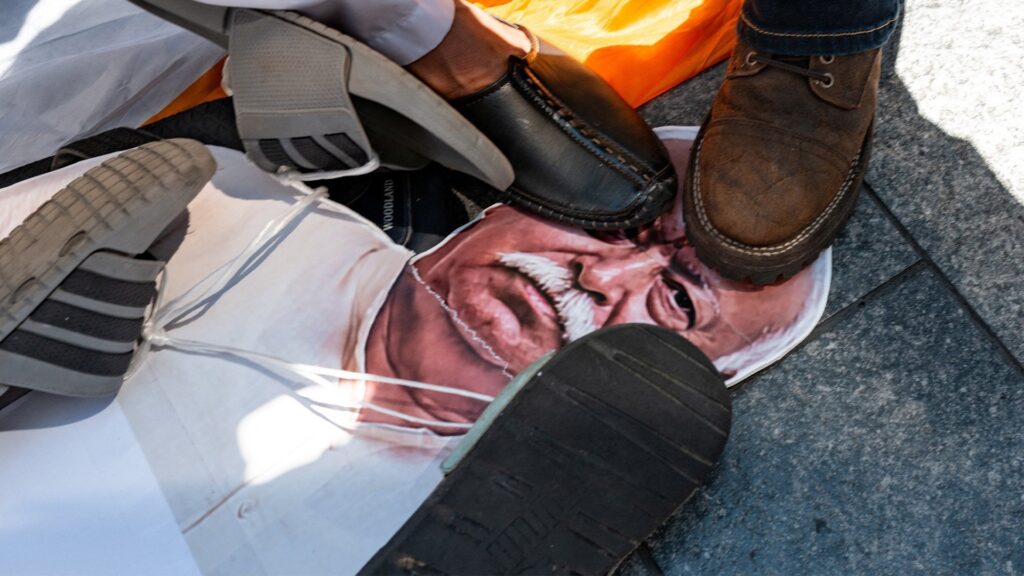
On August 28, 2026, a Manhattan venue hosted a public address by Bhagwat that was streamed live to thousands of attendees. The invitation highlighted his recent book, “A New India,” and promised a discussion on “cultural unity and economic progress.” Within hours, a coalition of South Asian activist groups, civil‑rights organisations, and local community leaders organised a protest outside the venue, chanting slogans against communal violence and demanding that the city revoke the permit.
Police records show that roughly 1,200 demonstrators gathered, while the event itself drew about 800 paying attendees. The protesters carried placards reading “No to hate,” “Protect minorities,” and “NYC is not a stage for sectarian politics.” Several speakers, including a representative of the Indo‑American Muslim Council, warned that Bhagwat’s rhetoric has historically been linked to anti‑minority incidents in India, citing the 2020 Delhi riots as a recent example.
The demonstration remained largely peaceful, though a few isolated scuffles broke out when a handful of supporters tried to push through the crowd. New York Police Department officials later confirmed that no arrests were made and that the event concluded without major disruption. Nonetheless, the protest received extensive coverage on social media, with the hashtag #NYCProtestsRSS trending for several hours.
Why it matters for US‑India relations
The United States and India have cultivated a strategic partnership that spans trade, defence, and technology. However, the partnership has always been sensitive to domestic political currents in New Delhi, especially when they involve communal tensions. According to a senior adviser at the US State Department, cited by The Washington Post, the presence of a high‑profile RSS leader on American soil “raises questions about how the US will balance its commitment to free speech with concerns over hate‑based ideologies.”
Congressional lawmakers have begun to take note. In a letter sent to the State Department last week, a bipartisan group of Representatives expressed “deep concern” over the RSS’s influence in diaspora communities and urged the administration to monitor any foreign‑linked extremist activity. While the letter stopped short of calling for a ban, it signals a growing willingness among US officials to scrutinise organisations that could threaten social cohesion.
For Indian businesses operating in the US, the episode adds a layer of uncertainty. Companies such as Tata Consultancy Services and Infosys have invested heavily in American tech hubs, and any perception that India’s ruling coalition is aligned with extremist groups could affect investor confidence. Analysts at Bloomberg note that while the immediate market impact is limited, prolonged diplomatic friction could complicate joint ventures and defence contracts worth billions of dollars.
Ripple effects on the African Indian diaspora
India’s relationship with Africa is a cornerstone of its foreign policy, with trade between the two continents projected to exceed $150 billion by 2030. A sizable Indian diaspora lives across the continent, especially in Kenya, Tanzania, Uganda, and South Africa, where they run businesses ranging from retail to manufacturing. These communities have historically navigated a delicate balance between preserving cultural identity and integrating into local societies.
The New York protests have resonated with African‑based Indian organisations that fear a similar export of RSS ideology to their neighbourhoods. In Nairobi, the Kenya Indian Association released a statement saying that “the promotion of a singular religious narrative abroad can fuel mistrust at home, jeopardising the hard‑won social licence that Indian entrepreneurs enjoy.” The comment reflects anxieties that a hardening of Hindu nationalist sentiment could be used by local politicians to stoke ethnic divisions, a tactic not unfamiliar in some African electoral contexts.
Moreover, the episode underscores a broader trend: diaspora groups are increasingly influencing policy in both their host and home countries. Scholars at the University of Pretoria argue that the RSS’s overseas expansion mirrors China’s cultural‑soft‑power push in Africa, and that both powers are competing for the loyalty of diaspora voters. If African governments perceive the RSS as a source of communal tension, they may reconsider partnerships with Indian firms, potentially reshaping the trade calculus for sectors such as pharmaceuticals and renewable energy.
What comes next: legal, diplomatic and community responses
Legal experts say the First Amendment protects Bhagwat’s right to speak, but city officials retain discretion over permits for events that could incite public disorder. New York City’s Mayor’s Office of Immigrant Affairs announced a review of the licensing process for foreign political figures, a move that could tighten scrutiny for future RSS or BJP‑linked appearances.
On the diplomatic front, India’s Ministry of External Affairs issued a brief statement describing the protests as “an internal matter of the Indian diaspora” and urged “respect for India’s democratic traditions.” The tone suggests a willingness to engage quietly rather than launch a public diplomatic row, a strategy that has served New Delhi well in previous overseas controversies.
Within the diaspora, the protests have sparked a wave of new organisations focused on secular, inclusive Indian identity. A coalition called “United Voices of Indian America” launched a crowdfunding campaign to fund civic‑education workshops and legal aid for activists facing harassment. Early reports indicate that the group has already raised $120,000, pointing to a growing appetite for counter‑narratives that challenge the RSS’s brand of nationalism.
Quick Answers
Who is Mohan Bhagwat and why was he speaking in New York?
Mohan Bhagwat is the chief of the Hindu nationalist RSS; he was invited to discuss cultural unity and economic progress, which sparked protests over his organization’s ideology.
How could the RSS event affect US‑India trade relations?
While immediate market effects are limited, heightened US scrutiny of Hindu nationalist groups could create diplomatic friction that may impact joint ventures and defence contracts.
What impact might the New York protests have on Indian communities in Africa?
African‑based Indian groups fear that the export of RSS ideology could fuel local ethnic tensions, potentially jeopardising business relations and prompting governments to reassess partnerships with Indian firms.
Source: www.aljazeera.com




💬 Comments 0