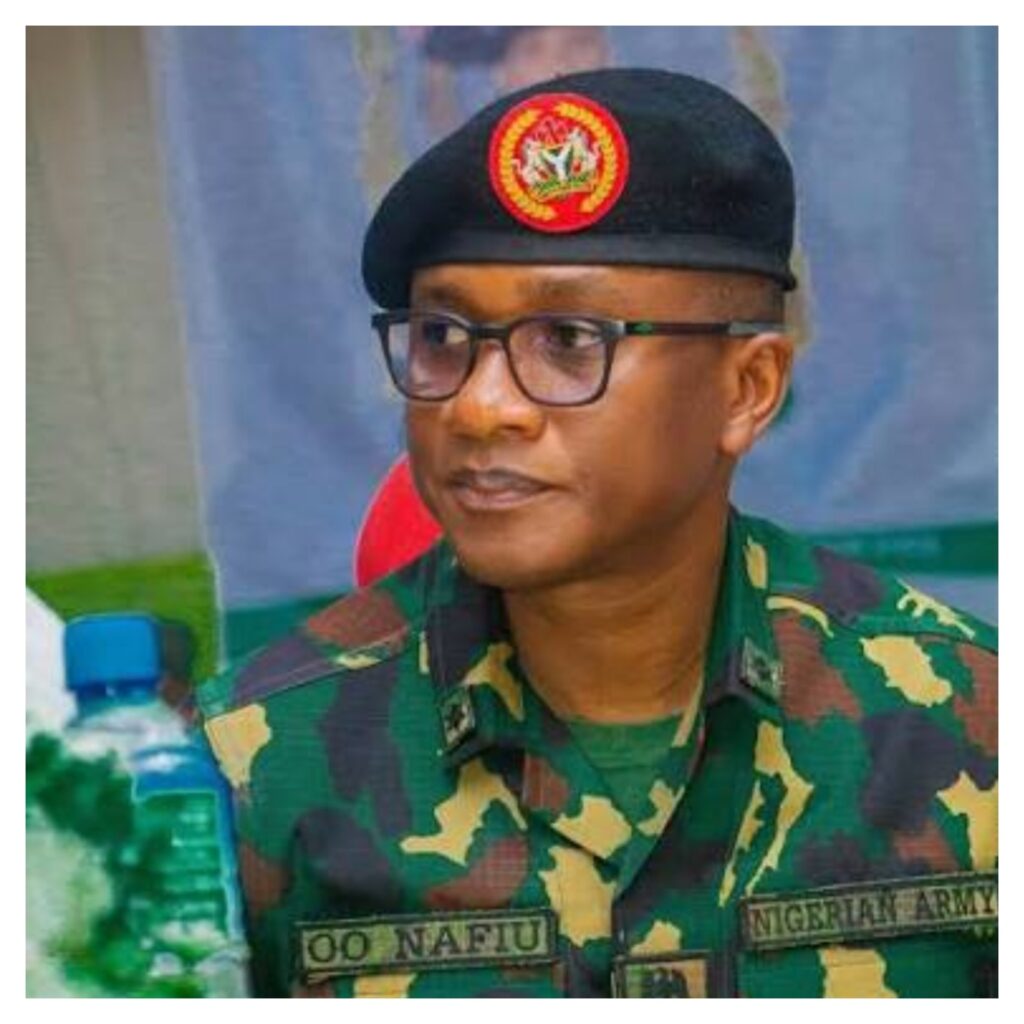
NYSC DG Brig. Gen. Olakunle Nafiu warns corps members against political campaigning and AI misinformation ahead of 2027 elections
Background: NYSC’s historic stance on political neutrality
Since its inception in 1973, Nigeria’s National Youth Service Corps (NYSC) has been charged with fostering unity among graduates from the country’s diverse ethnic and religious groups. A core tenet of the programme is political neutrality; corps members are expected to serve without aligning with any party or candidate, a rule that has been reiterated in every NYSC orientation camp since the 1990s.
The NYSC’s mandate is enshrined in the National Youth Service Corps Act, which stipulates that members must not use the NYSC identity badge, uniform or official communication channels for partisan activities. Violations can lead to disciplinary action, including the revocation of the service certificate that is required for many public‑sector jobs.
In recent years, the rise of social media has blurred the line between personal expression and official representation. Corps members, many of whom are digital natives, often post political commentary from their NYSC‑linked accounts, prompting the corps leadership to tighten its enforcement policies.
What the DG said: A warning against campaign involvement and AI‑driven fake content
During a press briefing in Abuja on 19 August 2026, Brig. Gen. Olakunle Nafiu reminded corps members that the upcoming 2027 general elections are a critical period for national stability. He cautioned that any participation in rallies, door‑to‑door canvassing, or the use of NYSC‑issued email addresses to endorse a party would breach the corps’ code of conduct.
Nafiu also highlighted the growing threat of artificial‑intelligence‑generated misinformation. He warned that deep‑fake videos, AI‑written manifestos and bot‑amplified rumors could easily be masqueraded as NYSC communications, thereby eroding public trust in the institution and influencing voter perception.
According to the DG, the NYSC is collaborating with the National Information Technology Development Agency (NITDA) to monitor suspicious online activity and to provide members with a short e‑learning module on digital literacy before they are posted to their places of primary assignment.
Why it matters: Youth, elections and the digital battlefield
Nigeria’s youth constitute roughly 60 % of the electorate, and the NYSC remains one of the few platforms that brings together graduates from every state. Their collective voting power can sway marginal constituencies, making the corps a strategic focus for political parties seeking grassroots momentum.
The warning comes at a time when AI tools for content creation are becoming cheaper and more accessible. A report from the African Centre for Media Studies noted a 73 % increase in AI‑generated political memes across West Africa in the past twelve months, many of which have been traced back to coordinated disinformation campaigns.
If corps members inadvertently amplify such content, the repercussions could be two‑fold: the credibility of the NYSC could be damaged, and the election outcome could be distorted by fabricated narratives that exploit the corps’ perceived impartiality.
Broader trends: The clash between digital freedom and state‑sanctioned neutrality
The NYSC directive mirrors a wider continental debate over how governments should regulate political expression on digital platforms. In Kenya, the Electoral Commission recently introduced a code of conduct that bans public servants from posting partisan content during election periods, while Ghana’s Parliament is considering a bill that would criminalise the creation of deep‑fakes aimed at voters.
Critics argue that such measures risk stifling legitimate dissent and curbing the vibrant online activism that has driven social change across Africa. Pro‑government voices, however, contend that unchecked AI manipulation threatens the integrity of emerging democracies, especially where institutional trust is already fragile.
For the Nigerian diaspora, the NYSC warning signals that even expatriate Nigerians who retain NYSC email accounts may be scrutinised. Community groups in London and New York have already begun circulating guidelines on how to separate personal political commentary from official NYSC identifiers, a practice that could become standard for other African youth programmes.
What’s next: Enforcement, education and the 2027 election landscape
The NYSC plans to roll out a compliance audit in the next six months, focusing on social‑media footprints of corps members posted to the northern states, where election contests are historically tight. Members found violating the neutrality rule could face a suspension of their service certificate, a penalty that may affect future employment in the public sector.
In parallel, the corps is launching a digital‑literacy campaign titled "Fact‑Check Your Service," which will include webinars on spotting AI‑generated deep‑fakes, guidelines for responsible posting, and a hotline for reporting suspicious content. Partnerships with local universities and tech hubs are expected to broaden the reach of the program.
Analysts predict that the NYSC’s proactive stance could set a precedent for other youth service schemes across Africa. If the 2027 elections proceed without a major scandal involving corps‑linked misinformation, the model may be cited as a best‑practice example for safeguarding electoral integrity in the digital age.
Quick Answers
What is the NYSC’s policy on political campaigning?
The NYSC prohibits members from using their service badge, uniform, email or official social‑media accounts to support any political party or candidate.
Why did Brig. Gen. Olakunle Nafiu warn about AI misinformation?
He warned that AI‑generated deep‑fakes and bots could be disguised as NYSC communications, potentially misleading voters and harming the corps’ reputation.
How could the NYSC warning affect the 2027 elections?
By limiting partisan activity among a large, mobile youth cohort, the warning aims to reduce the spread of fake political content and preserve a neutral environment for the upcoming vote.
Source: dailypost.ng


💬 Comments 0