Oregon Teacher Pretended to Be Dead During 2026 School Shooting, Survives Injuries
Background: A Tragic Day at the Oregon Elementary School
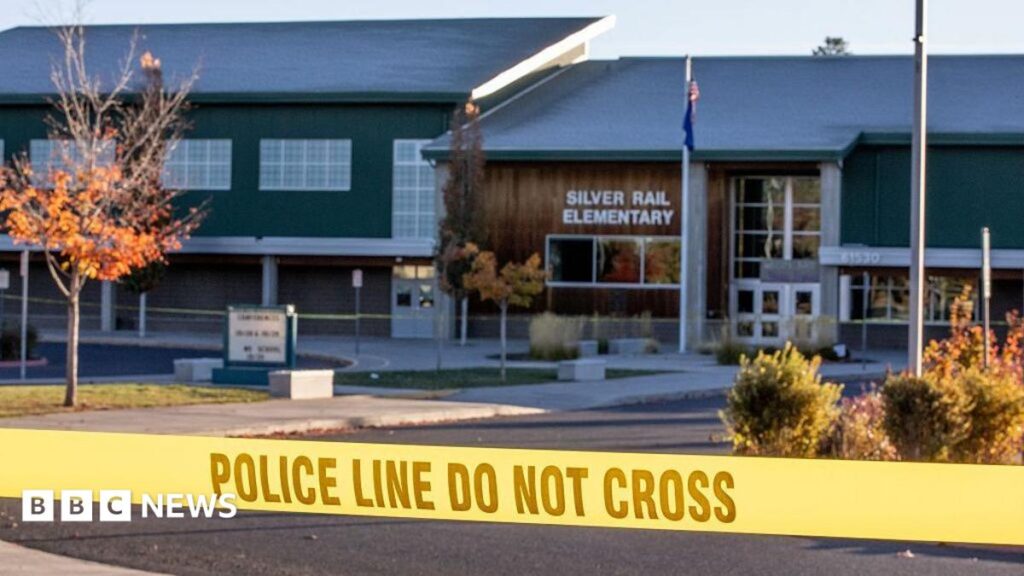
On October 19, 2026, a gunman entered an elementary school in Beaverton, Oregon, setting off a chain of violence that left several staff members and students injured. The assailant, whose identity has not yet been released by law enforcement, opened fire in a hallway before being subdued by police. The incident added to a growing list of school shootings that have plagued the United States over the past two decades.
The school, which serves a diverse community of roughly 600 students, has been praised in the past for its inclusive curriculum and strong parental involvement. Prior to the attack, the district had invested in mental‑health counselors and upgraded security measures, but the shooter was able to breach those defenses, raising fresh questions about the adequacy of current safety protocols.
Among the victims was a 32‑year‑old third‑grade teacher, Maya L. Thompson, who had been teaching at the school for five years. Thompson, a former public‑school teacher from Lagos who moved to the U.S. in 2018, was known for integrating African literature into her lessons, a practice that resonated with the growing number of African‑descent students in the district.
What Happened: The Split‑Second Decision to Play Dead
According to a statement released by the school district, Thompson was hit in the shoulder and abdomen as she tried to shepherd a group of children into a classroom. The bullet fragments caused severe internal bleeding, leaving her unable to move or speak. In a moment of terror, she recalled a self‑defense technique taught in a first‑aid workshop: feigning death to avoid further aggression.
Witnesses say Thompson lay motionless on the floor for nearly three minutes, her breathing shallow but steady. When the shooter moved on, a fellow teacher, Carlos Mendes, found her and called emergency services. Paramedics arrived within minutes, stabilizing her condition before rushing her to Oregon Health & Science University (OHSU) for surgery.
Thompson’s own account, given in a recorded interview with local media, describes how she focused on her own heartbeat and deliberately stopped moving, hoping the attacker would think she was already a casualty. "I thought if I could convince the gunman I was already dead, he might stop looking for me," she said, her voice hoarse from the trauma.
Why It Matters: Lessons for School Safety and Trauma Response
Thompson’s survival tactic highlights a stark reality: many educators receive little to no training on how to respond during an active‑shooter event. While some districts have introduced active‑shooter drills, critics argue that these exercises often focus on evacuation rather than on situational improvisation, leaving teachers to rely on instinct.
The incident also underscores the need for comprehensive post‑trauma support. A study by the National Center for Education Statistics, released earlier this year, found that teachers who experience school violence are three times more likely to suffer long‑term mental‑health issues than their peers. Without proper counseling, the ripple effects can extend to classroom performance and student well‑being.
For the African diaspora, Thompson’s story resonates on another level. Her decision to stay calm under fire reflects cultural teachings about resilience that many immigrant families pass down. Community leaders in Portland’s Ethiopian and Nigerian neighborhoods have begun using her experience as a case study in resilience workshops, linking personal survival strategies with broader discussions about safety in foreign lands.
Reactions: From Local Communities to National Policy Debates
The Beaverton community responded with vigils, candlelight walks, and a petition demanding stricter gun‑control legislation. Local activist group Oregon Safe Schools reported a surge in donations, earmarked for security upgrades and mental‑health services. The district’s superintendent, Dr. Laura Chen, announced an immediate review of emergency protocols, promising “a transparent, data‑driven approach” to prevent future tragedies.
Nationally, the shooting reignited a heated debate in Congress over the federal Assault Weapons Ban, which is set to expire at the end of 2026. Lawmakers on both sides cited Thompson’s ordeal as evidence of the human cost of inaction. According to a statement from the Senate Judiciary Committee, the incident will be referenced in upcoming hearings on school‑safety funding.
In the diaspora press, Nigerian newspapers such as The Guardian Nigeria featured op‑eds by educators who argued that the U.S. must address school violence if it wishes to retain talented foreign‑born teachers. They warned that a pattern of unsafe schools could deter future African professionals from seeking opportunities abroad.
What’s Next: Policy, Prevention, and Global Implications
The Oregon Department of Education has pledged $5 million toward a statewide “Rapid Response Training” program, which will include modules on tactical de‑escalation and the psychological after‑effects of gun violence. The curriculum will be developed in partnership with the National Association of School Psychologists and will be rolled out to all public schools by the start of the 2027 academic year.
Beyond the United States, the incident is prompting African universities that host exchange students in the U.S. to reassess safety briefings. The University of Lagos’s Office of International Relations announced it will add a mandatory safety‑planning workshop for students heading to U.S. campuses, citing Thompson’s experience as a cautionary example.
Finally, the story may influence how technology firms approach school security. Several Silicon Valley startups, already working on AI‑driven threat detection, have expressed interest in piloting their systems in Oregon schools. If successful, such tools could set a precedent for schools across the continent, where similar safety concerns are emerging in urban centers like Nairobi and Lagos.
Quick Answers
How did the Oregon teacher survive the school shooting?
She pretended to be dead by staying completely still after being injured, which caused the shooter to move on before she was rescued.
What changes are being made to school safety after the shooting?
Oregon is allocating $5 million for rapid‑response training, reviewing emergency protocols, and considering AI‑based threat detection systems.
Why is the incident significant for African diaspora communities?
The teacher’s background and resilience sparked discussions about safety for African professionals abroad and prompted diaspora groups to advocate for better support and security measures.
Source: www.bbc.co.uk




💬 Comments 0