Osun State police probe death of unidentified woman found in Osogbo church with missing left wrist, 2026
Background: Rising unease over church‑related crimes in Osun
Osun State, long known for its vibrant cultural festivals and pilgrimages to historic shrines, has seen a spate of unsettling incidents linked to places of worship over the past two years. While most cases involve petty theft or vandalism, a handful of violent episodes—most notably the 2024 assault on a youth ministry in Ile-Ife—have sparked fears that religious venues are becoming soft targets for criminal gangs seeking anonymity.
The Obelewo district of Osogbo, where the latest tragedy unfolded, is a densely populated suburb that houses several churches, mosques and a bustling market. Community leaders have repeatedly warned that the area’s rapid urbanisation has outpaced policing, leaving narrow alleyways and vacant lots vulnerable to illicit activity. According to a 2025 report by the Osun State Ministry of Safety, property crimes in Osogbo rose by 14 % between 2023 and 2024, a trend that local officials attribute to inadequate street lighting and limited patrol resources.
The Discovery: What police found inside the church premises
On the morning of 14 August 2026, worshippers at the St. Michael’s Anglican Church in Obelewo reported a foul smell emanating from the rear hall. When the parish’s security guard opened a locked storage room, he discovered the body of an adult woman lying on the floor, her left wrist cleanly severed. The woman was not identified by family members or neighbours, and no personal belongings were found on her.
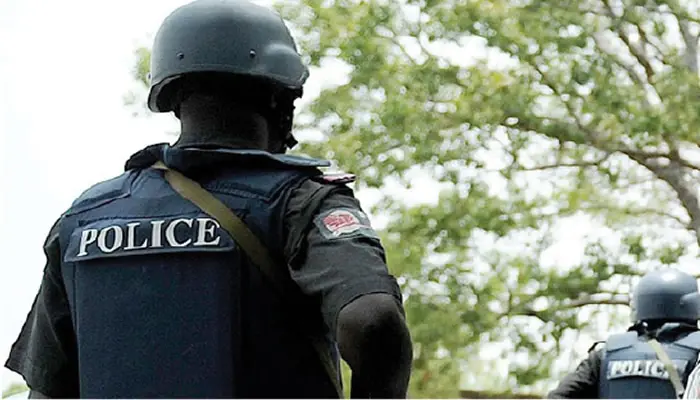
Police officers from the Osun State Police Command arrived within an hour, sealing off the site and launching a forensic examination. Early findings indicated that the victim had likely been alive when the wrist was cut, suggesting a possible attempt to remove a piece of identification such as a bracelet or a watch. The missing limb was not recovered at the scene, leading investigators to suspect that it was taken by the perpetrator(s) before the police could secure the area.
Possible motives and cultural context: Beyond a simple homicide
While the exact motive remains unclear, several theories have emerged among locals and crime analysts. One line of speculation points to ritualistic practices that sometimes involve body parts as talismans—a belief that persists in some fringe spiritual circles across southwestern Nigeria. According to a cultural anthropologist at Obafemi Awolowo University, the removal of a left wrist could be linked to traditional concepts of “hand‑of‑power” used in protection charms, although such claims are rarely substantiated in court.
Another plausible scenario involves organized crime. Osogbo sits on a key transit corridor for goods moving between Lagos and the interior states, and recent police raids have uncovered networks that traffic counterfeit medicines and stolen electronics. A source familiar with the investigation told the *Daily Trust* that the missing wrist could have been removed to conceal a micro‑chip or a tracking device, a tactic sometimes employed by smugglers to evade detection.
Impact on the community and security concerns
The grisly finding has reverberated through the Obelewo neighbourhood, prompting an outpouring of grief and anger on social media. Residents have called for increased police presence, better lighting, and a community‑led safety watch. A petition signed by over 2,000 locals was submitted to the Osun State Governor’s office demanding a rapid response and a transparent investigation.
Beyond the immediate emotional shock, the incident raises broader questions about the safety of public gathering places in Nigeria’s rapidly urbanising regions. Churches, traditionally viewed as sanctuaries, are now being scrutinised for security lapses. The Nigerian Police Force’s recent “Safe Spaces” initiative, launched in early 2026, aims to equip religious institutions with basic surveillance equipment, but implementation has been uneven. Critics argue that without a coordinated effort between faith leaders, local councils, and law enforcement, such measures will remain symbolic.
Economically, the episode could affect small‑scale vendors who rely on church events for trade. Weekly markets that set up outside St. Michael’s often see a surge in foot traffic on Sundays; a decline in attendance due to safety fears could dent incomes for dozens of families.
What comes next: Police steps, legal ramifications and community response
The Osun State Police Command has announced a three‑phase investigative plan: securing forensic evidence, canvassing witnesses, and tracing any missing body parts through hospital records. Detectives are also reviewing CCTV footage from nearby shops, a move that could yield crucial leads if the perpetrator attempted to leave the area on foot or by motorcycle. Sources say that the police have already detained two individuals who were seen near the church late on the night of the discovery, though they have not been formally charged.
Legal experts warn that if the case is linked to ritualistic crime, it could trigger a harsher sentencing regime under Nigeria’s 2022 Anti‑Ritualistic Violence Act, which mandates a minimum of 20 years imprisonment for offenses involving body‑part mutilation. However, proving a ritual motive in court requires concrete evidence of intent, a hurdle that prosecutors often struggle to meet.
Community leaders are urging the state government to fast‑track the deployment of emergency lighting and to fund a joint security task force that includes church volunteers. Meanwhile, NGOs such as the Women’s Rights Advancement Initiative (WRAI) are calling for a broader public education campaign on gender‑based violence, noting that women are disproportionately affected by both domestic abuse and the kind of public‑space violence highlighted by this case.
Quick Answers
Who was the woman found dead in the Osogbo church?
The victim remains unidentified; police have not released a name or any personal details as of now.
Why was the woman's left wrist missing?
Investigators believe the wrist was removed by the perpetrator, possibly to hide an item or for ritual purposes, but the exact reason is still under investigation.
What actions are being taken by the Osun State Police?
Police have sealed the crime scene, launched a forensic examination, are reviewing nearby CCTV footage, and have detained two suspects for questioning.
Source: dailypost.ng




💬 Comments 0