Palestinian American Returns to Besieged West Bank Home as Israeli Settlers Block Access, 2026
Background: Settlement expansion and diaspora property claims
Since the Oslo Accords, Israeli settlement activity in the occupied West Bank has accelerated, with more than 650,000 settlers now living in outposts deemed illegal under international law. The growth of these communities often brings friction with Palestinian landowners, especially those who hold dual citizenship and travel back to tend family farms. For many in the diaspora, returning to ancestral property is both a cultural duty and a political statement, a dynamic that has intensified as settlement bulldozers reshape the landscape.
U.S. citizens of Palestinian descent have faced a unique set of challenges. While American passports afford them diplomatic protection, the Israeli military’s authority over the occupied territories limits any direct intervention. Past incidents—such as the 2018 seizure of a Palestinian‑American’s olive grove in Hebron—have highlighted how property rights can become flashpoints for broader geopolitical tensions.
The return: Who is the Palestinian American and why he went back
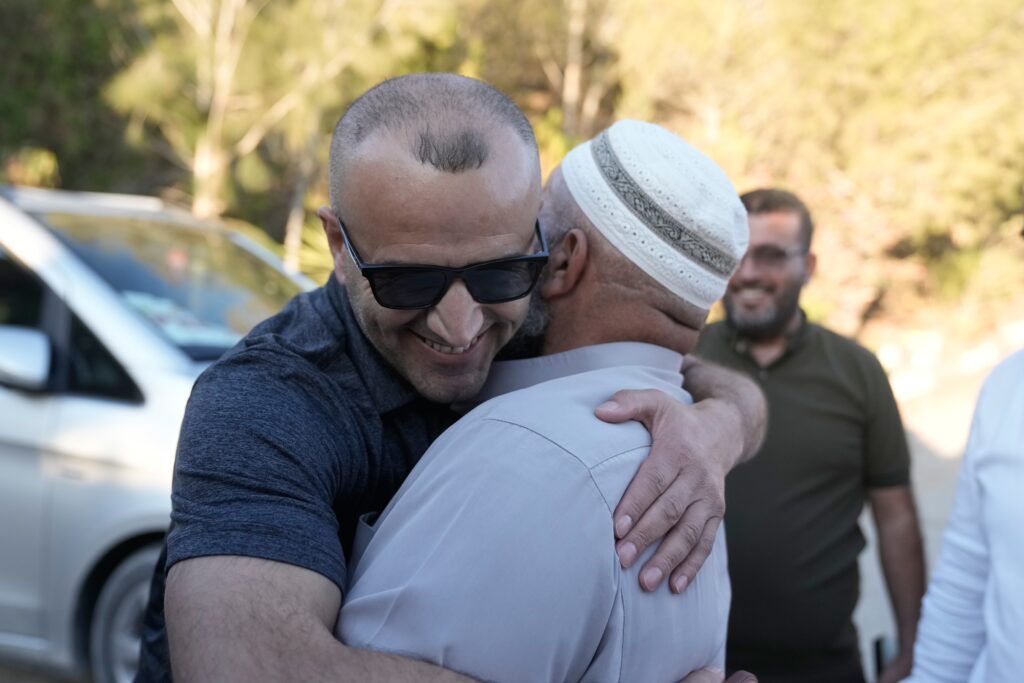
The man at the centre of this week’s incident is Samir Al‑Haj, a 38‑year‑old engineer based in Chicago who was born in the village of Qalqilya before his family emigrated in the early 1990s. Al‑Haj maintains a modest plot of land on the outskirts of his hometown, where his parents still live. After a year of remote monitoring, he decided to travel to the West Bank on Monday to join relatives who have been physically defending the property against encroaching settlers.
Al‑Haj’s decision mirrors a growing trend among diaspora Palestinians who, emboldened by recent legal victories in European courts, feel compelled to assert ownership on the ground. Sources close to the family say the trip was also meant to document the situation for international media, hoping to generate pressure on both Israeli authorities and the U.S. State Department.
Why it matters: Legal, diplomatic and symbolic stakes
Legally, the case pits Israeli military orders—often used to justify demolition or seizure of “illegal” structures—against the Israeli‑Palestinian property registration system, which still recognises pre‑1967 ownership documents. If settlers succeed in establishing a de‑facto siege, it could set a precedent for further land grabs, undermining the limited protections that dual‑nationality owners currently enjoy.
Diplomatically, the incident tests the United States’ willingness to intervene on behalf of its citizens in a territory it does not officially control. While the State Department has historically issued “consular assistance” statements, it rarely escalates to formal protests. A high‑profile case like Al‑Haj’s could force Washington to balance its strategic alliance with Israel against growing domestic pressure from a vocal Palestinian‑American constituency.
Regional ripple: Echoes in African land disputes and diaspora activism
The West Bank siege resonates with similar land‑rights struggles across Africa, where settler‑colonial legacies and state‑backed land grabs threaten local and diaspora owners alike. In South Africa, white farm owners have faced violent protests and legal challenges, while in Kenya, foreign investors have been accused of displacing indigenous communities. Both contexts illustrate how diaspora members often become symbolic battlegrounds for broader debates over sovereignty and restitution.
For African readers, the Al‑Haj episode underscores a pattern: diaspora populations returning to claim ancestral lands can trigger heightened security measures, legal battles, and international scrutiny. It also highlights the potential for cross‑continental solidarity, as NGOs that monitor land rights in Africa are beginning to collaborate with Palestinian advocacy groups to share litigation strategies and media outreach.
Reactions: From settlers, Palestinian community, U.S. officials and NGOs
Israeli settler leaders in the nearby outpost issued a statement describing Al‑Haj’s presence as an “unlawful intrusion” and warned that any attempt to “re‑occupy” the land would be met with “self‑defence measures.” Their rhetoric mirrors earlier calls for “protecting the settlement perimeter” that have justified the use of force against Palestinian protestors.
Palestinian officials, including the Ministry of Interior in Ramallah, condemned the siege as a violation of international law and called on the United Nations to intervene. The American‑based NGO Al‑Quds Center for Legal Aid released a brief urging the U.S. embassy in Jerusalem to provide consular assistance, noting that Al‑Haj’s safety could be jeopardised without diplomatic pressure.
What’s next: Legal battles, international attention and broader implications
The immediate next step is likely a petition to Israel’s Supreme Court, where Al‑Haj’s legal team will argue that the settlers’ blockade infringes on his property rights under the 1967 property law. Parallel to the court filing, a media campaign is expected to target both Israeli and American audiences, aiming to frame the dispute as a human‑rights issue rather than a purely territorial one.
If the court rules in Al‑Haj’s favour, it could create a narrow but important legal precedent for other diaspora owners facing settler pressure. Conversely, a loss may embolden further encroachments, prompting a wave of similar petitions from Palestinians and potentially from African diaspora land‑owners confronting state‑sanctioned dispossession in their home countries. The outcome will therefore influence not only the micro‑level fate of a single family farm, but also the macro‑level narrative of diaspora‑driven land reclamation worldwide.
Quick Answers
Who is the Palestinian American who returned to the West Bank in 2026?
The man is Samir Al‑Haj, a Chicago‑based engineer originally from Qalqilya, who traveled back to defend his family’s property amid a settler siege.
Why does the return of diaspora Palestinians to their West Bank homes matter internationally?
It raises legal questions about property rights under Israeli military orders, tests U.S. diplomatic obligations to its citizens, and highlights a broader trend of diaspora land‑rights activism.
How does this West Bank land dispute relate to African land‑rights issues?
Both involve diaspora owners confronting settler or state‑backed land grabs, prompting similar legal strategies and cross‑regional advocacy among NGOs.
Source: www.npr.org



💬 Comments 0