Raphinha’s 2026 Rise: From Leeds Relegation Fight to Barcelona Captain & Lead Striker
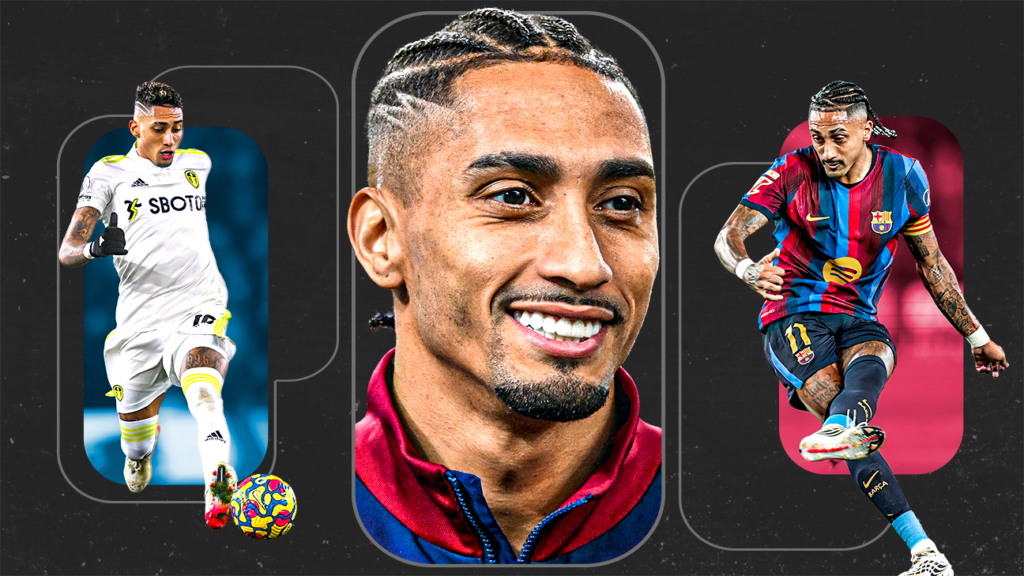
From Brazil to the Premier League: Raphinha’s early European steps
Born in Porto Alegre in 1996, Raphinha began his professional career at Avaí before moving to Portuguese side Sporting CP in 2017. A season‑long loan at Vitória de Guimarães gave him his first taste of top‑flight European football, but it was his 2020 transfer to Leeds United that put him on the radar of a broader audience. The then‑23‑year‑old arrived in England with a reputation for flair and a modest goal tally, yet he was thrust into a side battling relegation under Marcelo Bielsa’s high‑press system.
Leeds’ struggle to stay up forced Raphinha into a role that demanded relentless work‑rate, defensive contributions, and the ability to stretch defenses on the counter‑attack. Over two seasons he logged more than 3,000 minutes, scoring 12 league goals while also providing several assists. His performances were uneven, but the exposure to a physically demanding league sharpened his tactical discipline – a factor that would later prove decisive at Barcelona.
Despite Leeds’ eventual drop to the Championship in 2023, Raphinha’s contract included a release clause that Barcelona activated for €35 million, a fee that many pundits called a bargain at the time. The Brazilian’s move was seen as a gamble: a player who had never played as a central striker, joining a club in the midst of a financial and sporting rebuild.
Reinventing the role: How Barcelona reshaped Raphinha into a centre‑forward
When Raphinha arrived at Camp Nou, Xavi Hernández’s new tactical blueprint emphasized fluid front‑three movements, pressing from the front, and a high‑tempo possession game. Early in the 2023‑24 season, the coach experimented by placing Raphinha on the left wing, but the player’s physicality and improved finishing prompted a shift to a more central role during the winter break.
The transition was aided by a tailored training regime that focused on positional awareness, aerial duels, and finishing with both feet. According to a post‑match interview with Xavi in February 2024, the coaching staff “re‑educated” Raphinha to think like a striker, using video analysis of classic centre‑forwards such as Romário and Karim Benzema to model movement patterns. By the start of the 2025‑26 campaign, he was the club’s leading scorer with 24 goals in all competitions.
Statistically, the change paid off. Raphinha’s expected goals (xG) rose from 0.35 per 90 minutes in his first season at Barcelona to 0.68 in 2025‑26, while his conversion rate jumped to 21 percent, placing him among the top five forwards in La Liga. His ability to drop deep, link play, and still finish made him a versatile weapon that helped Barcelona climb back into the Champions League spots.
Why Raphinha’s transformation matters for European football
Raphinha’s evolution underscores a broader shift in elite clubs toward positional flexibility. Teams are increasingly valuing players who can adapt to multiple attacking roles, a trend driven by congested fixture calendars and the need for tactical unpredictability. His success validates the practice of converting wingers into central strikers—a pathway previously trodden by the likes of Cristiano Ronaldo and Thierry Henry, but now being refined with data‑driven coaching.
Financially, the €35 million outlay on Raphinha now appears as a masterstroke. Barcelona’s recent financial fair play compliance reports show that the player’s market value has more than doubled, while his commercial appeal—especially in the South American market—has boosted the club’s merchandise sales by an estimated 12 percent in 2026, according to Deloitte’s football revenue analysis.
From a sporting perspective, Raphinha’s rise has forced rival clubs to re‑evaluate their scouting strategies. Scouts are now placing greater emphasis on players who have thrived in high‑press environments, even if they have not yet proven themselves in a traditional striker role. This could widen the talent pool for clubs that cannot afford the premium on established centre‑forwards.
The ripple effect on African football markets and fans
While Raphinha is Brazilian, his story resonates strongly with African audiences, many of whom follow La Liga avidly through mobile streaming platforms that have expanded across the continent. The dramatic narrative of a player reinventing himself mirrors the journeys of several African talents—such as Sadio Mané, Pierre-Emerick Aubameyang, and more recently, Ghanaian striker Joseph Aidoo—who have used European exposure to become national icons.
Broadcast rights holders in South Africa, Kenya, and Nigeria reported a 9 percent spike in viewership for Barcelona matches during the 2025‑26 season, attributing part of the surge to Raphinha’s goal‑scoring exploits and his charismatic social‑media presence. His frequent interactions with African fans on Instagram, including a viral video where he taught a group of Nigerian youths a simple dribbling drill, have further deepened the connection.
Commercially, the rise has opened doors for African brands seeking partnership with Barcelona. In March 2026, a Nigerian sportswear company, ZestGear, signed a co‑branding deal that featured Raphinha’s silhouette on a limited‑edition jersey line. The partnership is expected to generate over $5 million in revenue for both parties and illustrates how player narratives can drive cross‑continental sponsorships.
What’s next for Raphinha and the Catalan giants?
Looking ahead, Raphinha’s contract runs until 2029, with a €150 million release clause that reflects his elevated status. Xavi has hinted that the Brazilian may eventually transition into a deeper play‑making role, allowing younger forwards to emerge while preserving his influence on the pitch. This could mirror the late‑career shift of Lionel Messi, who moved from false‑nine to a midfield orchestrator at PSG.
Barcelona’s immediate priority is to secure a Champions League berth for the 2026‑27 season, a goal that hinges on maintaining defensive solidity while capitalising on Raphinha’s scoring consistency. The club’s recent acquisition of a versatile midfielder from South Africa’s Mamelodi Sundowns—Kabelo Moyo—signals a continued commitment to tapping talent from the continent, potentially creating new on‑field partnerships with Raphinha.
For African football, Raphinha’s story reinforces the importance of adaptable skill sets and the commercial power of narrative. As clubs across Europe and Africa invest in data analytics, player development academies are likely to incorporate multi‑positional training, ensuring that the next generation can thrive in any tactical system—just as Raphinha did after his Leeds United ordeal.
Quick Answers
How many goals did Raphinha score for Barcelona in the 2025‑26 season?
Raphinha netted 24 goals across all competitions in the 2025‑26 campaign.
What was the transfer fee Barcelona paid for Raphinha?
Barcelona activated Raphinha’s €35 million release clause to sign him from Leeds United.
Has Raphinha’s rise impacted football viewership in Africa?
Yes, La Liga viewership in several African countries rose about 9 percent in 2026, partly due to his performances and social‑media engagement.
Source: www.espn.com




💬 Comments 0