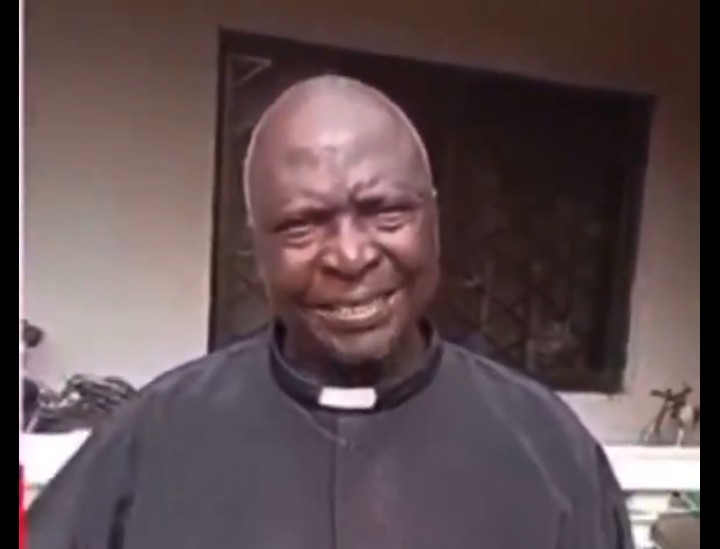
Rev. Ezekiel Dachomo slams Sheikh Sani Jingir’s claim Nigeria is a Muslim nation – 2026
Background: Nigeria’s religious mosaic and recent flashpoints
Nigeria’s population is roughly split between roughly 50 % Muslims, 40 % Christians and a small proportion of adherents of indigenous faiths, according to the 2022 national census. This demographic balance has historically underpinned a delicate social contract, especially in the volatile North‑Central belt where Plateau, Kano and surrounding states intersect. Over the past decade, political actors have repeatedly invoked religion to mobilise voters, a practice that intensified after the 2023 elections when religious rhetoric was used to justify campaign promises and to delegitimize opponents.
The controversy erupted on 10 August 2026 when Sheikh Sani Yahaya Jingir, a hard‑line cleric based in Kano, declared on a televised programme that "Nigeria is a Muslim country" and that non‑Muslims should accept Islamic primacy. His remarks coincided with a regional COCIN gathering in Barkin Ladi, Plateau State, where Rev. Ezekiel Dachomo, the church’s regional chairman, was scheduled to speak. The timing amplified the clash, turning a routine ecclesiastical event into a flashpoint for inter‑faith tension.
What Rev. Dachomo said and why it resonated
In his response, Rev. Dachomo affirmed that "Nigeria is a nation of many faiths, not a Muslim state," and warned that Jingir’s statement could inflame sectarian divisions already simmering in the country’s middle belt. He appealed to the 1999 Constitution, which guarantees freedom of religion and prohibits any law that establishes a state religion. Dachomo’s remarks were quickly disseminated across local radio stations and social media platforms, where they attracted both praise from Christian groups and criticism from hard‑line Muslim supporters of Jingir.
The reaction was not limited to domestic audiences. Nigerian diaspora organisations in the United Kingdom and the United States issued statements echoing Dachomo’s call for constitutional adherence, arguing that the diaspora’s political engagement often hinges on preserving Nigeria’s pluralist identity. According to a diaspora forum in London, “When religious leaders make exclusionary claims, it threatens the safety of our families back home and undermines the inclusive values we champion abroad.”
Why the dispute matters for politics and security
The exchange between the two clerics arrives at a critical juncture: the 2027 general elections are less than a year away, and political parties are already courting religious constituencies for votes. Analysts warn that Jingir’s assertion could be weaponised by politicians seeking to rally Muslim-majority states, potentially marginalising Christian and minority voters in swing regions such as Plateau, Nasarawa and Benue. The Electoral Commission has not yet issued guidance on religious campaigning, leaving a regulatory vacuum that could be exploited.
Security experts also see a direct link between incendiary religious rhetoric and the rise in communal clashes. The Armed Conflict Location & Event Data Project (ACLED) recorded a 12 % increase in inter‑faith violence in Nigeria during 2024‑2025, with attacks often sparked by provocative statements on radio or television. If Jingir’s claim gains traction, it may embolden fringe groups to justify attacks on churches or Christian communities, echoing the deadly 2022 Jos bombings that were linked to religiously‑motivated actors.
A broader African trend: religion as a political lever
Nigeria is not alone in witnessing religious leaders stepping into the political arena. In Kenya, the 2025 election saw evangelical pastors endorse specific candidates, while in Ghana, a prominent Islamic scholar publicly urged the ruling party to adopt Sharia‑inspired policies. These patterns reflect a continent‑wide shift where faith‑based authority is leveraged to shape policy debates, often blurring the line between spiritual guidance and partisan advocacy.
Scholars argue that this trend is fueled by a combination of demographic changes, the rise of digital media, and a perceived erosion of secular governance. The African Union’s 2026 report on “Faith and Governance” warned that unchecked religious rhetoric could destabilise fragile democracies, especially where constitutional safeguards are weak. Nigeria’s constitutional guarantee of religious freedom is thus being tested in real‑time, making the Dachomo‑Jingir clash a bellwether for how other African states might navigate similar pressures.
What comes next: legal, social and diplomatic pathways
Legally, the Federal Government could invoke the Constitution’s secular clause to challenge any policy proposals that seek to institutionalise Islam as the state religion. Human rights NGOs, such as the Centre for Constitutional Rights, have already signalled intent to file a public interest litigation should any legislative body act on Jingir’s narrative. Meanwhile, the Ministry of Religious Affairs announced a consultative forum scheduled for September 2026, aiming to bring together clerics from all major faiths to draft a “National Inter‑Faith Charter” that would reaffirm Nigeria’s pluralist identity.
Socially, civil‑society coalitions are mobilising grassroots peace‑building initiatives. The Inter‑Faith Youth Alliance, a network active in both Nigeria and the diaspora, launched a series of town‑hall meetings in Plateau and Kano to foster dialogue among young Muslims and Christians. Early feedback suggests that participants appreciate the opportunity to discuss the constitutional framework outside the polarising media narrative. Diplomatically, the Nigerian diaspora’s lobbying in Washington and London is pressuring foreign embassies to monitor any escalation, as instability could affect foreign investment and the safety of expatriate workers.
Quick Answers
Is Nigeria officially a Muslim country?
No, Nigeria’s 1999 Constitution guarantees freedom of religion and does not designate any religion as the state faith.
How could Sheikh Jingir’s statement affect the 2027 elections?
Political parties may use the claim to rally Muslim voters, risking the marginalisation of Christians and heightening sectarian tension ahead of the vote.
What actions are being taken to prevent religious violence after the remarks?
Human rights groups plan legal challenges, the government is organising an inter‑faith forum, and civil‑society groups are holding dialogue sessions across affected states.
Source: dailypost.ng

💬 Comments 0