Sara Duterte posts bail after 2026 arrest order over alleged assassination threat
Political backdrop: the Duterte dynasty and Philippine power dynamics
Since Rodrigo Duterte took the presidency in 2016, his family has become a fixture of Philippine politics. His daughter, Sara Duterte, rose from mayor of Davao City to the nation’s vice‑president in 2022, inheriting both the political machinery and the polarising reputation of her father’s hard‑line style. The Duterte brand, built on a mix of populist rhetoric and a promise of order, still commands loyalty in the south‑central islands, even as critics accuse it of undermining democratic institutions.
The current administration, led by President Ferdinand Marcos Jr., represents another political dynasty that reclaimed power after the 1986 People Power Revolution. The Marcos family’s resurgence has revived old wounds and sparked fierce competition for influence between two of the country’s most powerful lineages. This rivalry has increasingly spilled into the public arena, with accusations and legal battles becoming tools of political warfare.
The arrest order and bail: what actually happened
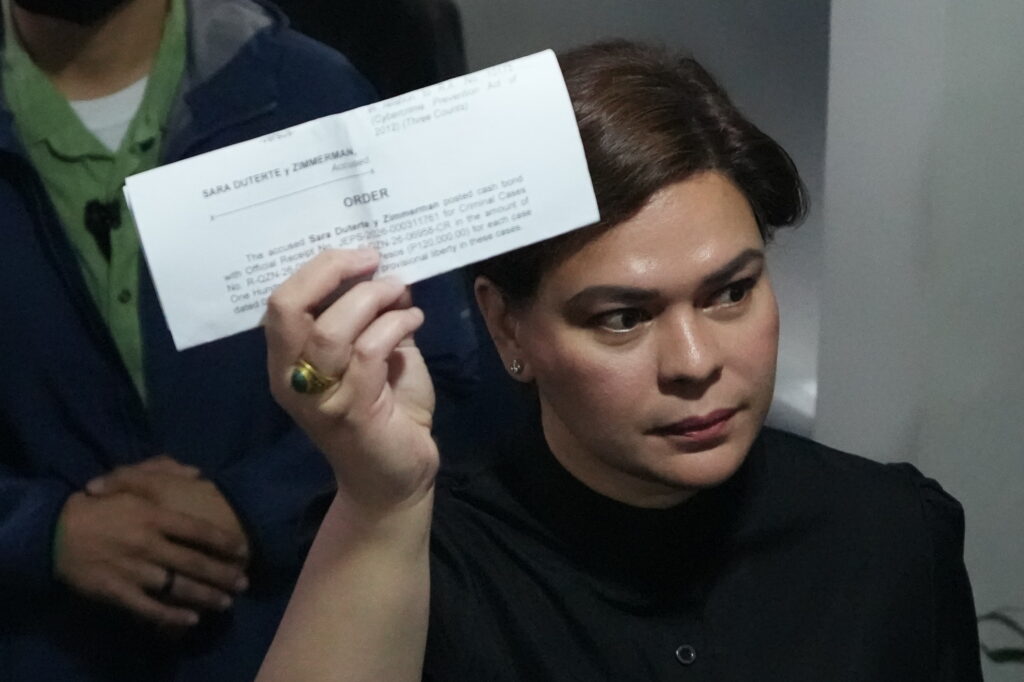
In early August 2026, a Manila court issued an arrest warrant for Vice‑President Sara Duterte after prosecutors alleged she publicly threatened to arrange the assassination of President Marcos Jr. and two senior officials. The alleged threat was said to have been made during a televised interview, where Duterte reportedly said she could “make sure they disappear” if they continued to pursue her allies. The prosecutor’s office framed the statement as an incitement to violence, a crime punishable under the Philippines’ Revised Penal Code.
Duterte’s legal team moved swiftly, filing a bail petition that the court granted on September 4, 2026. The bail amount, set at 1 million Philippine pesos, was posted the following day, allowing her to remain free while the case proceeds. The vice‑president has denied any intent to harm the president, describing the charge as a politically motivated attack designed to weaken her position ahead of the 2028 elections.
Why the case matters for the Philippines and the wider region
The episode underscores a growing trend of personal vendettas masquerading as legal actions in Southeast Asian politics. When high‑ranking officials face criminal charges for speech, it raises doubts about the health of the rule of law and the space for dissent. International investors, already wary of policy volatility, watch such developments closely because they can signal abrupt shifts in regulatory environments.
The Philippines is a key partner in the United States’ Indo‑Pacific strategy, and any internal turmoil could reverberate through security arrangements. Analysts note that a prolonged showdown between the Duterte and Marcos camps might distract Manila from its commitments to joint naval exercises and the development of the “enhanced defence cooperation” framework, potentially creating openings for rival powers such as China to increase their influence in the South China Sea.
A parallel in Africa: dynastic politics and the risk of legal weaponisation
While the Philippines is geographically distant from Africa, the pattern of political families using the courts to settle scores is familiar to many African nations. In Kenya, the Kenyatta and Odinga families have repeatedly faced legal challenges that coincide with election cycles. In the Democratic Republic of Congo, the Kabila dynasty has similarly been accused of leveraging state institutions to curb opponents. These parallels highlight a broader issue: when the judiciary becomes a battlefield for elite rivalries, democratic consolidation stalls.
For African diaspora communities in the Philippines—students, migrant workers, and entrepreneurs—the uncertainty surrounding the country’s political climate can affect visa policies, labor permits, and bilateral agreements. A destabilised Philippines may tighten its immigration controls, which would directly impact the flow of African professionals seeking opportunities in Manila’s growing BPO sector.
What comes next: legal battles, elections and regional diplomacy
The bail does not end the legal process. Prosecutors have indicated they will pursue a trial, and the Supreme Court may be called upon to interpret whether a political figure’s speech can be criminalised as incitement. The outcome could set a precedent for how future political rhetoric is policed, either reinforcing a culture of accountability or chilling free expression among elected officials.
Politically, the case is likely to become a rallying point for both camps. Duterte’s allies may portray the arrest as a witch‑hunt, mobilising grassroots supporters ahead of the 2028 national elections. Conversely, the Marcos administration could use the incident to argue that it is willing to hold even the highest‑ranking officials to the law, bolstering its anti‑corruption narrative. Observers expect a flurry of campaign ads, public rallies, and possibly new legislation aimed at clarifying the limits of political speech.
On the diplomatic front, the United States and the European Union have expressed concern about the “political weaponisation of the judiciary” in the Philippines, according to statements from their respective embassies. Both have urged a transparent and speedy resolution, warning that prolonged instability could affect trade agreements worth billions of dollars, including the ASEAN‑EU Free Trade Agreement, which has clauses on good governance and legal certainty.
Quick Answers
Why was Vice President Sara Duterte arrested in 2026?
She was charged with incitement after prosecutors said she publicly threatened to arrange the assassination of President Ferdinand Marcos Jr. and two officials during a televised interview.
What does posting bail mean for Duterte’s political future?
Posting bail allows her to remain free while the case proceeds, but the pending trial could limit her ability to campaign and may affect her standing within the administration.
How could this legal clash affect Philippines‑Africa trade relations?
Political instability may prompt stricter visa and work‑permit rules, potentially slowing the flow of African workers and investors who rely on the Philippines’ growing services sector.
Source: www.npr.org



💬 Comments 0