South Africa police arrest three in Jabulile Ntimba murder as ninth body found east of Johannesburg, 2026
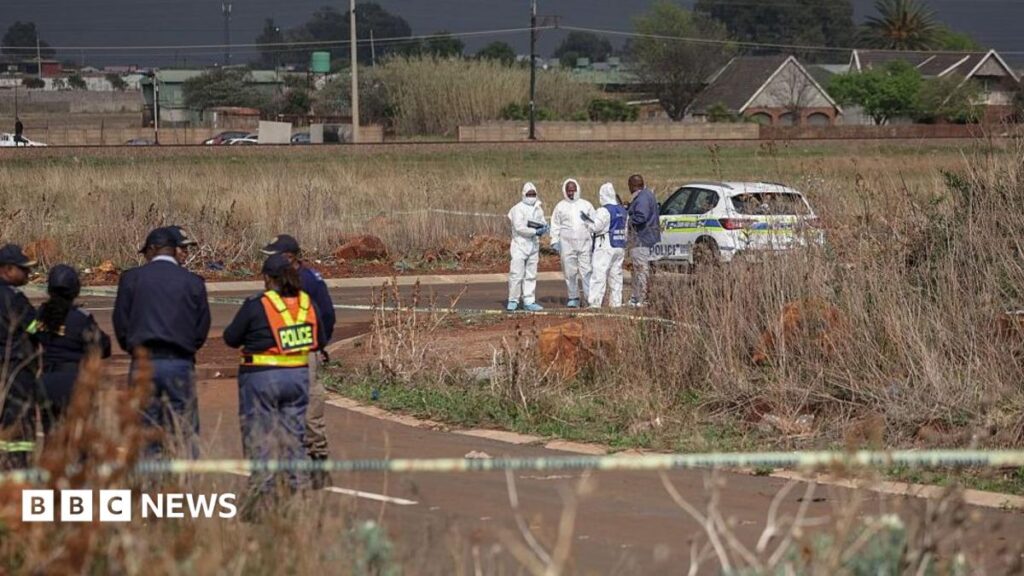
A string of grim discoveries east of Johannesburg
Since early 2026, the sprawling townships and informal settlements east of Johannesburg have become a grim crime scene, with eight bodies uncovered before the latest find of Jabulile Ntimba. The locations – ranging from the outskirts of Tembisa to the industrial zones near Kempton Park – are areas already grappling with high unemployment, rapid urbanisation, and strained municipal services. These factors have created fertile ground for criminal activity, as residents navigate a daily reality of limited policing resources and pervasive insecurity.
The series of discoveries has forced South Africa's national police service (SAPS) to admit that its investigative capacity in the region is under severe pressure. According to a statement from SAPS, the bodies were found in abandoned structures, vacant lots, and even in disused mining shafts, complicating forensic work. While some of the victims have been identified as local residents, others are believed to be migrant workers, a fact that adds a layer of complexity to the investigation and highlights the vulnerability of undocumented populations in the country.
The latest case: Jabulile Ntimba and three suspects
Jabulile Ntimba, a 34‑year‑old mother of two, was reported missing in early September. Her body was discovered on September 18 in a dilapidated warehouse near the Rietfontein industrial area, making her the ninth victim uncovered in the past six months. Police quickly linked her death to a pattern of strangulation and blunt‑force trauma that mirrors the earlier cases, prompting a rapid response.
Within 48 hours, detectives arrested three men – Sipho Dlamini, 29; Themba Mkhize, 31; and Lerato Khumalo, 27 – all of whom have prior arrests for violent offences. The suspects were apprehended after a tip from a local resident who recognised one of the men from a neighbourhood watch patrol. While the three remain in custody, they have not yet entered pleas, and their exact motive remains under investigation. The arrests have been hailed as a breakthrough, yet critics argue that the speed of the detentions may mask deeper investigative shortcomings.
Why the string of murders matters for South Africa
Beyond the immediate horror, the killings strike at the heart of South Africa's broader security challenges. The country has seen a steady rise in violent crime since 2022, with the homicide rate climbing to 35 per 100,000 people in 2025, according to Stats SA. When murders cluster in a specific corridor, they erode public confidence in law enforcement and fuel a sense of lawlessness that can deter investment and tourism – two pillars of the national economy.
For the residents of the eastern Johannesburg belt, the impact is personal and economic. Small businesses, already struggling with supply‑chain disruptions, fear that a reputation for danger will drive customers away. Moreover, the victims' families often lack access to social safety nets, meaning the loss of a breadwinner can plunge households into deeper poverty, reinforcing a vicious cycle of crime and deprivation.
Linking the murders to broader trends: gendered violence and migrant vulnerability
The pattern emerging from these cases aligns with a disturbing national trend: gender‑based violence (GBV) that disproportionately targets women in informal settlements. A 2025 report by the South African Institute of Race Relations noted that 62 % of femicide victims in Gauteng were found in low‑income neighborhoods, where police response times are often double the city average. Ntimba’s murder, therefore, is not an isolated incident but part of a systemic failure to protect women in high‑risk zones.
Another layer is the presence of migrant workers among the victims. South Africa hosts an estimated 4 million foreign nationals, many of whom work in the informal sector and lack legal documentation. Human‑rights groups argue that this status makes them easy targets for both criminal gangs and exploitative employers. The fact that some of the earlier bodies were later identified as migrants has raised concerns that the killings could be linked to organized crime networks that profit from human trafficking and forced labour.
Reactions from government, civil society and the diaspora
President Cyril Ramaphosa’s office issued a brief statement urging “swift justice” and promising additional resources for the SAPS in the affected districts. The Minister of Police, Bheki Cele, announced a task force that will include forensic experts from the National Forensic Laboratory Services, signalling a shift toward more specialised investigations.
Civil‑society organisations have mobilised quickly. The #EndGBV South Africa coalition organised a candlelight vigil in Tembisa, demanding better protection for women and more transparent policing. Meanwhile, the South African diaspora in the United Kingdom and Canada has taken to social media, expressing alarm that the violence could affect family members still residing in the country. Diaspora remittances, which account for roughly 5 % of South Africa’s GDP, may be impacted if fear drives migrants to relocate or reduces the flow of money back home.
What comes next: investigations, reforms and community resilience
The immediate priority for SAPS is to complete forensic analysis of Ntimba’s remains and to interrogate the three suspects for any links to the earlier murders. Prosecutors have indicated that the case will be fast‑tracked through the Specialised Commercial Crime Courts, a move intended to signal zero tolerance for serial violence.
Long‑term, experts say the government must address the structural roots of the crisis. Recommendations include expanding community policing units, improving lighting and surveillance in informal settlements, and launching a national GBV hotline staffed in multiple languages to reach migrant communities. Some municipalities are already piloting mobile safety vans that patrol high‑risk corridors after dark, a model that could be scaled if proven effective.
Community resilience is also emerging as a counter‑force. Local NGOs are training residents in basic self‑defence and establishing neighbourhood watch groups that coordinate with police via WhatsApp. These grassroots initiatives, while not a substitute for state responsibility, provide a template for how civil society can fill security gaps while broader reforms take shape.
Quick Answers
Who were the three suspects arrested in the Jabulile Ntimba murder case?
The suspects are Sipho Dlamini, 29; Themba Mkhize, 31; and Lerato Khumalo, 27, all with prior violent‑offence records.
How many bodies have been found east of Johannesburg since early 2026?
Nine bodies, including Jabulile Ntimba, have been discovered in the area since the start of 2026.
What impact could these murders have on South Africa’s diaspora remittances?
If fear prompts migrants to leave or reduces their ability to work, remittance flows—about 5 % of South Africa’s GDP—could decline.
Source: www.bbc.co.uk




💬 Comments 0