South Africa President Cyril Ramaphosa vows justice after 5 women found near Johannesburg, 2026

A grim backdrop of gender‑based violence
South Africa has long grappled with one of the world’s highest rates of gender‑based violence, a crisis that claims thousands of lives each year and fuels a climate of fear among women and girls. Official statistics from the South African Police Service show that in the past twelve months more than 15,000 women were reported as victims of assault, with a significant portion ending in homicide. This endemic violence has been linked to deep‑seated social inequalities, high unemployment, and a culture of impunity that often shields perpetrators.
The problem is not confined to urban centres; rural provinces such as KwaZulu‑Natal and the Eastern Cape report similar, if not higher, per‑capita murder rates for women. International NGOs, including Amnesty International, have repeatedly urged the South African government to implement comprehensive reforms, warning that failure to act could erode the country’s democratic credentials and deter foreign investment. The latest cluster of bodies discovered near Johannesburg adds a fresh urgency to those calls.
What happened on the outskirts of Johannesburg
In early September 2026, residents of a semi‑rural settlement on the north‑west fringe of Johannesburg reported a foul smell emanating from a vacant lot. When police arrived, they uncovered the bodies of five women, all aged between 22 and 38, each bearing signs of violent trauma. The victims were identified through DNA testing and community testimony, revealing that they were local residents with limited access to formal employment and social services.
Authorities have not yet confirmed a single perpetrator, but they have opened a “serial‑killer” line of inquiry after forensic experts noted similar wound patterns across the cases. While the police chief cautioned against premature conclusions, the investigation has already sparked a wave of protests, with community leaders demanding swift justice and an end to the perceived “culture of silence” surrounding attacks on women.
Ramaphosa’s pledge and the political stakes
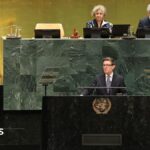
President Cyril Ramaphosa addressed the nation on September 15, condemning the killings as “a stain on our collective conscience” and promising that “no perpetrator will escape the full force of the law.” The president’s remarks came amid mounting pressure from opposition parties, civil‑society groups, and the African National Congress’s own Women’s League, all of which have accused the government of failing to protect women’s safety.
Ramaphosa’s pledge is politically significant because the next national elections are scheduled for 2029, and gender‑based violence has become a pivotal issue for younger voters, especially those in the diaspora who monitor South Africa’s human‑rights record. Analysts from the University of the Witwatersrand suggest that a perceived lack of action could erode the ANC’s traditional support base in key swing provinces such as Gauteng and Limpopo.
Economic and diaspora ramifications
Beyond the human tragedy, the spate of murders threatens South Africa’s economic reputation. The World Bank’s 2025 report warned that high crime rates, particularly gender‑based crimes, depress tourism revenues by up to 3% annually. For the South African diaspora, especially entrepreneurs and professionals in the United Kingdom, Canada, and the United Arab Emirates, safety concerns influence decisions about returning home or investing in local start‑ups.
Recent data from the South African Reserve Bank indicates that foreign direct investment (FDI) inflows fell by 4.2% in the first half of 2026, a dip partially attributed to “perceived social instability,” according to a statement from the Department of Trade and Industry. If the government fails to demonstrate tangible progress on protecting women, the trend could accelerate, undermining growth targets set for 2030.
What comes next: reforms, community action, and regional trends
In response to the crisis, the Ministry of Police announced a task force that will combine forensic specialists, gender‑based violence counselors, and community liaisons to fast‑track investigations. The task force is slated to release a public report within 90 days, outlining recommendations that could include expanding the National Register for Missing Persons and allocating additional funding to the Specialised Rapid Response Unit, which handles gender‑based crimes.
Civil‑society organisations are also mobilising. The #EndGBV coalition, which has chapters across South Africa and in diaspora hubs such as London’s Brixton district, plans a continent‑wide awareness campaign linking the Johannesburg case to similar patterns in Kenya, Nigeria, and Uganda. By highlighting that the problem transcends borders, activists hope to pressure regional bodies like the African Union to adopt a unified protocol for data sharing and victim support.
Quick Answers
How many women were found near Johannesburg in September 2026?
Five women, aged between 22 and 38, were discovered in a vacant lot on the outskirts of Johannesburg.
What has President Ramaphosa promised regarding the murders?
He pledged that no perpetrator will escape justice and ordered a rapid, transparent investigation.
Why does this case matter for South Africa’s economy?
High-profile gender‑based violence can deter tourism and foreign investment, contributing to a 4.2% drop in FDI in early 2026.
Source: www.bbc.co.uk


💬 Comments 0