Thai Buddhist monk arrested in $3 million embezzlement scandal with female accomplice, 2026
Background: The monk’s standing and Buddhism’s role in Thailand
In Thailand, Buddhist monks occupy a revered spot in society, often acting as moral guides, educators, and custodians of cultural heritage. The sangha, or monastic community, receives generous donations from laypeople, who view contributions as merit‑earning acts that support temples, charitable projects, and the monks’ modest daily needs.
The monk at the centre of this case had risen through the ranks of a prominent Bangkok temple, overseeing a charitable foundation that managed several community schools and health clinics. His public image was built on a pledge of celibacy and financial probity, qualities that attract both local worshippers and foreign tourists seeking authentic spiritual experiences.
Thailand’s tourism industry heavily markets its Buddhist sites, from the glittering Wat Phra Kaew to remote forest monasteries. Visitors often participate in almsgiving ceremonies, buying amulets, or donating to temple projects, making the financial health of monastic institutions a subtle but significant component of the country’s economy.
The scandal: $3 million missing and a filmed affair
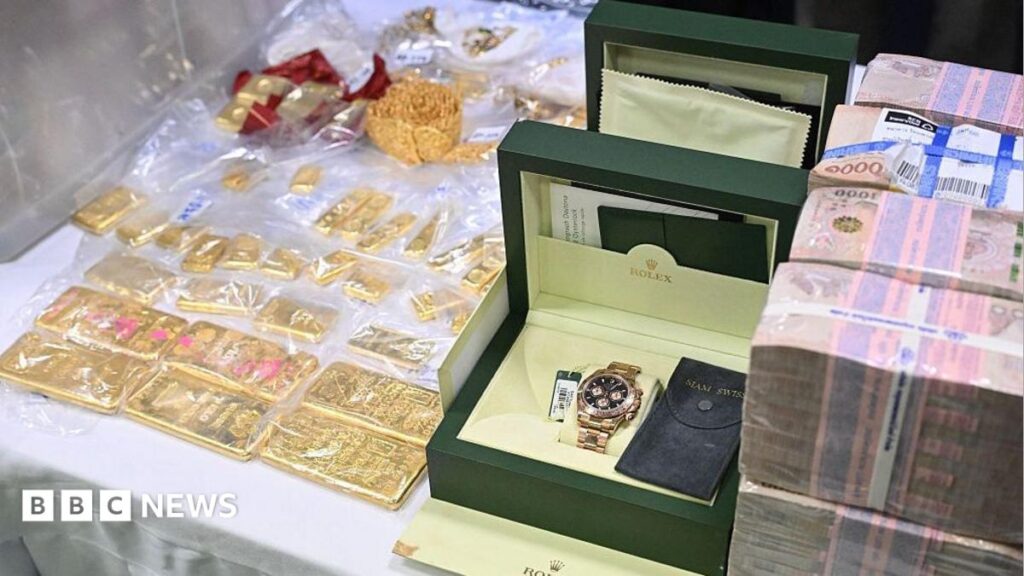
Police announced on September 10, 2026, that they had seized over $3 million in cash and bank records linked to the monk’s charitable foundation. Investigators allege that the funds were siphoned into personal accounts and used to purchase luxury items, a breach of Thailand’s strict regulations on monastic wealth.
In a shocking twist, authorities also released a video showing the monk in an intimate encounter with a woman later identified as a suspected accomplice. The footage, captured by a hidden camera inside a temple office, contradicts the monk’s vow of celibacy and has ignited public outrage across social media platforms.
The woman, whose identity has not been fully disclosed, was arrested alongside the monk on charges of fraud, illegal possession of temple assets, and violating the monastic code. Prosecutors say she helped conceal the financial trail by acting as a front for the monk’s personal expenditures.
Why it matters for Thailand: Trust, tourism, and political fallout
The scandal strikes at the heart of public confidence in the sangha, an institution that has historically been insulated from political interference. When a monk is implicated in both financial crime and sexual misconduct, it fuels calls for tighter oversight of temple finances and stricter enforcement of monastic discipline.
Tourism operators fear a dip in visitor numbers to Bangkok’s temple districts, where many travellers seek “spiritual tourism” experiences. According to the Tourism Authority of Thailand, temple visits account for roughly 12 % of cultural tourism revenue, and any erosion of the perceived sanctity of these sites could translate into measurable economic loss.
Politically, the case arrives at a time when the current government is promoting a “Moral Renewal” agenda, positioning Buddhism as a pillar of national identity. Opposition parties have already seized on the incident, demanding a parliamentary inquiry into temple funding and suggesting that the scandal could be leveraged to undermine the ruling coalition’s cultural narrative.
African Buddhist communities feel the ripple
While the scandal unfolds thousands of kilometres away, African Buddhist groups—particularly in South Africa, Ghana, and Kenya—are watching closely. These communities, many of which trace their lineage to Thai monastic teachers, rely on Thai temples for doctrinal guidance, training materials, and occasional financial support for local projects.
African lay donors who contribute to Thai‑based Buddhist charities may now reconsider their giving patterns, fearing misallocation of funds. A spokesperson for the South African Buddhist Association told local media that the group is reviewing its partnership agreements with Thai foundations to ensure greater transparency.
The episode also fuels a broader conversation about the localization of Buddhism in Africa. Scholars argue that reliance on foreign monastic structures can create vulnerabilities when scandals arise abroad, prompting a push for indigenous ordination lines and home‑grown governance models that are less dependent on distant hierarchies.
A global pattern: Religious leaders under financial scrutiny
The Thai monk’s case adds to a growing list of high‑profile religious financial scandals, from the Vatican’s 2023 money‑laundering probe to the 2025 embezzlement case involving a prominent Nigerian pastor. These incidents highlight a worldwide demand for greater fiscal accountability within faith‑based organisations.
Experts note that the rise of digital banking and crowdfunding platforms has made large sums move more quickly, but also leaves clearer audit trails for investigators. In response, several religious bodies are adopting international accounting standards and appointing independent auditors, a trend that could reshape how temples, churches, and mosques manage donations.
For Buddhist institutions, the challenge is two‑fold: preserving the traditional simplicity that defines monastic life while meeting modern expectations for financial disclosure. The International Buddhist Confederation has already drafted a set of best‑practice guidelines, urging national sanghas to publish annual financial statements and to separate monastic assets from commercial enterprises.
What’s next: Legal outcomes and possible reforms
The monk is currently being held in Bangkok’s central detention centre pending a formal charge sheet. Legal analysts predict a trial that could extend into 2027, given the complexity of tracing the alleged $3 million through multiple shell companies. If convicted, the monk faces a maximum sentence of ten years under Thailand’s Criminal Code for fraud and breach of monastic discipline.
In the wake of the arrests, the Thai Sangha Supreme Council announced an emergency meeting to review its financial oversight mechanisms. Sources say the council is considering mandatory quarterly audits for all temples receiving donations exceeding 1 million baht, as well as stricter vetting of lay volunteers who handle cash.
For African Buddhist organisations, the coming months will be a test of resilience. Many are expected to diversify funding sources, increase local fundraising, and adopt the new audit guidelines voluntarily to reassure their members. The scandal, while damaging, could ultimately accelerate a shift toward more transparent and self‑sufficient Buddhist practice across the continent.
Quick Answers
What amount of money is the Thai monk accused of embezzling?
He is alleged to have misappropriated roughly $3 million from his temple’s charitable foundation.
How could the scandal affect African Buddhist communities?
It may prompt African groups to reassess financial ties with Thai temples, push for local governance, and adopt stricter transparency standards.
What legal penalties could the monk face if convicted?
Under Thai law, he could receive up to ten years in prison for fraud and violations of monastic discipline.
Source: www.bbc.co.uk




💬 Comments 0