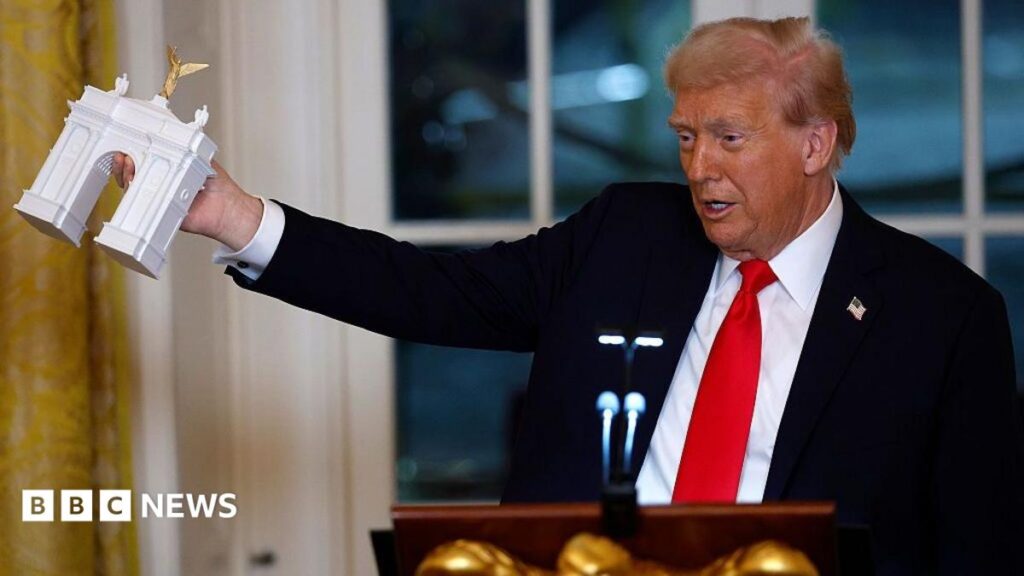
Trump says his planned triumphal arch will double as a military ammunition complex, 2026
Background: Trump’s Monumental Ambitions
Since leaving office, former President Donald Trump has floated a series of grandiose projects aimed at reshaping his legacy. One of the most talked‑about ideas is a 150‑foot triumphal arch in Washington, D.C., meant to echo the grandeur of Paris’s Arc de Triomphe while proclaiming a "victorious" America. The concept first surfaced in a 2024 interview where Trump hinted at a private‑funded monument that would become a tourist draw and a symbol of his “America First” ethos. The plan has never moved beyond sketches, but it resurfaced this month with a surprising twist.
In a brief televised appearance on September 18, Trump announced that the arch’s design had been altered at the request of the U.S. military. He claimed the structure would now serve a dual purpose: a civilian monument and a secure facility for storing ammunition. The statement, which appeared on his social‑media platform Truth Social, sparked immediate media attention and raised eyebrows among defense analysts who have not confirmed any formal request from the Pentagon.
The New Dual‑Use Design: Arch Meets Ammunition Depot
According to Trump, the updated blueprints include reinforced concrete walls, blast‑resistant doors, and an underground vault capable of holding tens of thousands of rounds of small‑arms and artillery ammunition. He said the military’s involvement was driven by "national security" concerns, arguing that a high‑profile, centrally located depot would streamline logistics for rapid deployment. The former president also suggested that the arch’s height would provide a natural observation point for monitoring surrounding airspace.
Critics point out that the concept blurs the line between civilian infrastructure and military assets, a practice that could make the site a potential target in a conflict. Defense experts, quoted by Reuters, note that integrating a munitions depot into a public monument would require extensive security clearances, strict compliance with the National Industrial Security Program, and coordination with the Department of Defense’s Installation Management Command. No official documents confirming such a partnership have been released, leaving the claim largely unverified.
Why It Matters: Security, Symbolism and Politics
If the arch were to become a functional ammunition storage site, it would raise significant security questions. Housing munitions in the nation’s capital could create a high‑value target for hostile actors, potentially necessitating additional law‑enforcement and National Guard deployments. Moreover, the move could set a precedent for other public monuments to serve covert defense purposes, complicating the legal framework that separates civilian spaces from military installations under the Posse Comitatus Act.
Politically, the proposal reinforces Trump’s pattern of using architecture as a vehicle for personal branding. Past projects, such as the proposed “Trump Tower” on the National Mall, were dismissed as vanity. By coupling a patriotic symbol with a military function, Trump attempts to merge his nationalist rhetoric with tangible defense contributions, positioning himself as a defender of national security even after his presidency. This narrative may resonate with his base, but it also fuels concerns about the politicization of defense infrastructure.
Reactions at Home and Abroad
Domestically, the response has been mixed. Some Republican lawmakers praised the idea as a bold statement of American strength, while others warned that the plan could jeopardize the safety of the capital’s residents. A spokesperson for the House Committee on Armed Services told the Associated Press that any modification to a federal property would require a thorough congressional review and an environmental impact assessment. Civil liberties groups, including the ACLU, issued a statement urging transparency, arguing that “embedding military assets in public monuments erodes the openness that defines our democratic spaces.”
Internationally, the announcement has been noted by defense observers in Europe and Africa alike. European analysts see the dual‑use concept as reflective of a broader trend where nations blend civilian infrastructure with strategic assets to deter adversaries. In Africa, several security ministries have expressed curiosity about the United States’ evolving approach to force posture, given the increasing competition for influence on the continent. The move could signal a willingness by the U.S. to embed logistical capabilities closer to potential theaters of operation, a notion that African partners are monitoring closely.
Implications for Africa and the Diaspora
For African nations, the United States’ emphasis on rapid ammunition storage and deployment may translate into heightened expectations for logistical support in joint operations, especially in regions like the Sahel where counter‑terrorism missions are ongoing. If the arch’s design proves feasible, it could inspire similar dual‑purpose facilities in U.S. bases across Africa, potentially reshaping how American forces manage supply chains on the continent. This shift might affect existing defense contracts with African defense firms that provide ammunition handling and storage services, either creating new market opportunities or intensifying competition.
The African diaspora in the United States is also watching the story unfold. Community leaders have historically been vocal about U.S. foreign policy in Africa, advocating for responsible engagement that prioritizes development over militarization. The notion of a high‑profile U.S. monument doubling as a weapons depot could fuel concerns that American policy is increasingly militarized, which may influence diaspora activism around issues such as the U.S. military presence in Somalia or the Democratic Republic of Congo. Social media commentary from diaspora groups has already framed the arch as a “symbol of war” rather than unity.
What Comes Next: Funding, Legal Hurdles and Timeline
The financial blueprint for the project remains opaque. Trump has claimed that private donors will cover construction costs, but integrating a military vault would likely require federal appropriations for security upgrades, a point that the Pentagon has not confirmed. Congressional oversight committees are expected to request a detailed budget breakdown before any funds can be allocated, especially if the Department of Defense must certify the storage facility. The National Environmental Policy Act (NEPA) process could also add months, if not years, to the timeline, as environmental impact statements would be mandatory for any construction in the capital’s historic district.
Legal challenges could emerge from historic preservation societies, which argue that the arch would alter the visual integrity of the National Mall. Additionally, any attempt to designate the structure as a military installation would trigger jurisdictional disputes between the Department of Defense, the Department of the Interior, and local authorities. As of now, no formal permits have been filed, and the project's feasibility hinges on a series of approvals that could stall the venture indefinitely. Observers suggest that the announcement may be as much a political signal as a concrete construction plan, intended to keep Trump in the national security conversation ahead of the 2028 election cycle.
Quick Answers
What is the purpose of Trump’s proposed triumphal arch?
Trump says the arch will serve as both a patriotic monument and a military complex to store ammunition.
How could the dual‑use design affect U.S. defense spending?
Adding a secure ammunition depot to a civilian monument would raise construction costs and likely require additional defense budget allocations.
Will the plan have any impact on African security partnerships?
If the arch houses U.S. munitions, it could signal a broader push to position American forces nearer strategic regions, influencing future defense collaborations with African nations.
Source: www.bbc.co.uk




💬 Comments 0