Uganda 2026: General Muhoozi Kainerugaba’s threats, VP warning and generals’ arrests
A volatile backdrop: Museveni’s three‑decade rule and the succession question
Since 1986, President Yoweri Museveni has steered Uganda through wars, economic reforms and a controversial constitutional amendment that removed age limits for the presidency. The 2021 election cemented his seventh term, but the absence of a clear successor has turned succession into a political fault line, especially as the president approaches his mid‑80s.
Opposition parties and civil‑society groups have long warned that a dynastic hand‑over would undermine Uganda’s democratic trajectory. Analysts note that the lack of an institutionalized transition mechanism makes any informal grooming of a family member a flashpoint for both the military and the public, a dynamic that has resurfaced repeatedly over the past decade.
The 2026 political climate is further charged by a series of high‑profile corruption scandals and a slowdown in foreign direct investment, factors that have amplified public impatience with a regime that appears to be planning its own continuity rather than addressing pressing governance gaps.
Muhoozi’s rise: military clout, social‑media bravado and the VP warning
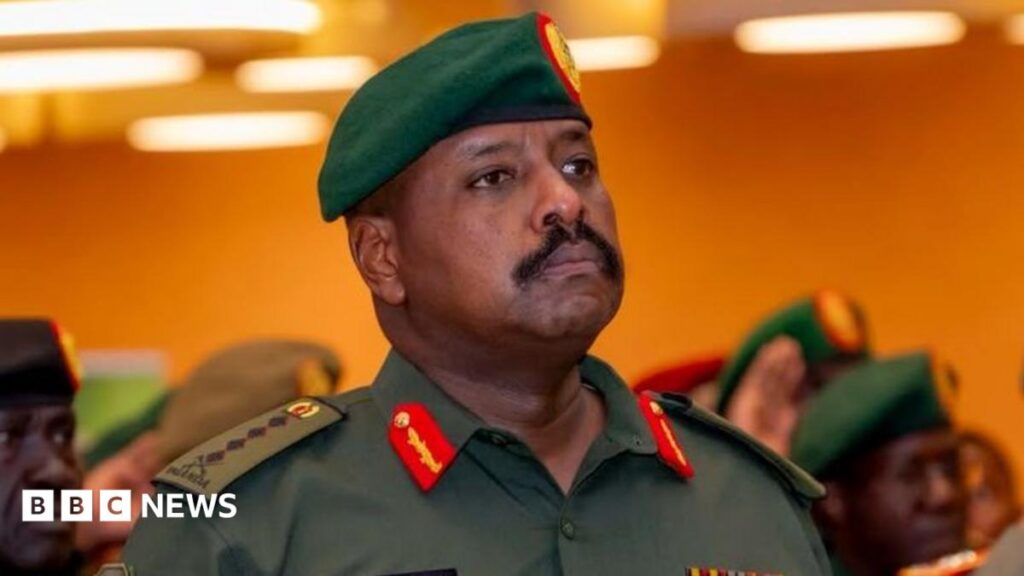
General Muhoozi Kainerugaba, the president’s 52‑year‑old son, commands the Uganda People’s Defence Forces (UPDF) as its deputy commander. His rapid promotion from a junior officer to the top of the army hierarchy has been justified by the president as a merit‑based decision, but critics argue it is a clear step toward a family succession plan.
Since early 2026 Muhoozi has used his personal X (formerly Twitter) account to post a series of assertive messages that blend nationalist rhetoric with veiled threats to political opponents. In March, he warned that any attempt to “undermine the nation’s stability” would be met with “swift and decisive” military action, a line that was widely interpreted as a warning to the vice president, Jessica Alupo.
Vice President Alupo, who has been positioned as a potential civilian successor, publicly rebuked the general’s statements at a parliamentary hearing, calling them “incompatible with democratic governance.” Sources close to the VP’s office say the exchange marked the first open rift between the two most powerful figures in the ruling circle.
The crackdown on senior officers: arrests that signal internal fissures
In the weeks following Muhoozi’s statements, the Ministry of Defence announced the detention of three senior officers—Brigadier Charles Buwembo, Colonel Jane Opiyo and Lieutenant‑General Samuel Kato—for allegedly plotting a coup. The arrests were carried out without public charges, a move that human‑rights groups described as “a chilling reminder of the regime’s intolerance for dissent within its own ranks.”
According to a report by the African Centre for the Study of the Armed Forces, the detained officers are believed to have been part of a faction that opposed the overt militarisation of politics and feared that Muhoozi’s ascendancy could marginalise professional soldiers who are not kin to the president. The lack of transparency surrounding the case has fueled speculation that the crackdown is as much about silencing rival power bases as it is about preventing an actual plot.
The episode has reverberated beyond the barracks. Investors in Uganda’s sovereign bonds noted a spike in yields the day after the arrests, while the East African Community’s secretariat warned that internal instability could jeopardise cross‑border trade projects slated for completion by 2028.
Why the drama matters for Uganda and the wider Great Lakes region
Uganda sits at the heart of the Great Lakes economic corridor, a hub for coffee, oil and a growing tech sector. Political turbulence in Kampala threatens supply‑chain continuity for regional exporters and could prompt a re‑routing of investment toward more stable neighbours such as Rwanda or Kenya. Analysts at Standard Bank note that a protracted power struggle could shave as much as 0.5 percentage points off Uganda’s projected GDP growth for 2027.
Security experts also point to the risk of spill‑over into bordering conflict zones in the Democratic Republic of Congo and South Sudan. A militarised succession battle could embolden rebel groups that have historically used Ugandan territory as a sanctuary, potentially reigniting cross‑border insurgencies that have been largely dormant since the 2020 peace accords.
For the Ugandan diaspora—estimated at over 2 million people across the UK, Canada and the United States—the stakes are personal. Remittances account for roughly 15 percent of Uganda’s foreign‑exchange earnings, and any downturn in confidence could translate into reduced cash flows, affecting households that rely on overseas money for education and health care.
What could happen next: scenarios and the diaspora’s stake
One plausible scenario is a negotiated hand‑over in which Muhoozi is positioned as a defence minister while a civilian, possibly Alupo, assumes the presidency after a constitutional amendment. This compromise would aim to placate both the military elite and international donors who have repeatedly warned against a hereditary transfer of power.
A less optimistic outlook envisions an outright confrontation between Muhoozi’s loyalists and the civilian faction, potentially leading to a short‑lived coup or a forced resignation of the president. In such a case, the immediate fallout would likely include curfews, internet blackouts and a surge in refugee flows toward neighbouring Tanzania and Kenya.
Regardless of the path, the diaspora is poised to play a decisive role. Ugandan NGOs in the UK have already launched a coordinated advocacy campaign urging the African Union to mediate, while diaspora business chambers are warning investors that “political risk premiums will rise dramatically if the succession is handled through force.” Their lobbying could shape the narrative that international partners present to Kampala in the coming months.
Quick Answers
Who is General Muhoozi Kainerugaba?
He is the 52‑year‑old son of President Yoweri Museveni and Uganda’s deputy commander of the armed forces.
Why are the arrests of senior Ugandan generals significant?
The detentions suggest deep divisions within the military over a possible dynastic succession and have raised concerns about political stability and investor confidence.
How could the succession dispute affect Ugandan diaspora remittances?
Instability could depress investor sentiment and lower foreign‑exchange earnings, prompting diaspora families to hold back or reduce the money they send home.
Source: www.bbc.co.uk




💬 Comments 0