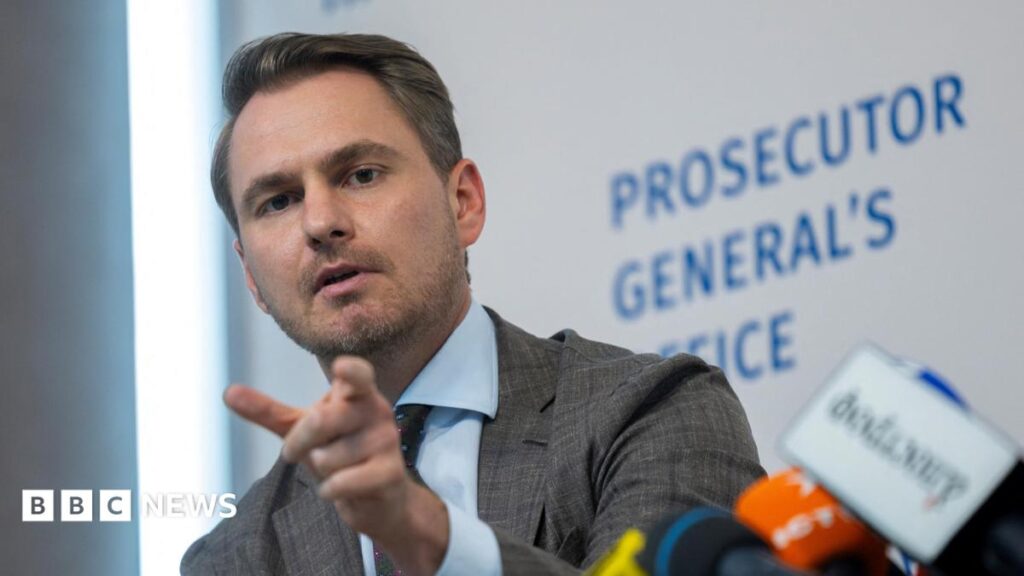
Ukraine chief prosecutor Ruslan Kravchenko resigns over call centre corruption scandal 2026
Background: Ukraine’s anti‑corruption overhaul
Since the 2014 Maidan revolution, Kyiv has marketed itself as a reform‑driven state eager to shed the legacy of entrenched graft. International donors, the European Union and the International Monetary Fund have tied billions of dollars of assistance to concrete anti‑corruption milestones, making the prosecutor’s office a focal point of scrutiny.
The General Prosecutor’s Office, restructured in 2016, was tasked with overseeing high‑profile investigations into money laundering, judicial manipulation and illicit procurement. Successes, such as the conviction of former officials linked to the 2014 conflict, have been touted as proof of progress, while setbacks have repeatedly triggered political crises.
Against this backdrop, the appointment of Ruslan Kravchenko in 2022 was seen as a signal that the government still valued continuity. Kravchenko, a career prosecutor, had previously headed anti‑organized‑crime units and was credited with modernising case‑management software.
The call centre scandal and Kravchenko’s resignation
In early July 2026, investigative journalists from the Ukrainian outlet *Ukrainska Pravda* exposed a network of call centres that allegedly siphoned off funds meant for victims of the ongoing war in the east. The centres, masquerading as helplines for displaced families, were accused of charging fees for services that were supposed to be free, diverting money into private accounts.
The scandal quickly escalated when a parliamentary inquiry linked the operation to senior officials within the prosecutor’s office, suggesting that the scheme had been protected from law‑enforcement scrutiny. Kravchenko was summoned for questioning, and the public pressure intensified after a leaked audio recording implied that he had been aware of the illicit activity.
On 7 September 2026, Kravchenko submitted his resignation letter, stating that he did not want his office "to be used as a tool in political confrontation". He denied any personal involvement in the fraud, but the resignation was widely interpreted as an admission that the scandal had become a political liability for the government.
Why the resignation matters for Ukraine’s reform agenda
The departure of the chief prosecutor at a time when Kyiv is negotiating the next tranche of EU assistance threatens to stall key anti‑corruption benchmarks. The European Commission has warned that any perceived backsliding could delay the accession roadmap, which many Ukrainians view as a pathway to economic stability.
Investor confidence is also at stake. Ukraine’s agricultural export sector, which relies heavily on foreign capital—including African agribusiness firms looking to source wheat and sunflower oil—depends on a predictable legal environment. Corruption scandals erode trust and may push prospective investors to look elsewhere, especially as the global market tightens after the pandemic‑driven commodity surge.
Domestically, the scandal fuels public cynicism. Polls conducted by the Kyiv International Institute of Sociology in August 2026 showed that 62% of respondents believed the justice system was still dominated by “old‑boys’ networks”. Kravchenko’s exit could either be a catalyst for deeper reforms or a convenient scapegoat that leaves systemic issues untouched.
African interests: investors, diaspora and the wider continent
African investors have been eyeing Ukraine’s fertile black‑soil regions for joint‑venture projects in grain processing and bio‑fuel production. Companies from Nigeria, Kenya and South Africa have signed memoranda of understanding with Ukrainian agribusinesses, betting on the country’s reputation for high yields. A corruption probe that reaches the highest prosecutorial level raises red flags for risk‑averse African financiers.
The Ukrainian diaspora in Canada, the United States and the United Kingdom includes a growing number of African professionals—engineers, doctors and IT specialists—who send remittances back home. Their confidence in Ukraine’s stability influences how much they are willing to invest in community projects or support relatives living in war‑affected zones.
Moreover, the scandal underscores a broader lesson for African reformers. Many African states are currently negotiating aid packages that tie disbursement to anti‑corruption performance. Ukraine’s experience illustrates how fragile gains can be when oversight bodies are compromised, a cautionary tale for ministries of justice across the continent.
What’s next for the prosecutor’s office and Ukraine’s justice system
President Volodymyr Zelenskyy announced on 9 September that an interim chief prosecutor would be appointed within 48 hours, emphasizing continuity of ongoing investigations. Legal scholars, such as Professor Olena Shevchenko of Kyiv University, argue that the appointment must be transparent to restore credibility and to satisfy EU monitoring teams.
Parliament is expected to pass a package of amendments aimed at tightening oversight of the prosecutor’s budget and establishing an independent ethics commission. If enacted, these reforms could prevent future “call‑centre” style schemes by limiting discretionary spending and mandating regular audits.
International watchdogs, including Transparency International’s Ukrainian chapter, have called for a full public inquiry into the scandal. Their recommendation is that any findings be published in both Ukrainian and English to allow foreign partners, including African investors, to assess the risk landscape accurately.
Quick Answers
Q: Why did Ruslan Kravchenko resign as Ukraine’s chief prosecutor?
A: He stepped down amid allegations that a network of fraudulent call centres operated with the knowledge of senior prosecutors, and he said he did not want his office used for political confrontation.
Q: How could the resignation affect African investors?
A: The scandal may increase perceived legal risk for African firms eyeing joint ventures in Ukraine’s agriculture sector, potentially prompting them to delay or renegotiate deals.
Q: What reforms are being discussed to prevent similar scandals?
A: Ukraine is considering tighter budget oversight of the prosecutor’s office, an independent ethics commission, and mandatory public audits to improve transparency.
Quick Answers
Why did Ruslan Kravchenko resign as Ukraine’s chief prosecutor?
He resigned after a parliamentary inquiry linked senior prosecutors to a fraudulent call‑centre scheme, and he said he did not want his office used for political confrontation.
How could the resignation affect African investors?
The scandal raises concerns about legal certainty in Ukraine, which may cause African agribusinesses and other investors to pause or re‑evaluate projects that rely on a stable anti‑corruption environment.
What reforms are being discussed to prevent similar scandals?
Ukraine is debating tighter budget controls for the prosecutor’s office, creation of an independent ethics commission, and mandatory public audits to increase transparency.
Source: www.bbc.co.uk



💬 Comments 0