Ukraine sinks Russian battleship in Libya port 2026: ripple effects for African security, oil markets and the wider war
Background: the war has moved beyond Ukraine’s borders
Since Russia’s full‑scale invasion of Ukraine in February 2022, the conflict has gradually spilled into neighboring regions, from the Black Sea to the Balkans and now the Mediterranean coast of North Africa. The latest episode – a Ukrainian strike that sank a Russian warship docked at the port of Derna, Libya – marks the first confirmed naval engagement involving a Russian vessel on African soil.
Derna, a city that has long been a flashpoint in Libya’s civil war, hosts a commercial harbour that handles a modest share of the country’s oil exports. The Russian vessel, identified by the Russian Ministry of Defence as the cruiser "Moskva‑II," was reportedly undergoing repairs after sustaining damage in the Black Sea. Ukrainian forces, using long‑range anti‑ship missiles launched from a coastal battery, were able to strike the ship while it lay idle in the harbour.
What happened: the strike and its immediate fallout
According to a statement released by the Ukrainian General Staff, the missile system used was the domestically produced Neptune‑V, capable of striking targets up to 300 kilometres away. Ukrainian officials claim the missile was fired from a concealed position on the Libyan coast, with the operation coordinated through intelligence shared by Western allies.
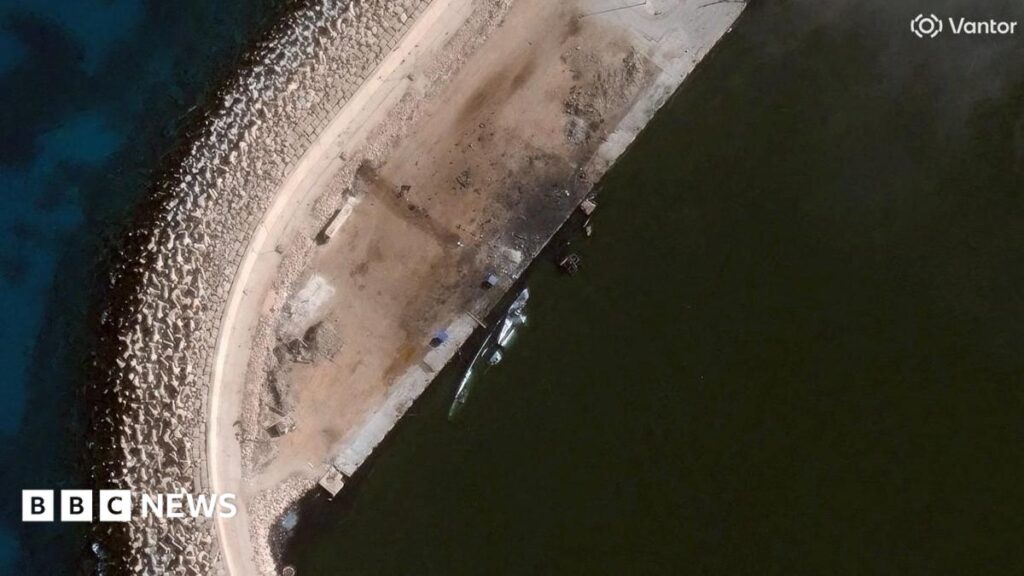
Russian media initially downplayed the loss, describing it as “a minor incident” that would not affect Russia’s naval capabilities. However, satellite imagery analysed by independent observers shows the cruiser partially submerged and the surrounding quay littered with debris. The incident prompted an emergency response from the Libyan Coast Guard, which evacuated nearby workers and secured the area to prevent further escalation.
Why it matters: strategic, economic and diplomatic implications
Strategically, the strike demonstrates Ukraine’s willingness to expand the battlefield into the Mediterranean, a region where Russia has cultivated naval footholds to protect its oil shipments from the Black Sea. By targeting a Russian vessel in Libya, Kyiv signals that any Russian asset operating outside the immediate war zone is now a potential target, complicating Moscow’s logistical calculations.
Economically, the incident could reverberate through African oil markets. Libya, despite its internal divisions, remains a key exporter of light crude to Europe. The temporary shutdown of the Derna port may force exporters to reroute shipments through the larger ports of Tripoli and Ras Lanuf, adding transit time and cost. Analysts at the African Development Bank warn that any disruption to Libyan oil flows could tighten global supply, potentially nudging crude prices upward at a time when many African economies are already grappling with inflation.
Diplomatically, the strike places the Libyan Government of National Unity (GNU) in a delicate position. While the GNU has welcomed international support to rebuild the country’s shattered infrastructure, it also relies on Russian military contractors for security assistance. The presence of Ukrainian forces on Libyan soil, even indirectly, may force the GNU to recalibrate its foreign‑policy balancing act between Moscow and the West.
African and diaspora reactions: security, migration and perception
The African Union’s Peace and Security Council issued a brief statement urging “all parties to respect the sovereignty of African states and avoid the export of external conflicts onto the continent.” Regional security experts note that Libya’s fragile stability is already threatened by rival militias, and an escalation involving Ukrainian and Russian forces could ignite a broader proxy war that would draw in other external actors, including Turkey and the United Arab Emirates.
For the African diaspora in Europe, especially those with family ties to Libya, the incident raises concerns about the safety of migrants crossing the Mediterranean. The International Organization for Migration (IOM) has warned that heightened naval activity could lead to stricter patrols, making illegal crossings riskier and potentially prompting a surge in refugee applications to European Union countries.
Meanwhile, African artists and creators are beginning to reference the event in their work. A Lagos‑based graffiti collective, "Coastline," unveiled a mural in early December depicting a stylised Ukrainian trident clashing with a Russian bear over a map of the Mediterranean, underscoring how the war’s imagery is resonating far beyond Eastern Europe.
What comes next: possible scenarios and policy choices
In the short term, the most likely outcome is a diplomatic protest from Russia, demanding compensation and a security guarantee for its remaining vessels operating in the Mediterranean. Moscow may also increase its naval presence around the Libyan coast, potentially deploying additional frigates or submarines to deter further attacks.
Long‑term, the incident could push the European Union to formalise a maritime security framework for the Southern Mediterranean, integrating NATO assets with African naval forces. Such a framework would aim to protect commercial shipping lanes while preventing the region from becoming a theater for great‑power confrontation.
For Ukraine, the success of the Derna strike could embolden its military planners to consider further operations targeting Russian logistics in North Africa, especially as the country seeks to weaken Moscow’s ability to sustain its war effort. However, any escalation must be weighed against the risk of alienating African states that prefer to stay neutral.
Quick Answers
Which Russian ship was sunk by Ukraine in Libya?
The vessel was the Russian cruiser Moskva‑II, which was docked for repairs at the Libyan port of Derna.
How could the strike affect oil prices in Africa?
A temporary closure of Derna’s harbour may force Libyan exporters to use longer routes, tightening global supply and potentially nudging crude prices higher.
What does the incident mean for Libya’s security?
It adds a new external dimension to Libya’s internal conflict, risking a proxy confrontation between Ukraine and Russia that could destabilise the fragile peace process.
Source: www.bbc.co.uk



💬 Comments 0