UN adopts new world map reflecting Africa’s true size after 164‑nation vote, Togo resolution 2026
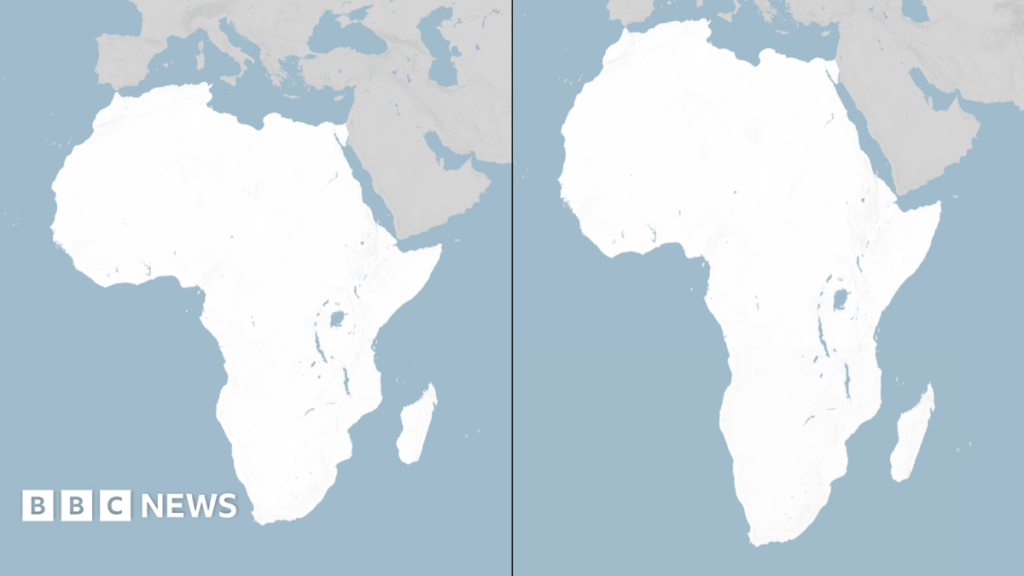
Background: The map distortion debate
For decades, the Mercator projection has been the default in classrooms, textbooks and news graphics, stretching continents near the poles and shrinking those close to the equator. Critics argue that this visual bias reinforces a Euro‑centric worldview, making Africa appear smaller than its actual landmass and population.
African scholars, educators and activists have long campaigned for a more accurate representation, citing studies that show distorted maps affect perceptions of economic power, historical contributions and geopolitical relevance. The debate gained renewed momentum after a 2020 UNESCO report linked map bias to reduced foreign investment in sub‑Saharan Africa.
In response, several African Union (AU) member states began lobbying within the United Nations for a formal resolution that would endorse a new, proportionate world map. The effort culminated in a proposal championed by Togo, which framed the issue as both a matter of scientific accuracy and cultural dignity.
The Togo‑sponsored resolution and the vote
On 3 September 2026, the UN General Assembly convened to consider the resolution titled “Adoption of a Revised World Map Reflecting Accurate Continental Proportions.” The text called for all UN bodies, educational agencies and affiliated organizations to replace the Mercator‑style map with a Gall–Peters‑type projection that shows Africa’s true size relative to other continents.
The vote was decisive: 164 member states supported the resolution, while the United States cast the sole dissenting vote. According to the UN press release, the remaining 10 members either abstained or were absent. Togo’s ambassador, Kossi Adé, described the outcome as “a historic affirmation of Africa’s rightful place on the global stage.”
The United States, as reported by The Washington Post, opposed the measure on the grounds that the UN should not dictate cartographic standards, arguing that individual countries retain the freedom to choose map projections for internal use.
Why the new map matters for Africa and the world
A more accurate map does more than correct a visual error; it reshapes narratives about power, development and identity. When Africa is shown at its real scale, the continent’s resource wealth, demographic weight and market potential become harder to ignore for policymakers and investors.
Education is a key arena where the change could have lasting impact. UNESCO has pledged to incorporate the revised map into curricula across member states, meaning a generation of African students will grow up seeing their continent in proportion, potentially boosting confidence and ambition.
Beyond Africa, the decision signals a broader shift in how international institutions address long‑standing Eurocentric biases. Similar calls have emerged for revising historical timelines, language representation and climate‑change data visualisation, suggesting a wave of de‑colonial reforms.
Economic, diplomatic and cultural ripple effects
Financial markets are already reacting. Analysts at the African Development Bank noted that a clearer visual of Africa’s size could improve risk assessments for infrastructure projects, as investors often rely on visual cues when scanning country profiles.
Diplomatically, the vote strengthens the AU’s leverage in multilateral negotiations. By securing a UN‑wide endorsement, African states can argue that their geographic reality now matches the diplomatic language used in trade agreements and climate accords.
Culturally, the new map is being celebrated by African artists and designers. A wave of merchandise—posters, apparel and digital wallpapers—has already hit online platforms, turning the map into a symbol of pride and a tool for soft power outreach across the diaspora.
What comes next: implementation and challenges
The resolution does not mandate an immediate overhaul of all existing maps, but it asks UN agencies to adopt the revised projection within twelve months. Implementation will require coordinated updates to digital databases, satellite imagery overlays and printed materials, a task that could strain the budgets of smaller UN bodies.
Critics warn that the Gall–Peters projection, while proportionate, distorts shapes and angles, potentially complicating navigation and certain scientific applications. Cartographers suggest a hybrid approach, using the new map for educational and diplomatic contexts while retaining the Mercator for technical uses.
For African governments, the next step is domestic adoption. Ministries of education in Nigeria, Kenya and South Africa have announced pilot programmes to replace textbooks with the new map by the start of the 2027 academic year. Success will depend on teacher training, printing costs and the willingness of local publishers to embrace the change.
Quick Answers
What did the UN vote on regarding world maps in September 2026?
The UN General Assembly adopted a resolution urging all UN bodies and affiliated agencies to replace the Mercator‑style map with a proportionate projection that accurately shows Africa’s true size.
How many countries supported the Togo‑sponsored resolution?
A total of 164 UN member states voted in favour of the resolution, with only the United States voting against it.
What impact could the new map have on Africa’s global perception?
By displaying Africa at its real scale, the map can enhance the continent’s perceived economic potential, strengthen cultural pride, and support diplomatic arguments for equitable treatment in international agreements.
Source: www.bbc.co.uk


💬 Comments 0