US Army declares 2026 Iowa controlled blast a huge success with zero lead detection
Why the Iowa blast matters beyond the test range
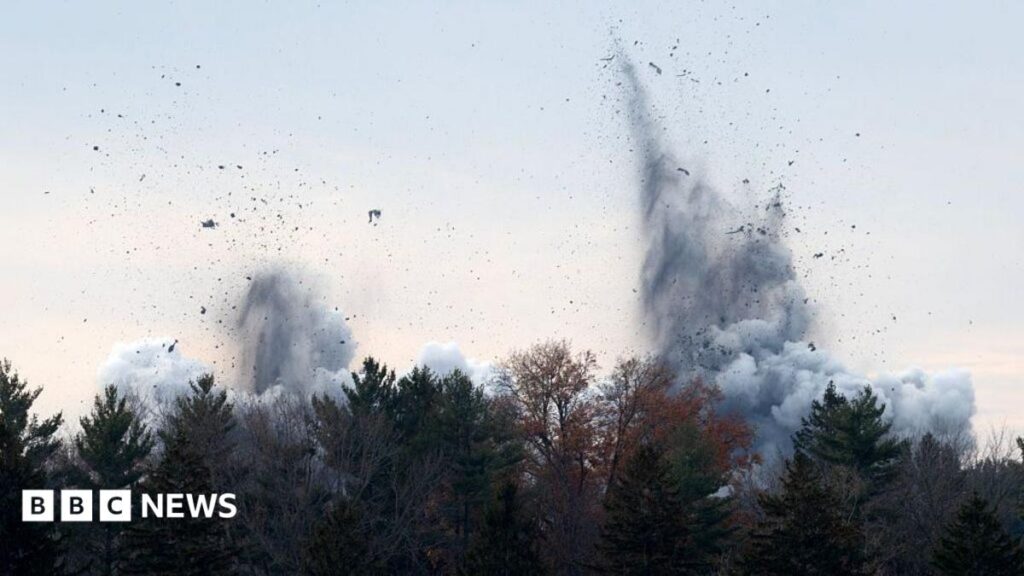
On 12 November 2026 the US Army completed a controlled detonation of a 250‑kilogram charge at the Iowa National Guard training center, describing the operation as a "huge success". The primary objective was to validate a new low‑smoke, lead‑free explosive formulation that could reduce health risks for soldiers and nearby communities while still delivering realistic blast effects for training.
Beyond the technical win, the test addresses a growing public concern about contamination from legacy munitions. Residents of the surrounding towns had long feared that routine explosions could leach lead into soil and water, a worry amplified by past incidents at other US ranges. The Army’s post‑detonation surveys, which found no detectable lead residues, aim to restore confidence and set a benchmark for future exercises.
The success also has budgetary implications. If the new formulation proves cost‑effective, it could replace older, lead‑based explosives across the Department of Defense, potentially saving billions in cleanup and health‑care expenses over the next decade. This shift aligns with broader Pentagon initiatives to modernise training while meeting stricter environmental standards.
From the Midwest to Africa: sharing blast‑control technology
American military training programs have long involved partners from the African continent, especially nations contributing troops to United Nations peacekeeping missions. The US Army’s Joint Readiness Training Center in Fort Polk, for example, regularly hosts soldiers from Nigeria, Kenya and Ghana for live‑fire exercises.
According to a statement from the US Army Training and Doctrine Command, the Iowa test will be incorporated into the curriculum for allied forces beginning in 2027. African troops could therefore train with explosives that produce realistic shock waves without the environmental footprint of traditional munitions, a benefit for host nations that often lack the capacity for extensive remediation.
The technology transfer also opens commercial opportunities for African defence manufacturers. Several firms in South Africa’s arms sector have expressed interest in licensing the low‑lead formulation, seeing it as a way to meet both export standards and domestic environmental regulations.
Environmental vigilance: lead concerns echo African mining sites
Lead contamination is not a new problem for Africa. In the Democratic Republic of Congo, artisanal gold mining has left swathes of soil with hazardous lead levels, affecting children’s health in mining communities. The Iowa test’s clean‑up‑free result resonates with activists on the continent who demand stricter controls on any activity that could introduce heavy metals into ecosystems.
Environmental NGOs in Nigeria have cited the US test as a case study for how modern explosives can be designed to minimise toxic by‑products. In a recent briefing, the Nigerian Environmental Study/Action Team (NEST) suggested that local militaries adopt similar standards to avoid the costly remediation seen after decades of using lead‑laden ammunition.
While the US Army’s data are still being peer‑reviewed, the immediate absence of detectable lead offers a tangible proof point for policymakers in African nations who are negotiating the terms of foreign‑provided training equipment.
Implications for US‑African defence cooperation
The successful Iowa blast could act as a catalyst for deeper defence collaboration between Washington and African capitals. The United States has pledged $1.2 billion under the Africa Defense Partnership Initiative for training, equipment and joint research, and the new explosive technology fits neatly into that portfolio.
For African militaries, adopting low‑lead munitions may improve troop health outcomes, especially in hot, dusty environments where inhalation risks are already high. A senior officer in the Kenyan Defence Forces told reporters that “cleaner training rounds mean fewer respiratory problems for our soldiers, which translates to better readiness on the ground.”
Conversely, the US gains a strategic advantage by standardising safer explosives across its partner forces, simplifying logistics and reducing the political fallout that can arise when training accidents cause environmental damage in host nations.
What comes next for US training and African partners
The Army plans a series of follow‑up tests later this year at Fort Bragg and the Nevada National Security Site, each designed to fine‑tune the charge composition for different terrain types. Data from those exercises will be shared with allied training centres, including the African Joint Training Centre in Ethiopia, which is slated to receive its first batch of low‑lead munitions in early 2028.
African defence ministries are expected to draft new procurement guidelines that reference the Iowa findings. In South Africa, the Department of Defence has already opened a public consultation on updating its explosives standards, inviting input from both industry and civil‑society groups.
If the rollout proceeds smoothly, the ripple effect could extend beyond the military sphere. Cleaner blast technology may find civilian applications in construction, mining and disaster‑relief demolition across the continent, offering a greener alternative to traditional explosives that have long been a source of pollution.
Quick Answers
Did the Iowa blast release any lead into the environment?
No, post‑detonation testing found no detectable lead in soil or water around the site.
How will the new explosive formulation affect African troops training with the US?
African soldiers will train with low‑smoke, lead‑free charges, reducing health risks and easing environmental concerns in host countries.
When will African nations start receiving the new low‑lead munitions?
The first shipments are expected in early 2028, following the Army’s scheduled follow‑up tests later in 2026.
Source: www.bbc.co.uk



💬 Comments 0