US envoys arrive in Moscow for Ukraine talks with Putin, Kushner heads to Dublin to meet Zelensky
Background: A stalled peace process
Since Russia’s full‑scale invasion of Ukraine in February 2022, diplomatic attempts to end the conflict have been punctuated by high‑profile summits, back‑channel exchanges and periodic cease‑fire talks that never quite stuck. The United States, after years of supplying Kyiv with weapons and imposing sweeping sanctions on Moscow, has recently signalled a willingness to explore a more direct diplomatic route, hoping to break the stalemate that has left millions of civilians displaced and European energy markets in turmoil.
The latest development comes after a series of quiet meetings in Geneva and Istanbul, where senior officials from Washington, Brussels and Kyiv tried to find common ground on issues ranging from grain exports to the status of Crimea. While those talks produced no formal agreement, they did open a narrow corridor for senior US figures to travel to Moscow, a move that many analysts see as a test of whether the Kremlin is ready to engage on a more pragmatic level.
The Moscow meeting: Kushner and Witkoff on the front line
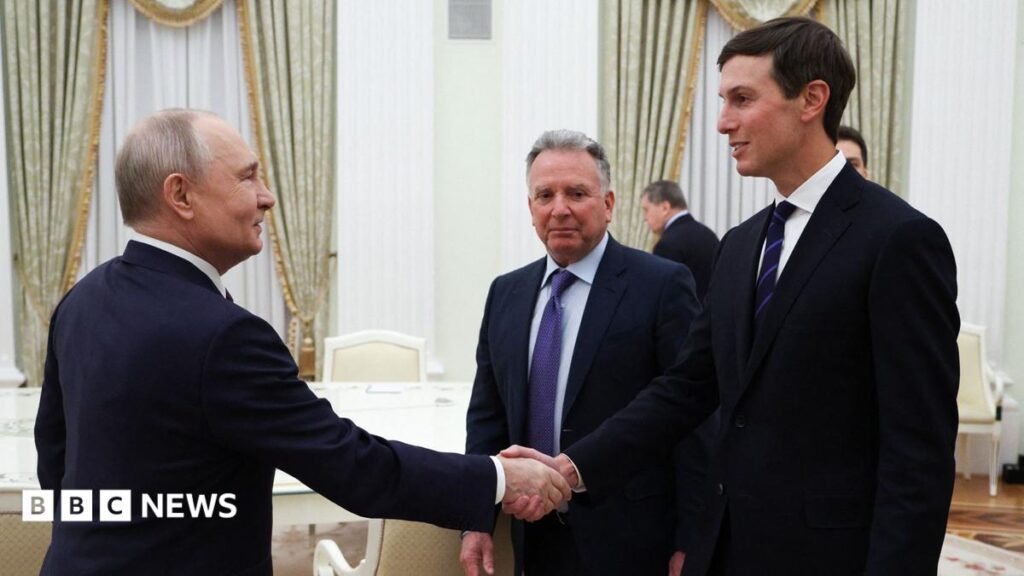
On Thursday morning, former White House senior adviser Jared Kushner and New York real‑estate investor Steve Witkoff landed at Sheremetyevo Airport, escorted by a small delegation of US State Department officials. Their official briefings describe the trip as a “high‑level diplomatic outreach” aimed at gauging Moscow’s willingness to discuss a phased withdrawal of Russian forces and the restoration of normal trade routes, especially for agricultural commodities.
Kushner, who served as senior adviser to former President Donald Trump, has been quietly working on a series of back‑channel initiatives since early 2024, leveraging his personal connections in the Kremlin and his reputation as a deal‑maker. Witkoff, meanwhile, was invited because of his experience in large‑scale negotiations and his recent involvement in a private‑sector consortium that seeks to rebuild war‑torn infrastructure in Eastern Europe. Together, they are expected to meet with senior Russian officials, including Deputy Foreign Minister Sergei Ryabkov, before a scheduled sit‑down with President Vladimir Putin later in the day.
The Dublin stop‑over: A two‑city diplomatic sprint
Later that same Thursday, the duo will fly to Dublin, where Ukraine’s President Volodymyr Zelensky is holding a summit with European leaders and diaspora representatives. The itinerary, confirmed by the Ukrainian foreign ministry, includes a private briefing with Zelensky followed by a round‑table on “post‑war reconstruction and investment.”
Observers note that the rapid shift from Moscow to Dublin underscores a delicate balancing act: Washington wants to keep the dialogue with Moscow alive while reassuring Kyiv that its allies remain committed to Ukrainian sovereignty. By meeting Zelensky in Ireland – a neutral ground that also hosts a sizable Ukrainian diaspora – the US hopes to demonstrate that any concessions discussed with Moscow will be anchored in a framework that protects Ukraine’s territorial integrity.
Why it matters for Africa: Food security and energy markets
The outcome of these talks could have a ripple effect far beyond Europe. Since the war began, Russia has been a major supplier of wheat to North‑East Africa, with countries such as Egypt, Sudan and Ethiopia relying on Russian grain for up to 30 % of their staple food imports. Sanctions and disrupted shipping lanes have driven up global grain prices, contributing to a food‑price inflation spike that the United Nations warned could push an additional 20 million Africans into hunger.
If the Moscow‑Dublin negotiations lead to a partial lifting of grain‑export sanctions, or at least a secured corridor for Ukrainian grain to reach the Red Sea, African markets could see a modest but meaningful drop in staple‑food costs. Moreover, any de‑escalation that stabilises European energy prices would likely ease the cost pressure on oil‑importing African nations, many of which have been hit hard by the surge in crude prices since 2022.
What’s next: Scenarios and stakes
Analysts outline three plausible pathways. The most optimistic scenario envisions a phased cease‑fire, coupled with a negotiated settlement that restores grain flows and opens a limited humanitarian corridor for displaced Ukrainians. A middle‑ground outcome could involve a temporary truce that eases sanctions on specific Russian commodities, allowing African wheat importers to secure cheaper supplies while the broader political dispute remains unresolved. The worst‑case scenario would see the talks break down, prompting a fresh round of sanctions that could further tighten global commodity markets.
For African policymakers, the immediate task is to monitor the negotiations closely and prepare contingency plans for both a sudden influx of cheaper grain and a possible continuation of high food‑price volatility. Regional bodies such as the African Union and the Inter‑African Coffee Organization have already signalled their intent to lobby both Washington and Brussels for any concessions that protect African food‑security interests. Meanwhile, diaspora groups in Europe and North America are mobilising to amplify African voices in the diplomatic arena, reminding negotiators that the war’s fallout is a global concern.
Quick Answers
Who are the US envoys traveling to Moscow for Ukraine talks?
The envoys are former White House adviser Jared Kushner and real‑estate investor Steve Witkoff, accompanied by a small State Department team.
What is the purpose of their meeting with President Vladimir Putin?
They aim to explore diplomatic pathways for ending the war, discuss possible cease‑fire terms and address grain‑export sanctions that affect global markets.
How could the Moscow‑Dublin talks impact African grain imports?
If the talks result in eased sanctions on Russian wheat, African countries that rely on Russian grain could see lower food‑price inflation and improved food security.
Source: www.bbc.co.uk




💬 Comments 0