US to Build Two Military Bases in Greenland Under 2026 Denmark Deal, Boosting Arctic Strategy
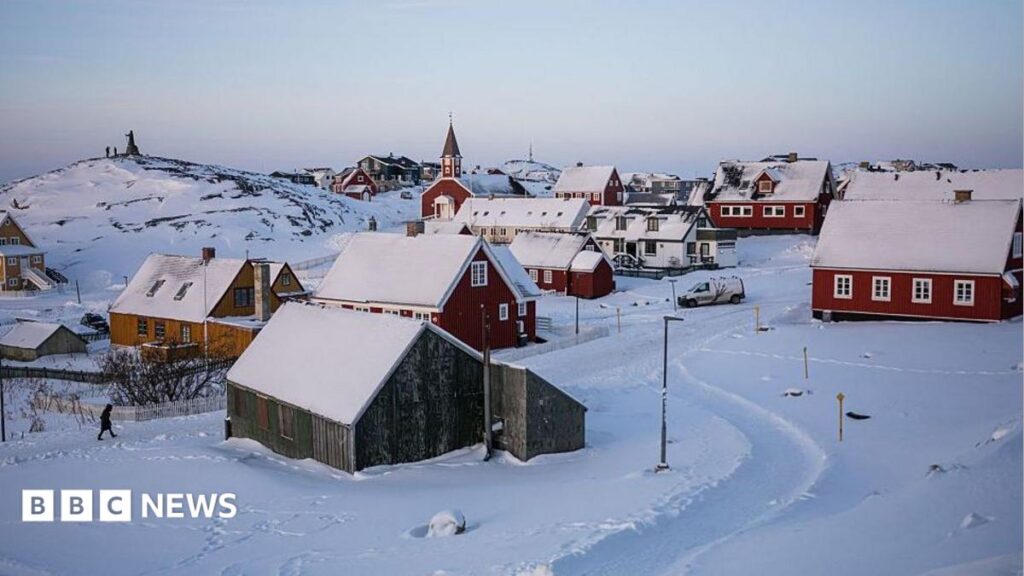
Background: The Arctic’s Rising Geopolitical Profile
The Arctic has moved from a remote wilderness to a strategic frontier where climate change is opening new sea lanes and exposing untapped natural resources. Over the past decade, the United States has repeatedly signaled its intent to deepen a military presence in the region, citing the need to protect freedom of navigation and to counter expanding Chinese and Russian footprints.
Denmark, which retains sovereignty over Greenland and the Faroe Islands, has long been a partner in NATO’s northern flank. Greenland’s semi‑autonomous government controls internal affairs but defers defense and foreign policy to Copenhagen, a dynamic that has shaped past US‑Denmark security collaborations, such as the Thule Air Base upgrade in the 1990s.
The latest development was announced at the United Nations General Assembly in September 2026, where both Washington and Copenhagen highlighted the agreement as a “peace‑preserving” measure that respects Greenland’s self‑governance while reinforcing NATO’s collective defence.
The Deal: Two New Bases, Locations and Timeline
Under the 2026 agreement, the United States will fund the construction of two multi‑purpose military installations on Greenlandic soil. The first, slated for the eastern coast near the town of Tasiilaq, will focus on rapid‑deployment forces and air‑lift capabilities. The second, positioned in the north‑west near the former US airstrip at Narsarsuaq, will serve as a logistics hub for Arctic patrols and satellite communications.
Both sites are expected to be operational by 2029, with an initial budget of roughly $3.2 billion shared between the United States and Denmark. The financing model mirrors earlier Arctic projects: the US shoulders construction costs while Denmark provides land rights and regulatory approvals, and Greenland’s government receives a revenue share earmarked for local infrastructure.
The agreement also re‑affirms Denmark’s sovereignty over Greenland, a clause meant to allay concerns in the island’s parliament that the deal could erode its autonomy. Greenland’s Premier, Múte Bourup Egede, publicly welcomed the investment, noting that the bases would bring jobs and modernised ports to remote communities.
Why It Matters: Strategic Competition and Climate Realities
The new installations will give the US a permanent foothold close to the increasingly navigable Northwest Passage and the emerging Northern Sea Route, both of which promise to shorten shipping times between Asia, Europe and the Americas. Control over these corridors is a key objective for Beijing, which has already invested heavily in Arctic research stations and ice‑breaker fleets.
Russia’s recent expansion of its Arctic air‑defence network and the construction of a new ice‑breaker base on the Kola Peninsula have heightened NATO’s alarm. By establishing forward operating bases in Greenland, the United States can project power, conduct surveillance, and support allied vessels without relying solely on distant bases in Iceland or Alaska.
Beyond military calculus, the bases will support climate‑monitoring satellites and scientific outposts. As per the US National Oceanic and Atmospheric Administration, Arctic data is critical for improving global weather models, a benefit that extends far beyond the polar circle.
African Angle: Trade, Climate, and Resource Interests
While the Arctic may seem distant from Africa, the continent stands to feel the ripple effects of a reshaped high‑latitude trade network. Faster routes between Europe and Asia could lower freight costs for African exporters of commodities such as cocoa, coffee and minerals, making their goods more competitive in global markets.
African nations are also increasingly involved in Arctic research collaborations. South Africa’s Council for Scientific and Industrial Research (CSIR) and Kenya’s Institute of Climate Change Research have joint projects with US and European institutes that rely on satellite data gathered from polar stations. The new Greenland bases will host additional ground stations, potentially improving data resolution for African climate models.
Moreover, several African mining companies have expressed interest in the Arctic’s rare‑earth deposits, which are crucial for renewable‑energy technologies. The US presence could provide a more stable environment for joint ventures, offering African firms a foothold in a sector that is otherwise dominated by Chinese state‑owned enterprises.
Reactions: From Washington to Moscow and African Think‑Tanks
US Secretary of Defense Lloyd Austin hailed the deal as “a decisive step to safeguard the Arctic for peaceful commerce and collective security.” In Washington, defence analysts see the bases as a counterbalance to China’s Belt‑and‑Road‑Arctic Initiative, which aims to fund port upgrades in Iceland and Norway.
Russia’s foreign ministry issued a statement calling the agreement “a provocative escalation” that could destabilise the region. Chinese diplomats, speaking at the UN, urged all Arctic actors to adhere to the 1982 United Nations Convention on the Law of the Sea, warning against militarisation that could threaten “global climate stability.”
African policy circles have begun weighing the implications. The African Union’s Department of Infrastructure and Energy released a brief noting that any shift in global shipping lanes could affect intra‑African trade corridors. The Lagos‑based think‑tank, The Africa‑Arctic Initiative, urged African governments to engage early in Arctic governance discussions to protect their emerging trade interests.
What’s Next: Implementation, Risks and Opportunities for Africa
Construction crews are expected to arrive in Greenland by early 2027, with the first phase focusing on air‑strip upgrades and renewable‑energy installations to power the bases. Both sites will rely heavily on wind and solar arrays, aligning with US Department of Defense goals to cut carbon emissions in forward operating locations.
Potential risks include environmental protests from Greenlandic NGOs concerned about the impact on fragile ecosystems and on traditional hunting grounds. Mitigation measures, such as mandatory environmental impact assessments and community benefit agreements, have been incorporated into the contract, though critics argue they may be insufficient.
For African stakeholders, the next step is to secure a seat at the table in Arctic governance forums, such as the Arctic Council’s observer meetings. By leveraging the data and logistics capabilities that will stem from the Greenland bases, African nations can enhance climate‑resilience planning and tap into new trade routes, turning a polar development into a continental advantage.
Quick Answers
When will the US military bases in Greenland become operational?
The two bases are scheduled to be fully operational by 2029, according to the 2026 US‑Denmark defence agreement.
How could the new Arctic bases affect African trade?
Shorter Arctic shipping routes could lower freight costs for African exporters, making their goods more competitive in Europe and Asia.
What role does Denmark play in the US‑Greenland deal?
Denmark retains sovereignty over Greenland, provides land rights and regulatory oversight, and receives a share of the construction revenue.
Source: www.bbc.co.uk



💬 Comments 0