Yemen government forces claim Marib advances as Houthi border attacks surge in November 2026
Background: a war that has become a proxy battlefield
The Yemeni civil war, which erupted in 2014 when Houthi rebels seized the capital Sana'a, has morphed into a complex proxy conflict involving regional powers. Saudi Arabia and the United Arab Emirates back the internationally recognised government, while Iran is widely reported to supply the Houthis with weapons and training. Over the past two years, the front lines have shifted repeatedly, but the most contested terrain remains the oil‑rich Marib governorate and the northern border with Saudi Arabia.
Since the United Nations brokered a fragile ceasefire in 2022, sporadic skirmishes have persisted, especially along the Saudi‑Yemeni border where the Houthis have launched cross‑border raids. Those attacks have targeted military installations, civilian infrastructure and, more recently, commercial convoys moving through the desert corridors that link the Red Sea ports to interior markets. The latest wave of Houthi incursions, which began in early November, marks a sharp escalation after a brief lull following the UN‑mediated talks in August.
The Yemeni government, led by President Rashad al‑Alimi, has been eager to demonstrate that it can regain control of strategic zones before the year‑end peace conference in Geneva. In that context, the claim of fresh advances across multiple fronts is both a domestic political statement and a signal to its Gulf allies that the war effort remains viable.
The latest offensives: what the government says it has achieved
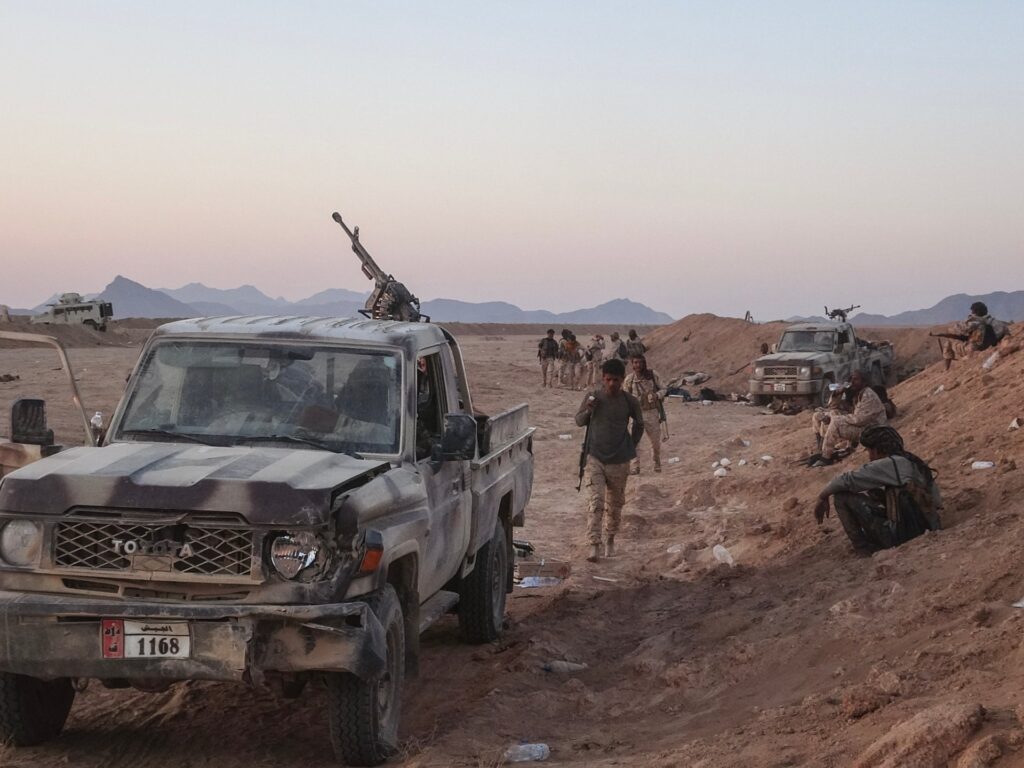
On Thursday, the Ministry of Defense released a statement saying Yemeni troops had seized several villages on the eastern outskirts of Marib, pushing the front line roughly five kilometres closer to the Houthi‑held town of Sirwah. The claim was accompanied by drone footage that, according to the ministry, shows Yemeni armored vehicles advancing under the cover of artillery fire.
In addition to Marib, officials said forces had repelled a Houthi raid on the Al‑Jawf border outpost, inflicting heavy casualties on the attackers. The statement warned that the rebels were “intensifying cross‑border attacks” in an attempt to destabilise the northern governorates and to pressure Saudi Arabia into loosening its blockade of Houthi‑controlled ports.
Independent monitors from the UN‑verified Joint Mission on Human Rights in Yemen have not yet confirmed the exact territorial gains, but satellite imagery released by a European think‑tank indicates movement of Yemeni vehicles toward the Sirwah road. Analysts caution that the fluid nature of desert warfare often means that control can change hands within days, making any claim of “advances” provisional at best.
Why it matters for the region and global trade
The Marib oil fields, which produce roughly 150,000 barrels per day, are a key revenue source for the Yemeni state. Regaining territory there could boost the government's fiscal capacity, allowing it to pay salaries for its armed forces and fund reconstruction projects that have been stalled since 2015. For Saudi Arabia, a stable Marib means a reduced risk of stray missile strikes on its own oil facilities in the Eastern Province.
Beyond oil, the renewed Houthi border attacks threaten the security of the Red Sea shipping lanes that pass close to Yemen’s coastline. In 2024, the International Maritime Organization recorded a 23 % rise in missile‑related incidents near the Bab al‑Mandab strait, prompting many carriers to reroute around the Cape of Good Hope—a costly detour that added an average of $1.2 million per voyage. Any further escalation could push shipping costs higher, feeding into global inflation on everything from oil to consumer goods.
Humanitarian consequences are also acute. The United Nations Office for the Coordination of Humanitarian Affairs estimates that 5 million Yemenis now face acute food insecurity, a figure that could swell if fighting disrupts the limited supply routes that pass through Marib. The latest offensives have already forced several internally displaced persons (IDP) camps to relocate, stretching already‑overburdened facilities in the north.
African stakes: Red Sea chokepoints, Djibouti, and the diaspora
For many African economies, the Red Sea is more than a distant waterway—it is the lifeline that connects landlocked nations to the world market. Ethiopia, which depends on the port of Djibouti for over 90 % of its imports, watches Yemeni developments closely. A spike in Houthi missile activity could force Djibouti’s authorities to impose tighter maritime security protocols, potentially slowing the flow of Ethiopian coffee, textiles and essential fuel shipments.
Somalia’s semi‑autonomous region of Puntland, home to the strategic Bosaso port, has already reported an uptick in piracy‑related chatter linked to the broader instability in the Gulf of Aden. According to a report from the African Union’s Peace and Security Council, Somali security forces are coordinating with Ethiopian and Kenyan naval units to patrol the waters near the Bab al‑Mandab, a direct response to the heightened threat perception caused by the Yemeni flare‑up.
The Yemeni diaspora in East Africa—particularly in Kenya’s coastal city of Mombasa and Tanzania’s Dar es Salaam—maintains strong trade ties with relatives back home, exporting spices, dates and artisanal crafts. Disruptions in Yemen’s internal logistics can reverberate through these informal networks, reducing remittance flows that many families rely on for schooling and health expenses. Moreover, diaspora community organisations have called on the African Union to lobby for a neutral humanitarian corridor that would bypass contested zones.
What could happen next: diplomatic moves, humanitarian aid, and security calculations
The upcoming Geneva peace conference, slated for early 2027, will likely feature a renewed push by the United Nations to freeze cross‑border hostilities. If the Yemeni government can substantiate its territorial claims, it may leverage them to demand a larger share of reconstruction funds from the World Bank and the Gulf donors. Conversely, the Houthis could use the surge in attacks to argue that they are defending against an “aggressive” government backed by foreign militias.
Humanitarian agencies are preparing contingency plans that include pre‑positioning food pallets in the safer zones of Marib and Al‑Jawf. However, access remains contingent on security guarantees from both sides. The International Committee of the Red Cross has warned that any further escalation could close the already‑narrow humanitarian corridors, leaving millions without life‑saving assistance.
On the security front, Saudi Arabia is expected to reinforce its border surveillance with additional Patriot missile batteries, while the United Arab Emirates may expand its naval presence off the Horn of Africa to protect commercial shipping. For African states, the challenge will be to balance cooperation with Gulf partners against the need to keep their own maritime trade routes open and affordable.
Quick Answers
What are the main strategic goals of Yemen's government forces in Marib?
They aim to recapture oil‑rich areas, secure revenue, and demonstrate progress ahead of peace talks.
How do Houthi border attacks affect African countries?
Increased attacks threaten Red Sea shipping, potentially delaying Ethiopian imports via Djibouti and raising costs for Somali and Kenyan ports.
When is the next major peace effort for Yemen scheduled?
A UN‑facilitated conference is planned for early 2027 in Geneva.
Source: www.aljazeera.com




💬 Comments 0