Zelensky Calls Putin a ‘Killer’ After Trump Calls Russian President a Friend, Threatening Ukraine Aid and African Grain Supplies 2026
Background: A fraught US‑Russia‑Ukraine triangle
The war in Ukraine entered its third year in 2026, with Moscow still holding large swathes of eastern territory. Western governments have kept billions of dollars in military and humanitarian aid flowing to Kyiv, while also imposing sanctions that have choked Russian oil, gas and grain exports. In that context, any sign that the United States might soften its stance toward Moscow is instantly magnified, especially after former President Donald Trump’s recent visit to Beijing where he praised his “great relationship” with Vladimir Putin.
Trump’s comment came during a joint press conference with Chinese President Xi Jinping, a setting that underscored Beijing’s growing role as a diplomatic bridge between Washington and Moscow. While the former U.S. president has long floated the idea of a personal rapport with Putin, his remarks were quickly seized upon by European leaders as evidence that the United States could be wavering on its commitment to Ukraine.
Trump’s praise and the diplomatic fallout
In the hours after the China visit, the White House issued a vague clarification, saying Trump’s remarks reflected “personal diplomacy” and did not alter official U.S. policy. Nonetheless, the comment sparked a flurry of statements from NATO allies, who warned that any perception of a U.S.‑Russia rapprochement could embolden Moscow to intensify its campaign in the Donbas region.
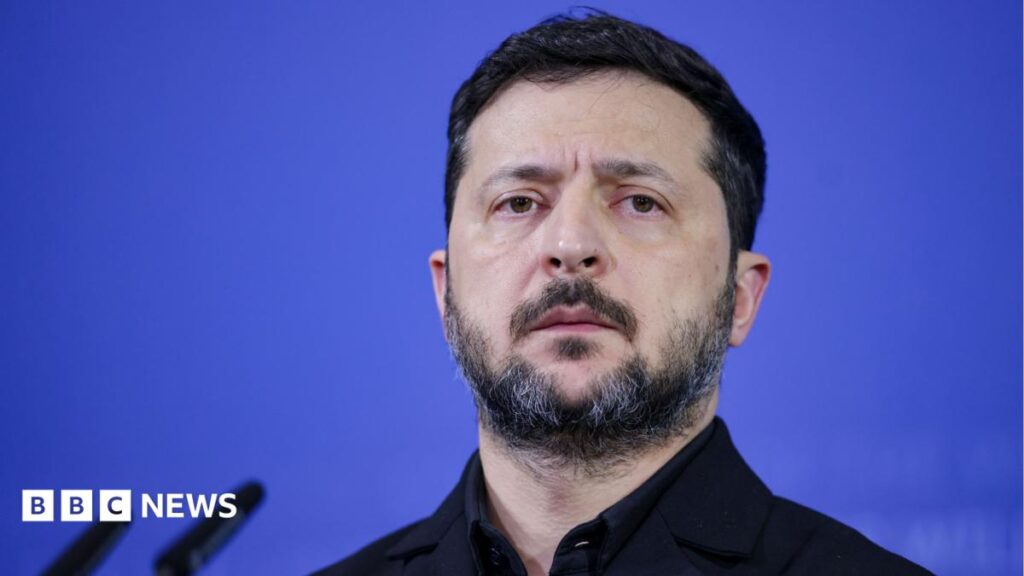
Ukrainian President Volodymyr Zelensky, who has spent the past three years rallying international support, responded forcefully on social media, labeling Putin a “killer” and accusing Trump of “legitimising aggression”. Zelensky’s condemnation was echoed by several European foreign ministers, who called the former president’s remarks “dangerous rhetoric” that could undermine the sanctions regime.
Why Zelensky’s rebuke matters beyond Kyiv
Zelensky’s outburst is more than a personal retort; it signals a potential fracture in the trans‑Atlantic consensus that has kept Russian aggression in check. If Washington’s political elite appears divided, Moscow may calculate that the cost of further escalation has fallen, prompting it to test the limits of Western resolve in places like the Black Sea or the Balkans.
For Ukraine, the stakes are immediate. Continued U.S. military aid—particularly air‑defence systems and artillery—depends on bipartisan support in Congress. Trump’s public praise of Putin could give skeptics a pretext to stall future aid packages, leaving Kyiv vulnerable at a moment when Russia is reportedly massing new missile units near the front.
African markets feel the ripple: grain, energy and security
The Ukraine war has already reshaped Africa’s food security landscape. In 2024, the continent imported roughly 30 % of its wheat from the Black Sea region, and disruptions have driven up staple prices across West Africa. Analysts warn that a softening U.S. stance could prolong the conflict, keeping Ukrainian grain out of African ports and deepening the “food‑price shock” that hit Nigeria, Ghana and Kenya last year.
Energy markets are similarly exposed. Western sanctions have forced Russia to pivot toward African oil‑producing nations such as Nigeria, Angola and Libya, offering credit lines and technical assistance in exchange for crude. If the United States signals a willingness to engage Russia more openly, African oil exporters could find themselves caught between competing geopolitical camps, complicating their own diversification strategies.
Diaspora reactions and the narrative battle
Ukrainian diaspora groups across Europe and North America have mobilised quickly, organising protests outside U.S. embassies and launching online campaigns that hashtag #PutinKiller. In contrast, some Russian‑heritage communities in the United States have used the same platforms to defend the “friendship” narrative, arguing that diplomatic engagement is the only path to de‑escalation.
For African diaspora audiences, the debate is refracted through the lens of historic colonial interference. Many see the Ukraine crisis as another example of great‑power rivalry that sidelines African voices. Community leaders in Lagos and Johannesburg have called for a “global solidarity” approach that links Ukraine’s right to sovereignty with Africa’s own struggles for food sovereignty and climate justice.
What’s next? Policy, sanctions and the African angle
In Washington, the debate is likely to move to the Senate floor, where a bipartisan group of lawmakers has already drafted a “Ukraine Continuity Act” to lock in aid funding for the next fiscal year regardless of presidential statements. If passed, the legislation would blunt any immediate impact of Trump’s comments on the ground level of Kyiv’s defence.
African governments are watching closely. The African Union’s Food Security Committee is set to convene in Addis Ababa next month to discuss contingency plans for grain imports, including a proposal to create a regional grain reserve funded by EU and Chinese partners. The outcome could determine whether the continent can weather a prolonged Ukrainian grain shortage or be forced to turn to alternative, often pricier, suppliers.
Quick Answers
Why did Zelensky call Putin a ‘killer’ after Trump’s comment?
Zelensky used the term to condemn what he sees as Trump’s legitimisation of Russian aggression, warning that any softening of U.S. policy could endanger Ukraine’s defence.
How could Trump’s praise of Putin affect African grain supplies?
If the war continues because of perceived U.S. leniency, Ukrainian grain exports may stay blocked, keeping African wheat prices high and threatening food security in several countries.
What steps are U.S. lawmakers taking after the controversy?
Congress is drafting a “Ukraine Continuity Act” to guarantee funding for military aid regardless of presidential rhetoric, aiming to keep support for Kyiv steady.
Source: www.bbc.co.uk




💬 Comments 0