2026 South Korea shark rescue: 9ft 10in shark stranded in Incheon canal draws massive crowds
Background: How a large shark ended up in a man‑made waterway
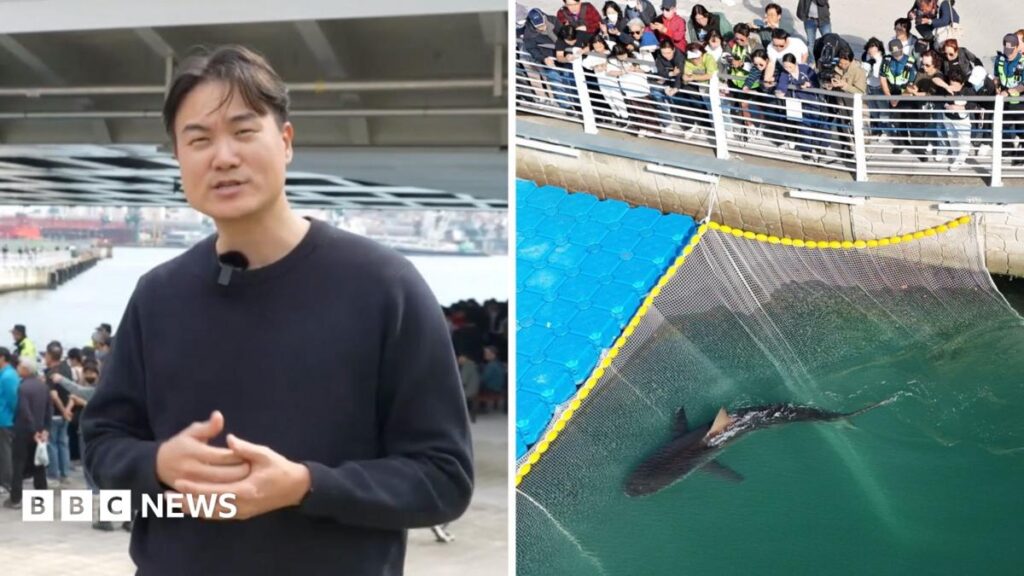
In early October 2026, a juvenile great white measuring roughly 9 feet 10 inches was spotted swimming in the Incheon Canal, a narrow shipping route that links the Han River to the Yellow Sea. The shark, likely following prey, became trapped when tidal currents pushed it into the canal’s shallow section, leaving it unable to return to the open ocean.
The incident quickly caught the attention of local residents and marine biologists, who recognized the rarity of a great‑white venturing so close to a heavily industrialised area. South Korean authorities confirmed that the shark was healthy but disoriented, prompting an emergency response from the Ministry of Oceans and Fisheries.
The rescue attempts and the spectacle they created
The first two rescue attempts, carried out on October 10 and 12, involved a combination of small fishing boats, underwater nets, and a team of divers. Both efforts failed because the shark repeatedly turned back toward the canal’s narrow end, where the water depth dropped below safe levels.
On October 14, a third operation was launched with a larger tugboat equipped with a specially designed cradle to coax the shark toward the canal mouth. The scene attracted an estimated 2,500 onlookers who gathered on the canal’s embankments, phones raised, hoping to witness the animal’s release. The crowd’s enthusiasm turned the rescue into a spontaneous public event, echoing the viral wildlife rescues that have become common on social media platforms.
Why the rescue matters: public perception and marine conservation
Beyond the immediate goal of saving a single animal, the incident highlights a growing public appetite for wildlife protection in East Asia. Surveys conducted by the Korean Environmental Institute in 2025 showed that 68 % of respondents support increased funding for marine rescue teams, a sharp rise from 52 % a decade earlier.
The visual drama of a massive shark navigating a concrete channel also underscores the fragility of marine ecosystems that are increasingly intersected by urban infrastructure. Conservationists argue that such high‑profile rescues can serve as catalysts for policy reforms, especially around coastal development and fishing practices that push apex predators into dangerous habitats.
Regional parallels: African nations facing similar marine‑rescue challenges
While the Incheon incident is unfolding in South Korea, comparable scenarios are playing out along Africa’s coasts. In 2023, a 7‑foot tiger shark became stranded in a Lagos drainage canal, prompting a community‑led rescue that attracted national media attention. Both cases reveal how rapid urbanisation creates unexpected wildlife corridors that can trap large marine species.
African NGOs such as the Marine Conservation Society of Kenya have cited the Korean rescue as a benchmark for coordinated government‑civilian action. They argue that South Korea’s use of a purpose‑built cradle could be adapted for Africa’s mangrove‑adjacent waterways, where similar rescue equipment is scarce but local knowledge is abundant.
What’s next: policy shifts and community involvement
Following the successful third attempt, officials announced a review of the canal’s design to install an emergency exit gate that could be opened during future wildlife intrusions. The Ministry also pledged a 15 % increase in the budget for the National Marine Rescue Unit, earmarking funds for training and equipment upgrades.
Local NGOs have called for educational campaigns aimed at fishermen and dockworkers, emphasizing how to recognise distressed marine animals and report them promptly. The public’s enthusiastic turnout suggests that community‑driven monitoring could become a reliable early‑warning system, especially in densely populated coastal cities.
Quick Answers
What species was the shark rescued from the Incheon canal?
It was a juvenile great white shark, about 9 feet 10 inches long.
Why did the shark get stuck in the canal?
Strong tidal currents pushed the shark into a shallow part of the canal where the water depth was insufficient for it to turn back to the open sea.
How might this rescue affect future marine policies in South Korea?
The government plans to add an emergency exit gate to the canal and increase funding for marine rescue teams, reflecting a broader shift toward proactive wildlife protection.
Source: www.bbc.co.uk




💬 Comments 0