Albanian Opposition Storms Parliament with Flares and Smoke Bombs in June 2026 Protest
Background
Albania’s political landscape has been marked by tension between the ruling Socialist Party and a coalition of opposition groups, including the Democratic Party and the Socialist Movement for Integration. Since 2024, the country has witnessed a series of street protests driven by allegations of corruption, rising living costs, and a perceived lack of transparency in government operations. The protests have drawn large crowds, especially among the youth, and have been amplified by social‑media campaigns that highlight economic grievances and demand political accountability.
The National Assembly in Tirana has long been a flashpoint for political confrontation. Over the past two years, lawmakers from opposition parties have staged walk‑outs, sit‑ins, and other forms of protest within the parliamentary precincts. These actions often serve as a platform for voicing dissent against Prime Minister Edi Rama’s administration, which has been accused of centralising power and curbing press freedom. The building’s symbolic status as the heart of Albanian democracy makes it a natural arena for such confrontations. In the months leading up to June 2026, tensions escalated as the opposition intensified its demands for reforms, citing the government's sluggish response to public protests and the erosion of democratic norms.
What Happened
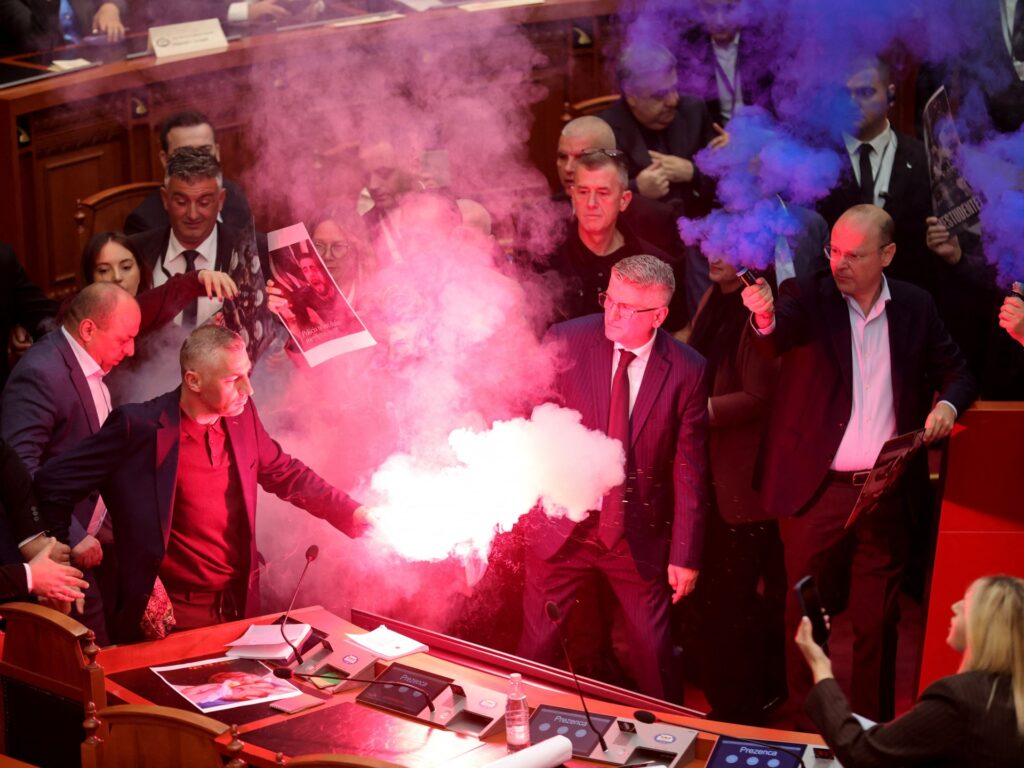
On the evening of June 15, 2026, a group of 30 opposition parliamentarians entered the National Assembly through a side entrance that was not normally used for official business. According to eyewitness accounts, they carried portable flares and smoke bombs, which they detonated in the central atrium. The resulting burst of orange light and thick smoke caused a temporary evacuation of the building and halted all parliamentary proceedings for over an hour. Security forces, including the Albanian Police’s Rapid Response Unit, were deployed to contain the situation and secure the premises.
The flares were set off in a deliberate display of defiance, while the smoke bombs were used to obscure visibility and create a sense of urgency. The incident left several benches scorched and produced a minor fire that was quickly extinguished by the emergency crew. Though no injuries were reported, the event disrupted the scheduled legislative agenda, including debates on the national budget and proposed constitutional amendments. The opposition’s spokesperson later stated that the act was a symbolic protest against what they described as a “silent” government that had failed to address the protests’ root causes.
Why It Matters
The episode underscores a growing crisis of confidence in Albania’s democratic institutions. By staging a dramatic disruption inside the National Assembly, the opposition highlighted the perceived disconnect between the ruling party’s policies and the populace’s demands. The incident raises concerns about the stability of Albania’s political system, especially as the country remains on the EU accession track, which requires demonstrable adherence to democratic principles and the rule of law.
Beyond domestic politics, the event could influence Albania’s economic trajectory. Investor confidence is already fragile; visible political unrest can deter foreign direct investment, affect the national currency, and reduce tourism revenue. The Albanian government’s response—whether it opts for dialogue or a hardline crackdown—will shape the country’s reputation among international investors and partners. In a region where political volatility can quickly spill over borders, the incident may also have ripple effects on neighboring Balkan states that share similar governance challenges.
Reactions
The opposition coalition condemned the government’s handling of the protests, arguing that it had been “systematically downplaying” the grievances expressed by citizens. They called for immediate reforms, including the establishment of an independent anti‑corruption commission and the release of detained opposition activists. The ruling party, however, dismissed the incident as a “provocation” and vowed to maintain order. Prime Minister Rama’s office issued a statement asserting that the government remains committed to democratic processes and would not tolerate disruptions that threaten parliamentary integrity.
Internationally, the European Union’s High Representative for Foreign Affairs and Security Policy expressed concern over the incident, urging all parties to respect democratic norms and engage in constructive dialogue. The United States Embassy in Tirana released a brief communique highlighting the need for transparency and accountability in Albanian governance. Civil society organizations, such as the Albanian Human Rights Association, called for an independent investigation into the security forces’ handling of the event. The incident also sparked heated debate on Albanian social‑media platforms, with many users calling for a peaceful resolution to the escalating tensions.
What's Next
In the immediate aftermath, the Albanian Parliament convened an emergency session to address the breach and to debate potential security reforms. The government announced the formation of a temporary committee to review the incident and recommend measures to prevent future disruptions. The opposition, meanwhile, is mobilizing a nationwide protest march slated for July 1, 2026, aimed at pressuring the government to enact comprehensive reforms. Analysts suggest that the incident could accelerate calls for early elections, especially if public trust continues to erode.
The security forces have pledged to review their protocols, with a focus on balancing the protection of parliamentary premises and the right to peaceful assembly. However, the incident also raises questions about the adequacy of existing laws governing protest and public safety. A potential legislative overhaul could involve stricter penalties for unlawful entry into government buildings, but such measures risk being perceived as suppressive. The international community, particularly the EU, is likely to monitor Albania’s next steps closely, given the country’s strategic position in the Balkan region.
Quick Answers
What triggered the opposition’s protest inside the Albanian parliament?
The opposition accused Prime Minister Edi Rama’s government of downplaying ongoing anti‑government protests and failing to address corruption and economic grievances, prompting a dramatic display of defiance inside the National Assembly.
Were there any injuries during the flare and smoke bomb incident?
No injuries were reported. The event caused minor property damage and temporarily halted parliamentary proceedings, but security forces contained the situation without violence.
How might this incident affect Albania’s EU accession prospects?
The disruption raises concerns about the rule of law and democratic stability—key criteria for EU membership—potentially slowing Albania’s accession talks if the government does not demonstrate commitment to reform and peaceful conflict resolution.
Source: www.aljazeera.com

💬 Comments 0