Albania’s Seventh Day of Anti‑Government Clashes: 300 Injured, EU Funding at Risk, and Ripple Effects for African Migrants in 2026
Background: A Government Under Fire
Protests erupted in Tirana on October 13 after the parliament passed a controversial pension reform that would raise the retirement age and cut benefits for public sector workers. The measure, championed by Prime Minister Edi Rama, was presented as a fiscal necessity to meet EU‑mandated budget targets ahead of Albania’s 2027 accession talks.
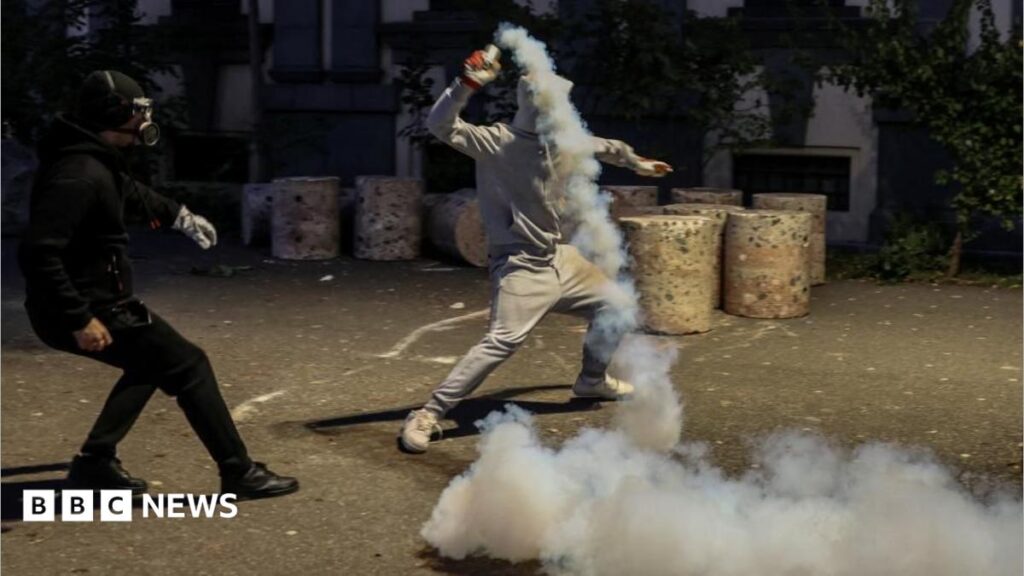
The opposition, led by the Democratic Party, accused the government of using the reform to weaken public sector unions ahead of the upcoming local elections. Demonstrators quickly escalated from peaceful rallies to street blockades, and police responded with tear‑gas canisters and water cannons. By the seventh day, the confrontation had turned into a sustained urban battle.
Albania’s political landscape has been volatile since the 2019 protests over a proposed electricity price hike. Analysts say the current unrest reflects deeper frustrations over corruption, slow judicial reforms, and perceived erosion of democratic norms under Rama’s administration.
What Happened on Day Seven: Numbers and Tactics
On October 19, police estimated that roughly 2,000 protesters gathered in the city centre, while the Ministry of Interior reported that 300 people were treated for injuries across the country. More than half of those injured – about 170 – were police officers, according to the Albanian Health Ministry’s daily bulletin.
The clashes were marked by the use of live‑round ammunition by a small number of rogue elements within the protester ranks, a claim the government made in a televised address. Human Rights Watch, however, noted that most injuries resulted from rubber‑bullet impacts and excessive force, a view echoed by local doctors who saw a surge in facial fractures and concussions.
In an attempt to disperse the crowds, authorities deployed a new crowd‑control drone equipped with acoustic‑loudspeaker warnings. Protesters responded by hurling stones and setting fire to a police vehicle, prompting the police to retreat from the main boulevard for the first time since the protests began.
Why It Matters: Domestic Stability and International Credibility
Albania’s bid to join the European Union hinges on meeting strict rule‑of‑law criteria. The EU’s Commissioner for Enlargement, Olivér Várhelyi, warned that “persistent violence undermines the credibility of Albania’s reform agenda” in a statement released on October 20. Continued unrest could delay the opening of accession negotiations, a setback for a country that has invested heavily in aligning its legislation with EU standards.
The unrest also threatens billions of euros in foreign direct investment. The World Bank’s Albania office noted that political instability raises the risk premium for lenders, potentially inflating borrowing costs for infrastructure projects that rely on EU cohesion funds. Investors in sectors ranging from renewable energy to tourism are watching the situation closely.
Beyond the economics, the protests expose a growing disconnect between the government’s technocratic approach and a populace that feels excluded from decision‑making. The pension reform, while fiscally sound, was rolled out without a broad social dialogue, fueling the perception that elite policymakers are indifferent to ordinary citizens’ livelihoods.
The African Connection: Migration Policy and Diaspora Concerns
Albania sits on a key Balkan corridor that the European Union uses to manage migration flows from Africa and the Middle East. Instability in Tirana can complicate EU border‑security operations in the region, potentially leading to a loosening of controls that many African migrants rely on to reach Europe.
According to a recent analysis by the African Migration Policy Center, any slowdown in EU‑Albania cooperation on joint patrols could push migrants to alternative routes through the Western Balkans, increasing the risk of dangerous crossings. The analysis warns that “political turmoil in Albania may inadvertently raise the stakes for African migrants attempting the Mediterranean passage” (African Migration Policy Center, October 2026).
Furthermore, the Albanian diaspora includes a modest but growing community of African students and entrepreneurs, especially from Nigeria and Ghana, who have been attracted by Albania’s low‑cost higher‑education system. The protests have prompted several universities to issue travel advisories, potentially affecting enrollment numbers and the broader perception of Albania as a safe study destination for African youths.
What Comes Next: Negotiations, Reforms, or More Unrest?
Prime Minister Rama has announced a “national dialogue” scheduled for early November, inviting opposition leaders, union representatives, and civil‑society NGOs to discuss the pension bill. Critics argue that the proposal lacks genuine power‑sharing, pointing to previous dialogues that ended without substantive policy changes.
International observers, including the OSCE, have called for an independent investigation into alleged police misconduct. If the inquiry confirms excessive force, the government may face pressure to overhaul its internal security protocols, a step that could restore some public trust but also embolden protestors demanding broader political reforms.
In the short term, the streets of Tirana are expected to remain tense. Security forces have increased their presence around government buildings, while protest organizers warn that any attempt to force the pension law through parliament without concessions will trigger “mass civil disobedience.” The outcome will likely shape not only Albania’s EU trajectory but also the broader stability of the Western Balkans, a region already grappling with nationalist rhetoric and economic uncertainty.
Quick Answers
How many people were injured during the seventh day of protests in Albania?
Around 300 people were treated for injuries, with more than half of them being police officers.
Why could the Albanian protests affect African migrants?
Instability may disrupt EU‑Albania border‑security cooperation, potentially altering migration routes that African migrants use to reach Europe.
What is the Albanian government’s plan to calm the situation?
Prime Minister Edi Rama has announced a national dialogue in early November to discuss the contested pension reform with opposition and civil‑society groups.
Source: www.bbc.co.uk


💬 Comments 0