Aliko Dangote’s $10bn Refinery IPO: Impact on Nigeria’s Economy and African Investors 2026
Background: Dangote’s Rise and the Refinery Project
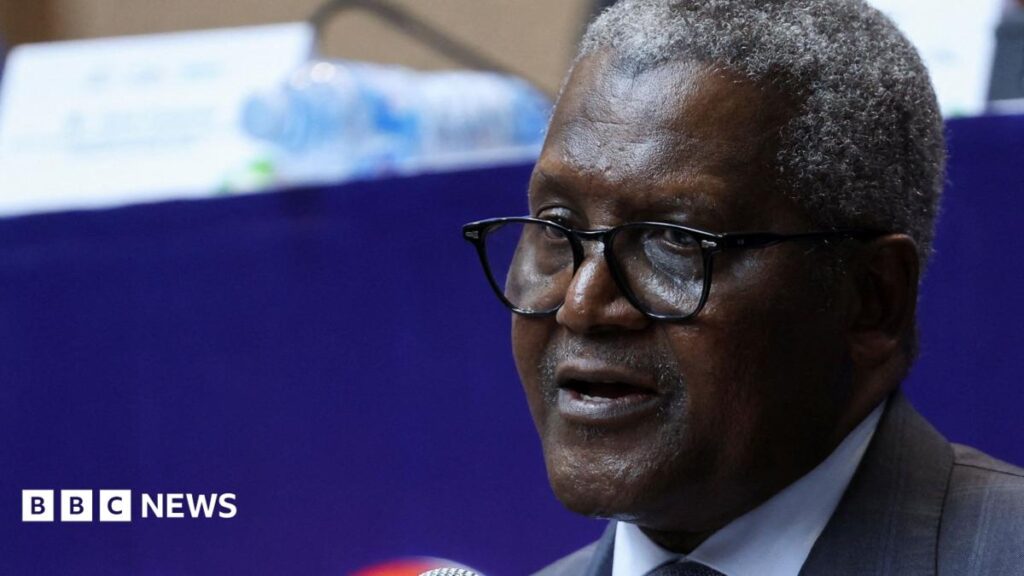
Aliko Dangote, Nigeria’s richest man and Africa’s wealthiest individual, has built an empire that spans cement, sugar, flour and, most recently, oil refining. His flagship Dangote Refinery, a $20 billion complex on the Lagos coast, is slated to become the continent’s largest single‑point refinery, capable of processing 650,000 barrels a day. The plant is expected to slash Nigeria’s reliance on imported refined petroleum, a chronic drain on foreign exchange that has plagued the economy for decades.
The refinery’s construction began in 2016, financed largely through a mix of bank loans, sovereign bonds and Dangote’s own capital. While the project has faced delays—partly due to the pandemic and logistical bottlenecks—its first commercial output is now projected for early 2027. The move to list a slice of the venture marks a shift from private, founder‑driven financing to public participation, a strategy that could reshape how mega‑infrastructure is funded across Africa.
The Share Sale: Details and Structure
On September 12, 2026, Dangote announced a $10 billion share offering that will constitute roughly 15 % of the refinery’s equity. The sale will be conducted through a dual‑listing on the Nigerian Stock Exchange (NSE) and the London Stock Exchange (LSE), giving both local and international investors access. According to the prospectus, the price per share is set at ₦1,250 ($2.90), a level that the company says reflects a modest discount to its internal valuation to encourage broad participation.
Unlike typical private placements, the offering includes a “retail tranche” aimed at ordinary Nigerians, with a minimum purchase of ₦10,000 ($23). The government, through the Securities and Exchange Commission, has mandated that at least 30 % of the retail tranche be allocated to small‑scale investors, a move meant to democratise wealth creation and deepen the domestic capital market.
Why It Matters for Nigeria’s Economy
Nigeria spends over $7 billion each year on imported refined fuel, a cost that erodes the country’s foreign‑exchange reserves and fuels inflation. By producing its own refined products, the Dangote Refinery could cut import bills by up to 40 %, according to a 2025 report from the Central Bank of Nigeria. The IPO therefore has macro‑economic implications that go far beyond a simple capital raise.
The infusion of $10 billion into the Nigerian market is also expected to boost the NSE’s market‑capitalisation, which has lagged behind other African exchanges such as the Johannesburg Stock Exchange. Analysts from Bloomberg suggest that the listing could trigger a “halo effect,” encouraging other large‑scale projects—like the proposed Ethiopia–Djibouti railway upgrade—to seek public listings, thereby broadening the pool of investable assets for both local and diaspora investors.
Implications for African Capital Markets and Diaspora Investors
For the African diaspora, especially Nigerians living in the United Kingdom, United States and the Gulf, the dual‑listing provides a familiar regulatory environment and custodial infrastructure. The LSE listing means that diaspora investors can use existing brokerage accounts without navigating Nigeria’s relatively nascent electronic settlement system. This could lead to a surge in foreign capital inflows, a trend that the African Development Bank has long advocated for to reduce the continent’s dependence on external debt.
The IPO also sets a precedent for African founders who have historically relied on private equity or sovereign wealth funds. By opening up a megaproject to public shareholders, Dangote signals confidence in the maturity of African equity markets. If the offering is oversubscribed—as early indications from the underwriting banks suggest—it may embolden other conglomerates—such as South Africa’s Sasol or Kenya’s KenGen—to contemplate similar public offerings.
What Comes Next: Risks and Opportunities
While the upside is compelling, investors must weigh several risks. The refinery’s profitability hinges on global oil price volatility and the speed at which Nigeria can transition from imported to domestically refined fuel. Moreover, regulatory uncertainties—particularly around the Nigerian government’s fuel subsidy reforms—could affect margins. Sources close to the Ministry of Finance have warned that any abrupt policy shift could compress the refinery’s break‑even point.
On the opportunity side, the share sale could catalyse the development of ancillary industries, from petrochemicals to logistics, creating jobs and fostering a value‑added supply chain. For African policymakers, the success of the IPO could serve as a case study for leveraging private wealth to fund public‑good infrastructure without over‑relying on debt. The next few months, especially the pricing and allocation phases, will reveal whether the market’s appetite matches Dangote’s ambition, and whether the model can be replicated elsewhere on the continent.
Quick Answers
How much of the Dangote Refinery is being offered in the IPO?
The IPO will sell about 15 % of the refinery’s equity, worth roughly $10 billion.
Why is the share sale important for ordinary Nigerians?
A retail tranche with a low minimum purchase lets everyday Nigerians own a stake in the country’s biggest industrial project, potentially sharing in future profits.
What impact could the refinery have on Nigeria’s fuel imports?
If the refinery runs at full capacity, it could cut Nigeria’s refined‑fuel imports by up to 40 %, saving billions of dollars annually.
Source: www.bbc.co.uk




💬 Comments 0