Netanyahu calls UN walk‑out delegates ‘moral cowards’ as he defends Gaza strikes – 2026 UNGA speech
Background: a fraught UN stage
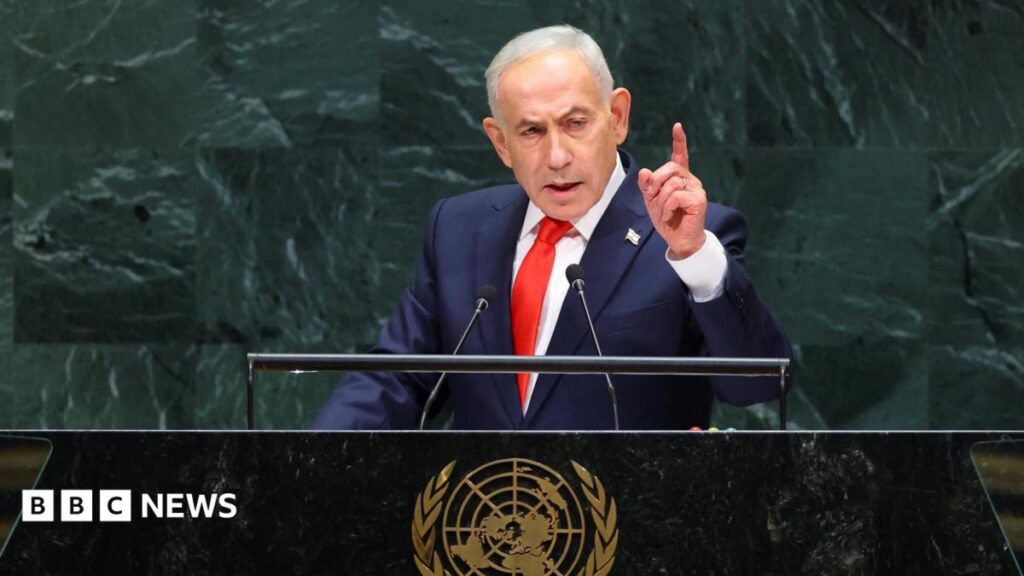
On September 25, 2026, Israeli Prime Minister Benjamin Netanyahu took the podium at the United Nations General Assembly to justify a month‑long military campaign in Gaza that has left thousands dead and sparked worldwide protests. The speech came after Israel’s latest air and ground operations, which it says target Hamas infrastructure but which humanitarian groups say have indiscriminately harmed civilians.
The UNGA has become a symbolic arena for the Israel‑Palestine conflict, with member states routinely using the platform to condemn or defend actions on both sides. In recent years, the assembly has seen a surge in walk‑outs and vocal interruptions whenever the topic of Gaza is raised, reflecting deepening polarization within the international community.
Netanyahu’s remarks were framed as a defence of Israel’s right to self‑defence, while also warning that any further criticism could embolden extremist groups. He referenced Israel’s security concerns and the need for “uncompromising” action, a narrative that mirrors his government’s messaging since the war’s escalation in August 2024.
The walk‑out: who left and why
During the speech, delegations from more than a dozen countries—including South Africa, Nigeria, Kenya, and several Arab League members—stood and exited the hall in a coordinated protest. The move was organized by a coalition of African and Middle Eastern states that had previously signed a joint statement calling for an immediate ceasefire.
According to a press release from the African Union’s Department of Political Affairs, the walk‑out was intended to signal “collective moral outrage” at what the signatories described as disproportionate use of force. The African bloc has historically supported the Palestinian cause, and many of its members view Israel’s actions as a breach of international humanitarian law.
Reporters from Reuters noted that the protest was largely peaceful, with delegates quietly filing out rather than shouting slogans. However, the visual impact was undeniable: dozens of flags were lowered, and the UN’s iconic green chamber was left noticeably emptier for the remainder of the address.
Netanyahu’s ‘moral cowards’ label – a political calculation
After the walk‑out, Netanyahu responded by calling the departing diplomats “moral cowards,” a phrase that quickly spread across social media and mainstream outlets. The prime minister’s choice of words is consistent with his broader rhetorical strategy of framing criticism as cowardice or betrayal, a tactic he has used in domestic politics to rally his base.
Political analysts in Israel, such as Dr. Yael Ziv of the University of Tel Aviv, argue that the insult serves two purposes: it deflects attention from the humanitarian toll of the Gaza offensive and it consolidates nationalist support at home ahead of upcoming elections in 2027. By portraying external critics as weak, Netanyahu hopes to reinforce a narrative of existential threat that justifies continued military pressure.
The comment also reverberated beyond the UN hall. Pro‑Israel lobby groups in the United States cited the prime minister’s language as evidence of a “double standard” in global media coverage, while Palestinian advocacy organizations condemned the rhetoric as inflammatory and dehumanising.
African diplomatic landscape: shifting ties with Israel
The incident underscores a broader transformation in Africa’s foreign policy toward Israel. While many African nations supported the Palestinian cause during the Cold War, the last decade has seen a gradual normalisation of relations, exemplified by Sudan’s 2023 diplomatic breakthrough and Kenya’s 2025 trade agreement with Israeli tech firms.
Nonetheless, the walk‑out demonstrates that the African consensus is far from monolithic. Countries like South Africa and Nigeria continue to champion Palestinian rights at the UN, often aligning with Arab states. According to a briefing by the African Centre for Strategic Studies, these nations view Israel’s military actions as a test of Africa’s credibility on human rights advocacy.
For the African diaspora in Europe and North America, the episode resonates deeply. Community leaders in London’s Southall district reported a spike in solidarity protests following the UN session, linking the walk‑out to broader anti‑racism and anti‑colonial movements that many diaspora groups associate with the Palestinian struggle.
What’s next: UN resolutions, diplomatic fallout and diaspora response
In the days after the speech, the UN Security Council is expected to debate a resolution calling for an immediate ceasefire in Gaza. African states that walked out are likely to co‑sponsor amendments that demand independent investigations into alleged war crimes, a move that could force Israel into a diplomatic corner.
If the resolution passes, Israel may seek to leverage its strategic partnerships with the United States and a handful of European countries to veto or dilute the language. Analysts at the International Crisis Group warn that a stalemate could further erode the UN’s credibility on conflict mediation, especially in regions where African nations feel their voices are routinely sidelined.
Meanwhile, diaspora organisations are organising fundraising drives for Gaza relief and lobbying their host governments to adopt tougher stances on Israel. The episode has also ignited debate within African media circles about whether walking out of the UN is an effective protest or a symbolic gesture that fails to translate into concrete policy change.
Quick Answers
Why did African countries walk out of Netanyahu's UN speech?
They left to protest Israel's Gaza offensive, labeling it a breach of international humanitarian law and to signal collective African opposition to the military action.
What does Netanyahu mean by calling the delegates ‘moral cowards’?
He used the phrase to dismiss critics as lacking courage, a rhetorical tactic aimed at deflecting criticism and rallying domestic support.
How might this UN walk‑out affect Africa‑Israel relations?
It highlights a split: while some African states are deepening ties with Israel, others remain staunchly pro‑Palestinian, potentially complicating future diplomatic and trade agreements.
Source: www.bbc.co.uk


💬 Comments 0