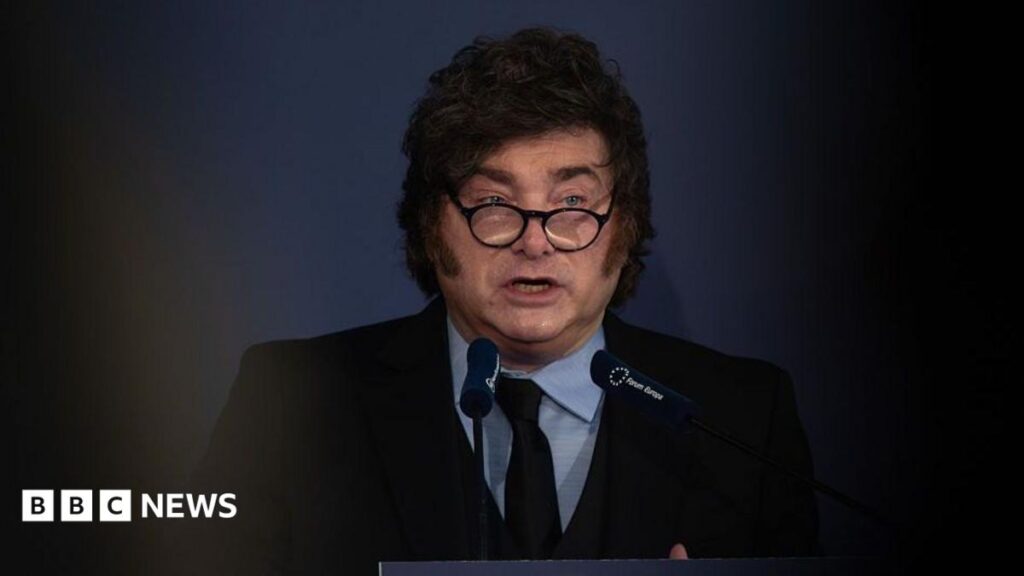
Argentina drops investigation into President Javier Milei over crypto fraud, sparking market and regulatory fallout
Background: Milei’s crypto flirtation and the deleted post
Since taking office in December 2023, libertarian President Javier Milei has cultivated a reputation for championing deregulation and embracing digital assets. His public statements have often praised Bitcoin and other cryptocurrencies as tools to bypass what he describes as a “failed monetary system” in Argentina, a country still wrestling with soaring inflation that has pushed many citizens toward alternative stores of value.
In early September 2026, Milei posted a short video on X (formerly Twitter) touting a newly launched token that promised “instant returns” for early adopters. Within hours, the token’s price surged, only to plunge dramatically after Milei abruptly deleted the post and issued a brief apology, saying he had been misled by the project's developers. The episode ignited a wave of criticism from consumer‑protection groups and opposition lawmakers who accused the president of either negligence or deliberate fraud.
The investigation and its sudden termination
The Argentine Federal Prosecutor’s Office opened a formal inquiry in mid‑September, alleging that Milei’s endorsement may have constituted a breach of market‑manipulation laws. Investigators reportedly seized communications between the president’s communications team and the token’s founders, and they summoned several senior aides for questioning, according to La Nación.
Just three weeks later, the prosecutor’s office announced that the case would be closed without charges. The statement, released on October 20, cited “insufficient evidence to prove intent to defraud” and emphasized that the president’s post had been deleted before any significant financial loss could be directly linked to his endorsement. Sources close to the investigation said the decision was influenced by political pressure and a lack of clear legal precedent for prosecuting a head of state over social‑media‑driven crypto hype.
Why the dismissal matters for Argentina’s fragile economy
Argentina’s economy remains on shaky ground, with annual inflation hovering around 210 % and a foreign‑exchange shortage that has forced many to turn to cryptocurrencies for everyday transactions. The Milei episode underscored how presidential rhetoric can instantly move capital in a market already prone to volatility. By dropping the case, critics argue the government is sending a signal that high‑profile figures can promote speculative assets with little accountability, potentially worsening capital flight.
Economists at the University of Buenos Aires warned that the lack of enforcement could erode public trust in any future regulatory framework. “When the head of state appears to be above the law, it discourages ordinary investors from expecting protection,” said Dr. Lucía Fernández in an interview with Bloomberg. The comment reflects broader concerns that Argentina’s attempts to formalize crypto activity—such as the 2025 “Digital Asset Registry” law—might be undermined if political leaders continue to treat digital tokens as personal promotional tools.
Ripple effects on African crypto markets and diaspora investors
The Milei saga is resonating far beyond South America, especially among African crypto users who closely watch Latin American regulatory swings. Nigeria, Kenya and South Africa together account for over 30 % of global crypto transaction volume outside the United States, according to Chainalysis. Many Nigerians, for instance, have been investing in “high‑yield” tokens that promise returns similar to the Argentine token Milei promoted.
Diaspora investors in Argentina—estimated at roughly 1.2 million by the Argentine Ministry of Foreign Affairs—have also felt the tremor. A survey conducted by the Lagos‑based fintech hub Kuda in October found that 18 % of Nigerian expatriates in Buenos Aires had allocated part of their savings to the same token before the post was deleted. The abrupt market swing prompted a wave of complaints to Argentina’s consumer‑protection agency, highlighting how political endorsement can have immediate cross‑border financial consequences.
A broader pattern: politicians, crypto hype and regulatory gaps
Milei’s episode joins a growing list of high‑profile political figures who have either endorsed or been implicated in crypto scams. In 2022, former U.S. Congressman Ron DeSantis faced scrutiny over a promotional tweet for a blockchain startup, while in 2024 Turkey’s president hinted at a state‑backed digital coin that later flopped. These cases expose a regulatory blind spot: existing securities and market‑manipulation statutes were drafted before the rise of decentralized finance, leaving courts to interpret old rules in a new context.
Legal scholars in the African continent have taken note. Professor Amina Kouyaté of the University of Dakar argues that “the Milei decision illustrates the danger of applying traditional financial law to a decentralized ecosystem without clear guidance.” She adds that African regulators, many of whom are still drafting basic crypto legislation, should anticipate similar political‑driven market moves and embed explicit conflict‑of‑interest provisions.
What’s next: potential reforms and diaspora reactions
In the wake of the dropped investigation, opposition lawmakers have filed a bill that would criminalize the public endorsement of unregistered digital assets by any elected official. The draft, known as the “Transparent Digital Promotion Act,” seeks to impose fines and, in extreme cases, temporary suspension of office for repeat offenders. While the bill faces an uphill battle in a Congress dominated by Milei’s coalition, its introduction signals a growing appetite for clearer rules.
Among the Argentine diaspora, reactions are mixed. Some Nigerians and other African expatriates expressed disappointment, fearing that the lack of accountability may deter future investment in Argentina’s emerging fintech scene. Others see an opportunity: “If the government finally clarifies the rules, we can build legitimate bridges between African crypto hubs and Argentine tech startups,” said Chinedu Obi, founder of the diaspora‑focused venture fund AfroLatAm. The episode may therefore catalyze a new wave of cross‑continental partnerships—provided the regulatory environment stabilises.
Quick Answers
Why did Argentina drop the investigation into President Milei’s crypto post?
Prosecutors said there was insufficient evidence of intent to defraud and noted the post was deleted before any clear financial loss could be tied to the president’s endorsement.
How could Milei’s crypto controversy affect African investors?
Many African diaspora investors in Argentina had bought the promoted token; the sudden price crash highlighted how political hype can trigger cross‑border losses and has sparked calls for tighter crypto rules.
What legislation is being proposed in Argentina after the case was closed?
Opposition lawmakers introduced the “Transparent Digital Promotion Act,” which would penalise elected officials for publicly endorsing unregistered digital assets.
Source: www.bbc.co.uk




💬 Comments 0