Bangkok Floods 2026: Streets Submerged, Thai Export Risks for Africa & Climate Warning
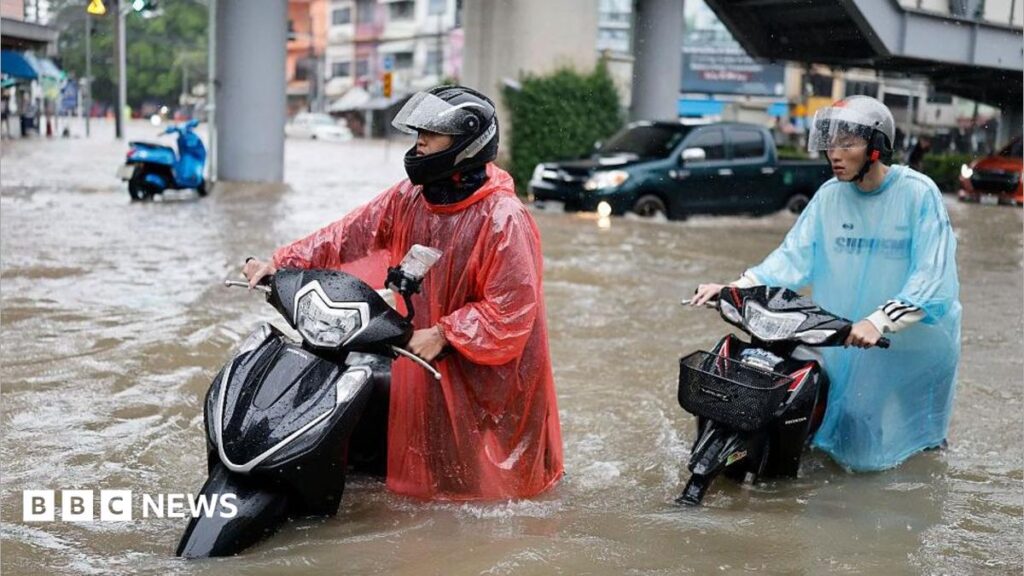
The deluge hits Bangkok
From the night of September 22, the Thai capital was pounded by an unprecedented spell of heavy rain. Meteorological agencies recorded more than 300 mm of precipitation in 48 hours, a volume usually spread over a week. By September 25, water had risen to waist‑high levels in many districts, forcing the government to declare a state of emergency across the city.
The flooding has crippled key arteries such as Rama IV and Sukhumvit, turning bustling boulevards into rivers. Public transport, including the BTS Skytrain and MRT subway, halted service on several lines, leaving commuters stranded and prompting the army to assist with evacuations. Residents in low‑lying neighbourhoods like Bang Kapi and Thonburi have been urged to move to temporary shelters set up in schools and community centres.
Immediate economic fallout in Thailand
The sudden loss of mobility has already dented Thailand’s service sector, a pillar that contributes roughly 55 % of GDP. Hotels in the central business district reported occupancy drops of up to 40 % as tourists scramble to cancel bookings. Small businesses, especially street food vendors and market stalls, face losses that could push many out of operation for weeks.
More concerning for the broader economy is the disruption to logistics hubs that feed export‑driven industries. While the main seaport of Laem Chabang remains operational, road links that connect factories in the Eastern Economic Corridor to the port are jammed or under water. Analysts at Bloomberg estimate that the slowdown could shave off 0.3 % of Thailand’s annual export growth, a figure that may look modest but becomes significant for trade partners that rely on Thai rice, seafood and automotive parts.
Why African markets should care
Thailand is the world’s second‑largest rice exporter, and about 15 % of African rice imports come from Thai mills. The flood‑induced bottleneck threatens to tighten supply at a time when African governments are already grappling with higher food prices caused by the war in Ukraine and droughts in the Sahel. If Thai shipments are delayed, import‑dependent nations such as Nigeria, Kenya and Ghana could see price spikes that hurt low‑income households.
Beyond staple foods, Thailand supplies a growing share of processed seafood to African supermarkets. Companies like Thai Union have distribution centres in South Africa and Egypt; any interruption in the cold‑chain logistics could force retailers to turn to pricier local alternatives or to suppliers from Latin America, reshaping market dynamics. Moreover, the tourism sector—an important source of foreign exchange for African travelers—could see a dip as Thai authorities advise postponing non‑essential travel, affecting African expatriates and students studying in Thailand.
A climate echo chamber: parallels with African cities
Bangkok’s flood crisis is not an isolated incident. Climate scientists have warned that megacities built on low‑lying river deltas are increasingly vulnerable to “compound events” – simultaneous heavy rain, sea‑level rise and inadequate drainage. Lagos, Kinshasa and Dar es Salaam are already confronting similar threats, with the World Bank projecting that annual flood damages could exceed $30 billion across sub‑Saharan Africa by 2030.
What sets Bangkok apart is its decades‑long investment in flood‑control infrastructure, from massive canals to underground water storage tanks. Yet the 2026 event exposed gaps in maintenance and urban planning, lessons that African city planners are watching closely. A recent report by the African Development Bank cited Bangkok’s experience as a case study for how rapid urbanisation can outpace even the most ambitious engineering solutions.
Policy response and regional cooperation
Prime Minister Srettha Thavisin ordered a cabinet‑level task force to coordinate rescue, drainage and relief operations. The government has pledged 10 billion baht (about $280 million) for emergency repairs, and the Royal Thai Navy is deploying amphibious vehicles to reach isolated neighbourhoods. International aid, including a $2 million grant from the UN’s Office for Disaster Risk Reduction, is being mobilised to support vulnerable families.
In the wake of the disaster, ASEAN climate working groups are set to meet in Jakarta next month to discuss a joint “urban flood resilience” framework. African representatives at the upcoming UN Climate Change Conference (COP 29) have signalled interest in sharing best practices, hoping to translate Bangkok’s technical know‑how into affordable solutions for African municipalities.
What lies ahead for Bangkok and its global partners
Experts say the water may not recede fully until the monsoon season ends in November, meaning the city will have to operate under “partial normalcy” for the next two months. Businesses are already revising supply‑chain schedules, and some exporters are rerouting cargo through alternative ports in Malaysia and Vietnam to meet African delivery deadlines.
For African governments and importers, the flood underscores the importance of diversifying food‑security strategies. Building regional grain reserves, investing in local aquaculture and forging contracts with a broader set of suppliers can cushion the impact of distant weather shocks. Meanwhile, the shared vulnerability of Bangkok and many African megacities could become a catalyst for deeper South‑South collaboration on climate‑adaptation financing.
Quick Answers
How will Bangkok's floods affect rice imports to Africa?
Delays at Thai ports could tighten supply, potentially raising rice prices in African import‑dependent countries.
What similarities exist between Bangkok’s flooding and African city floods?
Both are driven by rapid urbanisation on low‑lying deltas, inadequate drainage and intensified rainfall due to climate change.
When is the floodwater expected to recede in Bangkok?
Officials estimate most water will drain by late November, after the monsoon season subsides.
Source: www.bbc.co.uk


💬 Comments 0