BBC exposes Abramovich’s falsified documents to hide yachts and mansions, evading $2bn tax
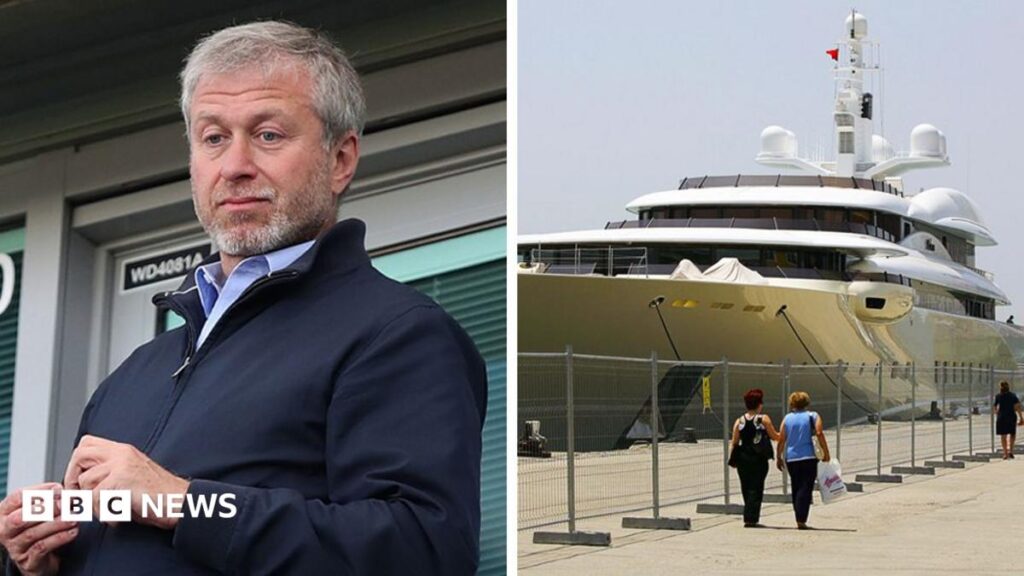
Background: Abramovich’s fortune and Western sanctions
Roman Abramovich, the Russian billionaire best known for owning Chelsea FC, amassed his wealth through oil, aluminium and mining deals that began in the 1990s. After Russia’s invasion of Ukraine in 2022, the United Kingdom, United States and European Union placed him on sanctions lists, freezing his assets and cutting off access to the global financial system.
The sanctions regime forced Abramovich’s legal teams to scramble for ways to keep his property portfolio – which includes several super‑yachts, palatial villas in the French Riviera and a sprawling estate in the Lake District – out of the public eye. Tax authorities in the UK and Russia have also been probing whether he evaded billions of dollars in income and capital‑gains tax over the past decade.
In this climate, offshore structures and complex paperwork have become the go‑to tools for many sanctioned Russians. Prior investigations have shown that some oligarchs route money through jurisdictions such as the Seychelles, Mauritius and the British Virgin Islands, exploiting lax reporting standards to conceal ownership.
The BBC investigation reveals falsified paperwork
A three‑month BBC Panorama probe, released this week, uncovered a trove of back‑dated documents that deliberately omitted Abramovich’s most valuable assets. The files, filed with UK Companies House and Russian tax authorities, listed his holding companies as having no yachts, no luxury homes and a dramatically reduced cash balance.
According to the BBC, the falsified records were signed by lawyers and accountants who later claimed they were misled about the true purpose of the filings. The investigation cites internal emails showing that the paperwork was prepared weeks before a scheduled audit by HM Revenue & Customs, suggesting a pre‑emptive attempt to dodge a tax assessment worth roughly $2 billion.
Financial analysts say the scheme mirrors tactics used by other sanctioned oligarchs, where ownership is transferred to shell companies that file “nil” statements. The BBC’s findings add a new layer of detail by showing that the back‑dating was not a clerical error but a coordinated effort to rewrite the financial history of Abramovich’s empire.
Why the deception matters for global tax enforcement
The case underscores a growing weakness in international tax cooperation: the ability of wealthy individuals to rewrite paper trails after sanctions are imposed. When assets disappear from official registers, tax authorities lose the basis for calculating owed taxes, and sanctions‑enforcement bodies lose a clear line of sight to frozen wealth.
Experts at the OECD’s Base Erosion and Profit Shifting (BEPS) project have warned that back‑dating documents erodes trust in corporate registries worldwide. If courts accept such filings as legitimate, it could set a precedent that emboldens other high‑net‑worth individuals to use similar tricks, undermining the global fight against illicit finance.
The potential revenue loss is staggering. The UK’s Treasury estimates that the combined tax gap from hidden offshore assets among sanctioned Russians could exceed £10 billion over the next five years. Recovering even a fraction of Abramovich’s alleged $2 billion tax bill would send a strong signal that evasion tactics will be met with concrete penalties.
Implications for Africa and offshore finance
While Abramovich’s assets are largely European, the mechanisms used to conceal them have a direct bearing on African offshore centres. Nations such as Mauritius, Seychelles and the Cayman Islands have historically been gateways for Russian money entering Africa’s real‑estate, mining and hospitality sectors.
Recent reports from Transparency International note a rise in Russian‑linked investments in African luxury hotels and yacht‑charter businesses since 2022. If the same back‑dating tactics are employed in African jurisdictions, local tax bodies could miss out on billions in revenue, and the continent’s reputation for financial transparency could suffer.
African regulators are therefore watching the Abramovich case closely. The African Union’s Continental Financial Inclusion Strategy, launched in 2023, calls for tighter beneficial‑owner disclosure rules. The BBC findings could accelerate regional reforms, prompting countries to adopt stricter filing deadlines and to share data with the Financial Action Task Force (FATF).
Reactions from regulators, legal circles and the public
HM Revenue & Customs announced a formal investigation into the falsified filings and said it would pursue civil penalties and possible criminal prosecution. In a statement, the agency warned that “deliberate deception of the tax system will be met with the full weight of the law.”
Legal commentators in London noted that the case could test the limits of the UK’s “piercing the corporate veil” doctrine. Professor Emily Shaw of King’s College London told the BBC that prosecutors will need to prove that the back‑dated documents were not merely inaccurate but intentionally fraudulent, a higher evidentiary hurdle.
Public opinion in the UK and across Europe has been sharply critical. Social‑media campaigns using the hashtag #AbramovichTaxEvasion have trended for days, with citizens demanding that the billionaire pay his fair share and that any assets hidden offshore be seized for public benefit.
What’s next: legal battles and policy reforms
The immediate next step is a court hearing scheduled for early 2027, where HMRC will seek an order to compel the disclosure of all hidden assets. If the court finds the back‑dated filings fraudulent, Abramovich could face a multi‑billion‑dollar tax bill plus interest, fines and possible imprisonment for those who facilitated the deception.
On the policy front, the UK government has pledged to tighten filing requirements for offshore entities, introducing real‑time reporting of beneficial owners by 2028. The European Commission is also reviewing its Anti‑Money‑Laundering Directive to close loopholes that allow documents to be retroactively altered.
For African jurisdictions, the fallout may translate into a push for greater alignment with international standards. Several African finance ministries have already signalled intent to adopt the OECD’s Common Reporting Standard, a move that could make it harder for future oligarchs to hide assets on the continent.
Quick Answers
What did the BBC discover about Abramovich’s tax documents?
The BBC found that back‑dated paperwork deliberately omitted Abramovich’s yachts, mansions and billions in cash, a scheme designed to evade roughly $2 billion in taxes.
How could Abramovich’s deception affect African economies?
If similar back‑dating tactics are used in African offshore centres, the continent could lose significant tax revenue and face reputational damage in global finance.
What legal action is expected against Abramovich?
HM Revenue & Customs plans to bring a court case in early 2027 seeking to force full asset disclosure and recover unpaid taxes, with possible criminal charges for fraud.
Source: www.bbc.co.uk




💬 Comments 0