Albania protests 2026: Riot police clash with demonstrators in Tirana, dozens injured
Background: A fragile coalition and a simmering crisis
Since the 2023 parliamentary election, Albania has been governed by a coalition led by Prime Minister Edi Rama’s Socialist Party, which has faced accusations of corruption, media intimidation and a weakening of judicial independence. The opposition, a patchwork of right‑wing and centrist parties, has repeatedly called for early elections, claiming the government has eroded democratic safeguards. Economic growth has slowed, inflation remains above 5 %, and public wages have not kept pace with the cost of living, fueling discontent among students, pensioners and small‑business owners alike. The unrest that erupted in early October follows a series of smaller demonstrations that were met with heavy police presence, setting the stage for a wider confrontation.
Albania’s strategic location on the Adriatic and its recent push for European Union accession have added pressure to its internal politics. EU officials have warned that democratic backsliding could stall accession talks, while foreign investors watch closely for signs of stability. In this climate, the government’s decision in late September to pass a controversial media law—perceived by many as curbing press freedom—served as a catalyst for the mass mobilisations that culminated in Saturday’s street battles.
The Saturday clashes: What unfolded in Tirana
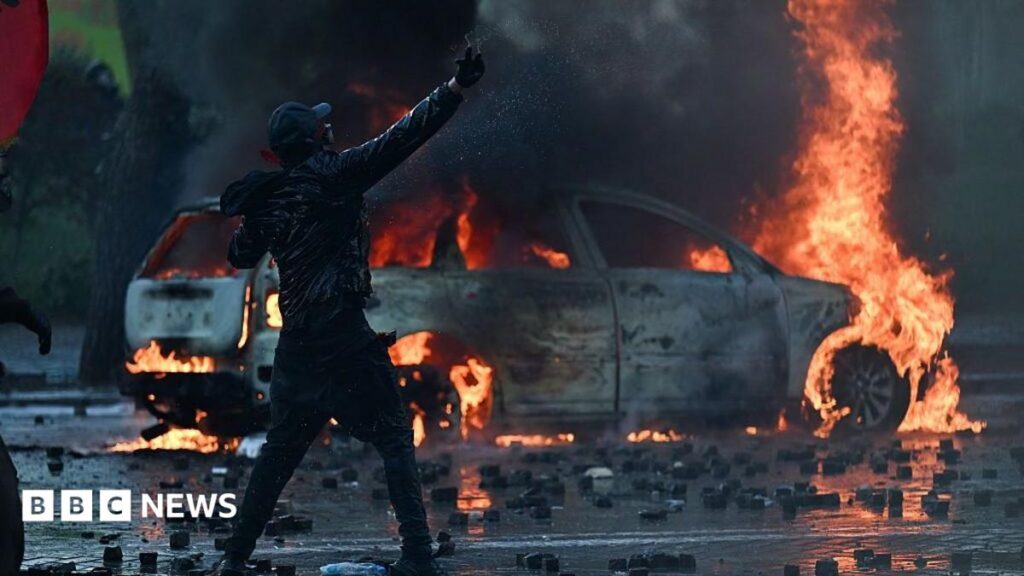
On Saturday, thousands of demonstrators gathered in Skanderbeg Square, chanting slogans demanding the resignation of the prime minister and the release of jailed opposition leaders. Within minutes, riot police deployed tear‑gas canisters and water‑cannon trucks, prompting several flashpoints across the capital. According to local media reports, at least 150 people were injured, including dozens with serious injuries from rubber‑bullet impacts. Video footage shared on social networks showed protesters using makeshift shields and confronting officers near the National History Museum, while other groups attempted to block the main thoroughfare leading to the parliament building.
Authorities declared a temporary state of emergency in the city centre, restricting movement and ordering the closure of several cafés and shops that had become informal rally points. The police chief, Major General Arben Çela, told state television that the force used was “proportionate to the threat” and warned that any attempt to storm government buildings would be met with “decisive action”. Human Rights Watch, however, later described the police response as “excessive and indiscriminate”, calling for an independent investigation into alleged abuses.
Why the unrest matters beyond Albania’s borders
The violence in Tirana reverberates through the Balkans, a region already grappling with political volatility in neighboring Kosovo, Serbia and North Macedonia. For the European Union, Albania’s turmoil raises doubts about the credibility of its enlargement agenda, especially as Brussels seeks to showcase the Western Balkans as a model of democratic transition. The EU’s foreign‑policy chief, Josep Borrell, warned that continued instability could “delay accession talks and jeopardise funding programmes that support rule‑of‑law reforms”.
Beyond the political sphere, the protests could have tangible effects on migration routes that cross Albania. The country has become a key transit point for African and Middle‑Eastern migrants aiming for Italy or Greece, with many using the Balkan corridor after entering the EU through Serbia or Montenegro. Disruptions at the capital’s main transport hubs could slow down border‑control operations, potentially creating temporary bottlenecks that either force migrants to linger longer in Albania or push smuggling networks to reroute through more dangerous pathways. NGOs such as the International Organization for Migration have warned that any slowdown could increase the exposure of vulnerable migrants to exploitation.
Reactions: From the streets to the diaspora
Inside Albania, opposition leader Sali Berisha (no relation to the former president) called the Saturday events a “state‑sanctioned massacre”, urging the international community to intervene. Meanwhile, civil‑society groups organized a candlelight vigil the following night, highlighting concerns over police brutality and demanding an independent inquiry. The Albanian diaspora, particularly the sizeable community in the United Kingdom and the United States, took to social media to voice solidarity, with several diaspora organisations pledging to lobby their host governments for a diplomatic push that would pressure Tirana to respect democratic norms.
In the African diaspora, the news sparked a different kind of response. Community leaders in Italy’s Albanian‑speaking neighborhoods, many of whom are of African origin, warned that the unrest could complicate already fragile integration efforts for migrants who rely on Albanian‑run NGOs for language training and job placement. A spokesperson for the African Union’s Migration Department noted that “instability in transit countries directly impacts the safety and rights of African migrants seeking a route to Europe”.
What’s next: Possible scenarios for Albania and its migrants
The government has announced a parliamentary inquiry into the police’s conduct and has pledged to review the contested media law. Analysts at the European Council on Foreign Relations argue that a genuine reform package could calm the streets and restore some EU confidence, but they caution that any perceived half‑measures may only deepen the opposition’s resolve. In the short term, the state of emergency is likely to stay in place for at least another 48 hours, allowing security forces to re‑establish control over the city centre.
For African migrants, the immediate concern is the continuity of safe passage through the Balkans. If Albanian authorities tighten border checks in response to the unrest, smuggling groups may shift routes toward the more perilous Adriatic sea crossing, raising the risk of loss of life. Humanitarian organisations are urging donors to allocate emergency funds to support migrants stranded in Albania while they await clearer guidance. In the longer view, the episode could become a catalyst for a broader regional dialogue on migration management, potentially involving African Union representatives, the EU, and Balkan states to negotiate safer, more regulated pathways.
Quick Answers
How many people were injured in the Tirana protests?
Local reports say at least 150 protesters were injured, with dozens sustaining serious injuries from police‑used rubber bullets.
Will the protests affect Albania’s EU accession talks?
EU officials have warned that ongoing instability could delay accession negotiations and threaten funding for rule‑of‑law reforms.
How might the unrest impact African migrants traveling through Albania?
Disruptions at border checkpoints could slow migrant flows, forcing smugglers to use riskier routes and increasing the vulnerability of African migrants seeking entry to Europe.
Source: www.bbc.co.uk




💬 Comments 0