Brendan Nugent’s Silent First Court Hearing Over Attack on MP Helen Haines, Wangaratta 2026
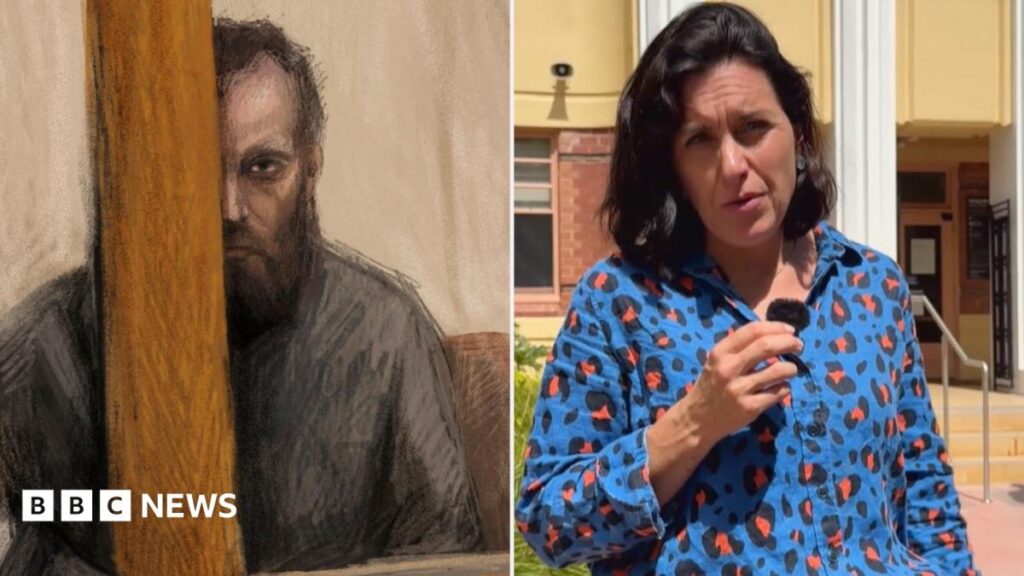
Background: the alleged attack on Helen Haines
On 15 October 2026, Australian federal MP Helen Haines, representing the regional seat of Indi in Victoria, reported that she had been physically assaulted outside her constituency office in the town of Wangaratta. The incident, captured on CCTV, showed a man pushing her and shouting profanities before fleeing the scene. Haines, a member of the Australian Labor Party, quickly lodged a police report and called for a swift investigation, citing concerns about the safety of elected officials in an increasingly hostile political climate.
The alleged assailant was identified as 43‑year‑old Brendan Nugent, a local resident with no prior criminal record. Police said Nugent was apprehended the following day after a community tip-off and charged with assaulting a public official, a misdemeanor under Victorian law. The case has drawn national attention because it follows a spate of threats and attacks on Australian politicians, some of which have been linked to online harassment campaigns.
Helen Haines has been a vocal advocate for mental‑health services and rural health infrastructure, issues that have resonated strongly with her electorate. Her public profile, combined with recent heated debates over climate policy and immigration, may have amplified the political tensions that culminated in the alleged assault.
The first court appearance in Wangaratta
Brendan Nugent appeared before the Wangaratta Magistrates’ Court on 21 October 2026 for his first hearing. The courtroom was unusually packed for a magistrate matter, with local journalists, community members, and a handful of Haines supporters in attendance. The prosecution outlined the charges – assault on a public officer and intimidation – and presented the CCTV footage as primary evidence.
When asked to enter a plea, Nugent remained silent, invoking his right to remain mute under Australian law. His legal counsel, senior barrister Amelia Clarke, entered a not‑guilty plea on his behalf and warned the court that Nugent would contest the evidence, suggesting the video could have been edited. The magistrate, Justice Michael O’Leary, ordered a pre‑trial hearing to discuss bail and the admissibility of the footage, setting the next date for 5 November.
The silence of the accused sparked a flurry of commentary on social media. Some observers interpreted the silence as a tactical move, while others saw it as a sign of disrespect for the judicial process. According to the Australian Broadcasting Corporation, legal experts note that remaining silent is a common strategy in assault cases where the defence plans to challenge the credibility of the prosecution’s evidence.
Why the silence matters: legal and political implications
In Australian courts, a defendant’s decision not to speak does not equate to an admission of guilt, but it does limit the ability of the defense to shape the narrative early on. By staying silent, Nugent forfeits the chance to present an immediate counter‑argument to the CCTV footage, potentially allowing the prosecution’s version of events to dominate the public discourse.
Politically, the case underscores the vulnerability of parliamentarians who operate in regional constituencies where personal interactions with constituents are frequent. A study by the Parliamentary Library in 2025 found that 18 % of Australian MPs had reported at least one threat or act of intimidation in the previous year, a rise from 12 % in 2022. The silence of the accused may therefore be perceived as an attempt to intimidate not just the victim but also other elected officials who could face similar attacks.
The broader legal community is watching the case for its potential to set precedent on how digital evidence, such as CCTV recordings, is scrutinised in assault trials. If the defence successfully argues that the footage was tampered with, it could compel law‑enforcement agencies to adopt stricter chain‑of‑custody protocols, affecting future prosecutions of political violence.
Wider ramifications for democratic safety and free speech
Australia’s recent experience with political aggression mirrors trends in several democracies where polarized online environments spill over into physical confrontations. The Australian Institute of Criminology reported a 27 % increase in assaults on public officials between 2022 and 2025, a surge that coincides with the rise of extremist social‑media groups. The Nugent‑Haines case may become a litmus test for how effectively the justice system can deter such behaviour.
Civil liberties groups have warned that an overly punitive approach could clash with free‑speech protections. The Australian Human Rights Commission, in a statement issued after the hearing, urged legislators to balance security measures with the right to protest, noting that “the line between legitimate dissent and criminal intimidation must remain clear.”
For the electorate, the incident has reignited debates about the adequacy of security funding for MPs, especially those serving remote or regional districts. In the weeks following the hearing, the Department of Parliamentary Services announced a review of security protocols, promising additional training for staff and the installation of more robust surveillance systems in constituency offices.
Connecting the dots: political violence in Australia and Africa
While the Nugent case is rooted in a local Australian context, it resonates with a pattern of attacks on lawmakers across the African continent. In 2024, Kenya’s parliament saw three MPs assaulted during constituency visits, and in Nigeria, a federal legislator survived a knife attack in Lagos last year. These incidents highlight a shared challenge: the erosion of safe spaces for elected representatives in both mature and emerging democracies.
African observers note that the drivers of violence—social media amplification, economic frustration, and mistrust of political elites—are strikingly similar. A 2025 report by the African Union’s Centre for Election Integrity warned that online hate speech is increasingly translating into real‑world aggression, a phenomenon also documented in Australia’s recent parliamentary assault statistics.
For the African diaspora in Australia, the case carries a personal dimension. Communities from Nigeria, South Africa, and Ghana have long advocated for stronger protections for minority politicians who may be targeted for their ethnic background or policy positions. The Nugent‑Haines hearing could serve as a catalyst for cross‑continental dialogue on safeguarding democratic participation, encouraging diaspora groups to share best practices and lobby for legislative reforms that protect all elected officials, regardless of geography.
Quick Answers
What charges does Brendan Nugent face for the alleged attack on Helen Haines?
He is charged with assaulting a public officer and intimidation under Victorian law.
Why did Brendan Nugent remain silent during his first court hearing?
He invoked his right to remain mute, a common legal strategy while his defence prepares to challenge the evidence.
How does this case relate to political violence trends in Africa?
Similar assaults on MPs have risen in several African nations, reflecting a global pattern where online hostility translates into physical attacks on elected officials.
Source: www.bbc.co.uk




💬 Comments 0