Canada trade war with US 2026: lumber tariffs, steel duties and what it means for African exporters
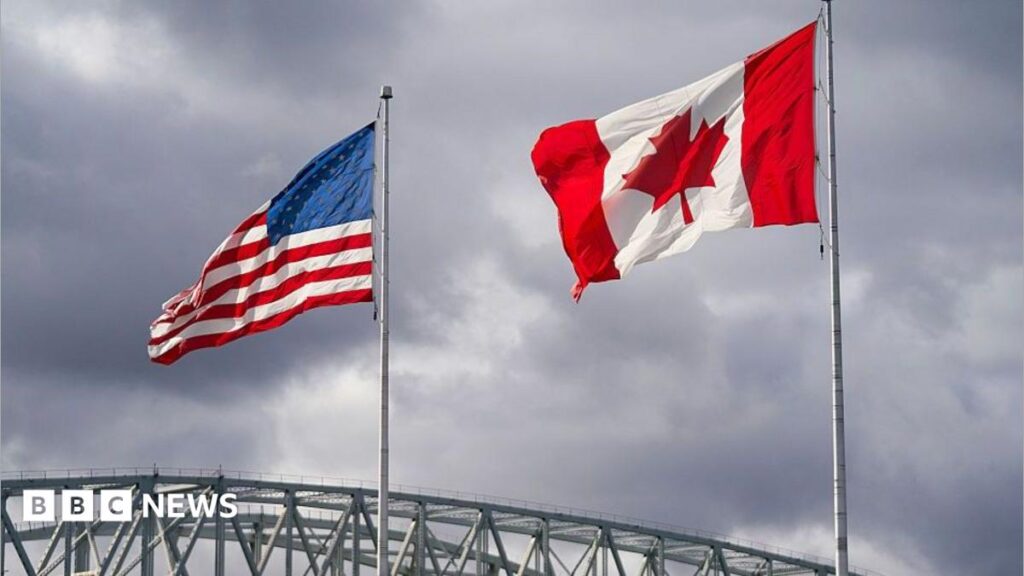
Background – how the US‑Canada trade fight escalated
The United States and Canada have long shared a deep economic bond, with bilateral trade exceeding $650 billion in 2025. That partnership, however, has frayed over the past year as Washington rolled out a series of punitive duties on Canadian steel, aluminum and softwood lumber – commodities that make up a sizable slice of Canada’s export basket. The move, announced by the Office of the US Trade Representative in March 2026, was framed as a response to alleged unfair subsidies and dumping, but many analysts see it as a bargaining chip in a broader geopolitical contest over North‑American supply chains.
Canada’s government, led by Prime Minister Justin Trudeau, quickly retaliated with counter‑tariffs on US agricultural products, including pork and wheat, and threatened to invoke dispute‑settlement mechanisms under the United States‑Mexico‑Canada Agreement (USMCA). The tit‑for‑tat has already raised the cost of cross‑border goods for manufacturers, construction firms and consumers on both sides of the border, while also prompting a wave of political posturing in Ottawa and Washington.
The dispute is not limited to raw materials. Technology firms, especially those involved in clean‑energy components, have been caught in the cross‑fire as the US seeks to protect its own emerging industries. Canadian companies that rely on US‑sourced semiconductors now face longer lead times and higher prices, a pressure that could ripple through sectors ranging from automotive to aerospace.
Why Canada still matters in the fight
Despite the United States’ larger market size, Canada wields considerable leverage because of its role as a reliable source of high‑quality natural resources and its strategic position in North‑American logistics. The country controls roughly 40 % of the world’s forest‑product exports, and its timber and lumber supply chains are integral to construction projects across the United States. A prolonged tariff on softwood lumber therefore threatens to raise housing costs and delay infrastructure projects in key US states such as California and Texas.
Beyond timber, Canada’s steel and aluminum sectors are essential for the automotive industry, which straddles the border with factories in Ontario and Michigan. Any disruption to the flow of these metals could force car manufacturers to re‑tool supply chains, potentially slowing the rollout of electric‑vehicle (EV) models that depend on lightweight, high‑strength alloys. This is a concern not only for US automakers but also for Canadian firms that have invested heavily in EV battery production.
Politically, Canada enjoys a degree of diplomatic independence that the United States cannot ignore. Ottawa’s ability to rally support from other USMCA partners – notably Mexico – and to appeal to World Trade Organization (WTO) panels gives it a platform to contest US measures on an international stage. This diplomatic weight makes the trade war a high‑stakes game of leverage rather than a one‑sided assault.
The African angle – how the dispute could touch the continent
African countries that export raw materials to Canada may feel the indirect effects of the trade war. Canada imports a growing share of timber and mineral concentrates from nations such as Ghana, the Democratic Republic of Congo and Tanzania. If US tariffs depress Canadian demand for lumber, Canadian importers could scale back purchases from African suppliers, tightening revenue streams for forest‑dependent economies that rely on Canadian processing facilities.
Conversely, the tension may open new opportunities for African exporters looking to diversify away from the United States. Canada has signalled interest in expanding its supply of sustainably sourced timber and rare earth minerals, sectors where several African nations have competitive advantages. Trade missions scheduled for late 2026 aim to connect Canadian manufacturers with African producers, potentially reshaping trade routes that have traditionally funneled through Europe or China.
The diaspora dimension should not be overlooked. Over one million Canadians trace their roots to Africa, and many run small‑scale import‑export businesses that bridge the two continents. Tariff hikes on Canadian goods increase the cost of everyday items – from dairy to building materials – for these families, while also prompting some entrepreneurs to explore direct sourcing from African markets as a cost‑saving measure.
Policy tools and possible outcomes
Both governments have a menu of legal and economic instruments at their disposal. The US could deepen its Section 301 investigations, imposing additional duties on Canadian aerospace parts, a sector that accounts for roughly $10 billion in annual trade. Canada, meanwhile, may accelerate its appeal to the WTO’s Dispute Settlement Body, a route that could result in the removal of US tariffs if they are deemed inconsistent with international trade rules.
A less confrontational scenario involves a negotiated settlement within the USMCA framework. Recent statements from US Trade Representative Katherine Tai suggest a willingness to reopen talks if Canada agrees to stricter verification of subsidy claims. Such a compromise could see Canada lift certain counter‑tariffs on US agricultural goods, while the United States rolls back its lumber duties – a win‑win that would stabilise supply chains for both economies.
If negotiations stall, the trade war could expand into new sectors. Analysts warn that technology‑related tariffs, especially on solar panels and wind‑turbine components, could emerge as the next flashpoint. This would have knock‑on effects for African nations investing in renewable‑energy projects that source equipment from Canadian firms, potentially slowing the continent’s clean‑energy transition.
Reactions and what to watch next
Business groups on both sides of the border have urged restraint. The Canadian Chamber of Commerce released a joint statement with the US‑Canada Business Council, calling the tit‑for‑tat “counter‑productive” and urging policymakers to focus on “long‑term competitiveness rather than short‑term political gains.” In Africa, the African Union’s Trade and Industry Committee has asked member states to monitor any shift in Canadian import demand, noting that “supply‑chain shocks in North America can quickly reverberate across African export markets.”
Investors are also recalibrating. Stock indices tied to lumber and steel have shown heightened volatility since the tariffs were announced, and hedge funds are betting on a potential de‑escalation before the end of 2026 fiscal year. For African commodity traders, the key metric to watch will be Canada’s import data – a sudden dip could signal a need to pivot to alternative markets such as the EU or Southeast Asia.
The next major milestone is the USMCA review scheduled for November 2026, where both sides will present evidence on the disputed duties. Observers expect that any resolution – whether a full rollback or a partial compromise – will set a precedent for how North‑American trade disputes are handled in an era of rising protectionism. For African economies and diaspora entrepreneurs, the outcome will shape the contours of market access, pricing stability and cross‑border investment for years to come.
Quick Answers
What are the main US tariffs on Canada in 2026?
The United States imposed duties of up to 25 % on Canadian steel and aluminum and a 10 % tariff on softwood lumber, citing subsidy and dumping concerns.
How could the Canada‑US trade war affect African exporters?
Reduced Canadian demand for timber and minerals may lower orders from African suppliers, while new Canadian sourcing initiatives could create alternative market opportunities.
When is the next chance for a resolution under the USMCA?
A formal USMCA review is set for November 2026, where both countries can present disputes and negotiate possible tariff adjustments.
Source: www.bbc.co.uk




💬 Comments 0