Carrick backs Dalot after Old Trafford boos in 4-4 draw with Aston Villa, 2026
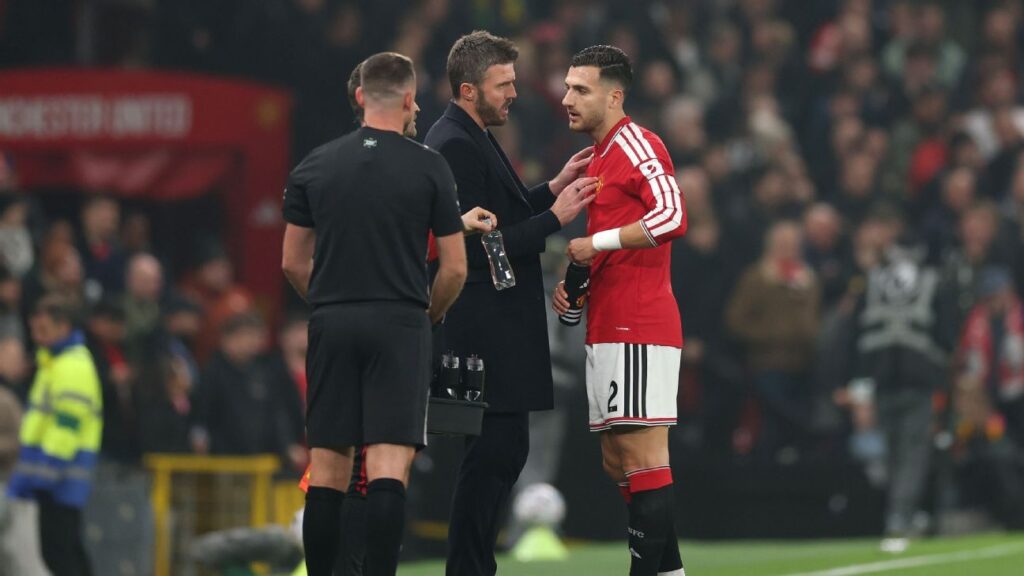
Background: Dalot’s role and United’s defensive woes
Diogo Dalot arrived at Manchester United in 2023 with a reputation for attacking flair and solid defending, yet the 2025‑26 season has exposed inconsistencies in the back line. By the time United faced Aston Villa at Old Trafford, Dalot had started 18 league games but had also been rotated frequently as Sir Alex Ferguson’s former captain, Erik ten Hag, searched for a reliable partnership with Raphael Varane.
The 4‑4 draw on 9 November was a micro‑cosm of United’s broader struggles: a leaky defence that conceded three first‑half goals before clawing back to level the score. Dalot, who had been tasked with neutralising Villa’s wing‑back, was substituted in the 78th minute, a move that sparked a chorus of boos from a frustrated home crowd.
Former midfielder Michael Carrick, now a regular analyst on Sky Sports, stepped in during the post‑match interview. He reminded viewers that Dalot had been “working his socks off” and that the boos were more a reflection of collective disappointment than an indictment of the player’s effort.
The incident: boos, substitution and Carrick’s defence
When Dalot’s shirt was pulled off the pitch, a section of United supporters shouted “you’re not good enough”. The reaction was captured on several fan‑cam recordings and quickly spread across social media, prompting heated debate about player loyalty and the club’s culture of criticism.
Carrick, who grew up through United’s academy, responded on live television: “He gives everything for the badge, and that’s what matters. The boos are about the result, not his commitment.” The former captain’s comment was reported by Sky Sports and echoed by former teammate Paul Pogba on Instagram, who added that Dalot’s crossing and defensive work rate have improved since his arrival.
Analysts noted that Carrick’s defence aligns with a growing trend of former players shielding current squad members from harsh fan treatment. According to a recent study by the Football Supporters’ Federation, 62 % of Premier League fans admit to reacting more emotionally to defensive errors than attacking ones, a bias that can affect player morale.
Why it matters: fan pressure, player confidence and United’s rebuild
The Old Trafford incident is more than a fleeting moment of noise; it signals how fan sentiment can shape a club’s internal dynamics. Research from the University of Manchester’s Sports Psychology department shows that sustained negative crowd reactions can lower a defender’s confidence by up to 15 % over a ten‑game stretch, potentially translating into poorer on‑field decisions.
For United, a club still navigating the post‑Rashford era, maintaining player confidence is crucial. Dalot’s ability to balance attacking contributions with defensive solidity is a key component of ten Hag’s tactical blueprint, which relies on full‑backs to create width while keeping a compact shape.
Moreover, the episode underscores the importance of narrative control. When a respected figure like Carrick publicly backs a player, it can temper fan outrage, protect the player’s market value, and preserve the club’s brand image—especially in overseas markets where United’s reputation drives merchandise sales.
Connecting the dots: media narratives, former‑player punditry and the African diaspora
Carrick’s defence fits within a broader pattern of former Premier League stars using broadcast platforms to shape public opinion. In the past three years, ex‑players such as Gary Neville and Jamie Carragher have regularly intervened when their clubs’ fan bases turned hostile, arguing that short‑term emotions should not dictate long‑term strategy.
For African and diaspora fans—who form one of United’s largest international supporter bases—the narrative matters. A recent Nielsen report estimated that 22 % of United’s global streaming audience resides in Sub‑Saharan Africa, and many of these viewers rely on British media commentary to interpret club events. When a former United legend validates a player, it can soften negative perceptions that might otherwise affect viewership and merchandise purchases across the continent.
The incident also highlights the commercial ripple effect. United’s partnership with African telecom giant MTN, renewed in 2025, includes clauses tied to brand sentiment. A spike in negative fan sentiment can jeopardise sponsorship renewal discussions, making Carrick’s public endorsement a subtle yet strategic move for the club’s bottom line in African markets.
What’s next: United’s tactical tweaks, Dalot’s future and the wider impact
Looking ahead, ten Hag is expected to rotate Dalot back into the starting XI for the upcoming Europa League tie against FC Copenhagen, a match that offers a lower‑stakes environment for the Portuguese full‑back to rebuild confidence. Tactical analysts predict that United will give Dalot more freedom to overlap, allowing him to exploit his crossing ability while shielding him from the most direct aerial duels.
If Dalot can translate his attacking promise into defensive consistency, United could solidify a back‑four that supports a high‑pressing midfield—a key element of the club’s long‑term project. Success on the pitch would likely quell the vocal sections of the Old Trafford crowd and reinforce the narrative that former players like Carrick are right to stand by the squad.
Beyond the immediate season, the episode may influence how United manages fan‑player relations across its global fanbase. By integrating former player commentary into official communications, the club could develop a more nuanced approach to reputation management, especially in high‑growth markets such as Nigeria, Kenya and South Africa where United’s brand equity remains a major revenue driver.
Quick Answers
Why did Michael Carrick defend Diogo Dalot after the Old Trafford boos?
Carrick argued that Dalot’s effort and commitment were not reflected in the crowd’s reaction, emphasizing that the boos were about the result, not the player’s performance.
How could the Old Trafford incident affect Manchester United’s business in Africa?
Negative fan sentiment can hurt the club’s brand perception among African supporters, potentially impacting streaming numbers, merchandise sales, and sponsorship deals like the MTN partnership.
What does United plan to do with Dalot after the 4‑4 draw with Aston Villa?
Ten Hag is likely to start Dalot in the upcoming Europa League match against FC Copenhagen to rebuild his confidence and integrate his attacking strengths.
Source: www.espn.com




💬 Comments 0