Ceuta clashes 2026: African migrants face violence as Spain tightens border
Background: Ceuta’s strategic position on the African‑European migration corridor
Ceuta, a Spanish enclave on the north‑west coast of Morocco, has long been a flashpoint for irregular migration. Its 6‑kilometre fence and heavily guarded port are among the few land gateways for thousands of sub‑Saharan Africans hoping to reach the European Union each year.
In recent months, the number of arrivals has surged as smugglers exploit new routes from Mauritania and Senegal toward the Spanish coast. The influx has strained local services, prompting Spanish authorities to increase patrols and deploy military vehicles to deter crossings.
The European Union’s 2025 migration pact, which calls for tighter external borders and faster deportations, has given member states like Spain a legal framework to act more aggressively at outposts such as Ceuta.
The flashpoint: stone‑throwing, fires and the escalation on the beach
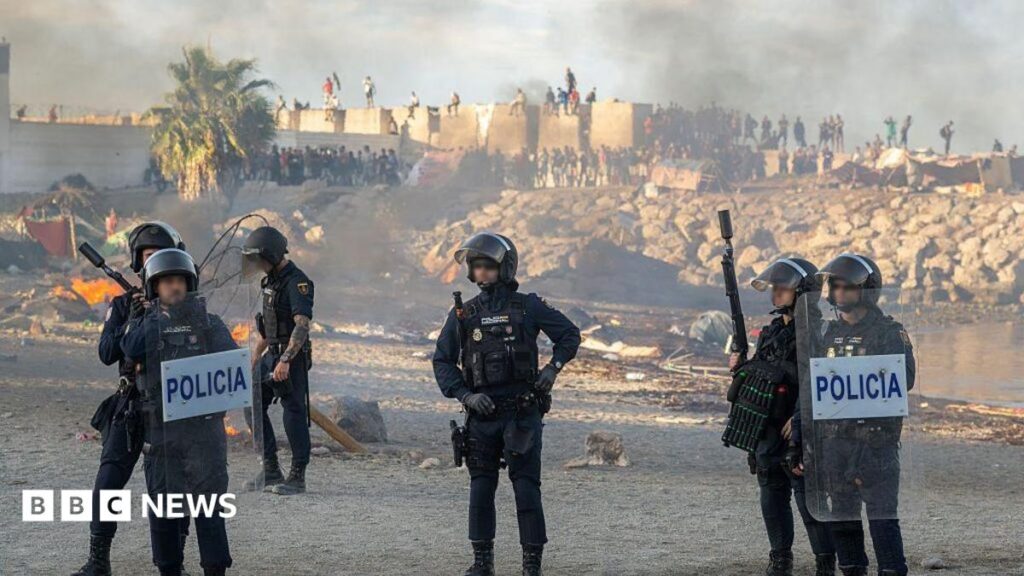
On the morning of 27 August 2026, a group of migrants gathered near the Playa de la Rabia, a makeshift camp that has become a temporary shelter for recent arrivals. According to eyewitnesses, some men hurled stones at a Spanish military vehicle that was patrolling the perimeter.
In retaliation, a handful of local residents—many of them small‑business owners who have long complained about overcrowding—set fire to sections of the camp. The blaze spread quickly across the tarpaulins, forcing dozens of migrants to flee into the sea while others were rescued by humanitarian volunteers.
Police reports indicate that several people were injured, including two migrants with minor fractures and one local who suffered smoke inhalation. The incident was captured on social media, sparking a wave of condemnation and support across different platforms.
Why it matters for Africa: the human cost and the ripple effect on remittances
Most of the migrants involved in the Ceuta clash hail from West African countries such as Ghana, Nigeria, and Ivory Coast. For families back home, each successful crossing can mean a significant boost in remittances, which collectively account for over 15 % of GDP in several of these economies.
When violence erupts at the border, it not only endangers lives but also disrupts the informal networks that facilitate money flows. According to a report by the African Development Bank, heightened border enforcement in 2026 has already caused a 4 % dip in remittance inflows to Ghana compared with the same period last year.
Beyond the economics, the episode underscores a growing sense of frustration among African diaspora communities. Many see the Ceuta incident as a symptom of a broader pattern where European policies ignore the root causes of migration, such as climate‑driven displacement and lack of economic opportunity in the Sahel.
European policy and the ripple effect: tightening borders or pushing migrants farther inland?
Spain’s decision to deploy military vehicles to Ceuta follows a series of EU‑wide measures aimed at curbing irregular arrivals, including increased funding for border‑guard technology and the expansion of offshore interception zones in the Mediterranean.
Critics argue that these tactics merely shift the pressure point, forcing migrants to take longer, more dangerous routes through Libya or the Sahara. A 2026 study by the International Organization for Migration (IOM) warned that every kilometer added to the journey raises the fatality risk by roughly 2 %.
The Ceuta clash may also influence future negotiations on the EU‑Morocco migration partnership. If Spain escalates its security posture, Morocco could be pressured to tighten its own coastal patrols, potentially creating a bottleneck that drives up smuggling fees and fuels criminal networks.
Reactions across the continent: NGOs, governments and the diaspora speak out
Human rights NGOs such as Amnesty International and the African Human Rights Watch have called for an independent investigation into the use of force by Spanish troops, labeling the stone‑throwing incident a “symptom of desperation” rather than a criminal act.
In Accra, the Ghanaian Ministry of Foreign Affairs issued a statement urging Spain to respect the rights of Ghanaian nationals and to provide consular assistance to those detained. Similar appeals have come from Nigeria’s embassy in Madrid, which highlighted the need for transparent processing of asylum claims.
Among the African diaspora in Europe, social media campaigns under the hashtag #CeutaJustice have trended for several days, demanding safer migration pathways and urging European leaders to address the structural inequalities that drive people to risk their lives at borders.
What’s next: legal challenges, policy debates and the future of the migration corridor
Legal experts predict that the incident will trigger a series of lawsuits in Spanish courts alleging excessive use of force and violation of the European Convention on Human Rights. A coalition of migrant rights groups has already filed a petition with the European Court of Human Rights, seeking a halt to the deployment of military vehicles at Ceuta’s border.
On the policy front, the Spanish parliament is expected to debate a new “Border Safety Act” that would grant law‑enforcement agencies broader powers to disperse encampments. If passed, the law could set a precedent for other EU states with similar enclaves, such as Melilla.
For African migrants, the immediate outlook remains uncertain. While some may be deterred by the heightened risk, others are likely to continue seeking the European dream, especially if climate shocks and economic stagnation worsen in the Sahel. The Ceuta clash thus serves as a stark reminder that without coordinated African‑European solutions, the cycle of crisis is poised to repeat.
Quick Answers
Why did violence erupt in Ceuta in August 2026?
Migrants threw stones at a Spanish military vehicle, prompting some locals to set fire to their beach camp, leading to clashes.
How does the Ceuta incident affect African migrants and their home countries?
It threatens the safety of migrants, disrupts remittance flows that support African economies, and fuels frustration among diaspora communities.
What could be the legal consequences for Spain after the Ceuta clash?
Human rights groups plan to sue for excessive force, and the case may reach the European Court of Human Rights, challenging Spain’s border policies.
Source: www.bbc.co.uk




💬 Comments 0