Delhi’s ‘Cockroach’ Protest Aftermath: Why 7,000 Detentions Matter for India’s Economy and Diaspora in 2026
Background: The Rise of the 'Cockroach' Movement
The self‑styled “Cockroach” group emerged in early 2025 as a loosely organised network of anti‑government activists, primarily university students and freelance journalists. Their name, deliberately provocative, reflects a belief that the state treats dissenters as pests to be exterminated. Within a year, they had staged flash‑mob rallies in Delhi, Mumbai and Bengaluru, demanding greater transparency over the 2024 budget allocations for public health and education.
The movement’s rapid growth was fueled by a series of high‑profile arrests of prominent critics, which many saw as a signal that the ruling party was tightening its grip on free speech. By mid‑2026, the group claimed a membership of roughly 15,000 across India, although independent observers note that the figure likely includes sympathisers rather than active participants.
Saturday’s Mass Detentions and Releases
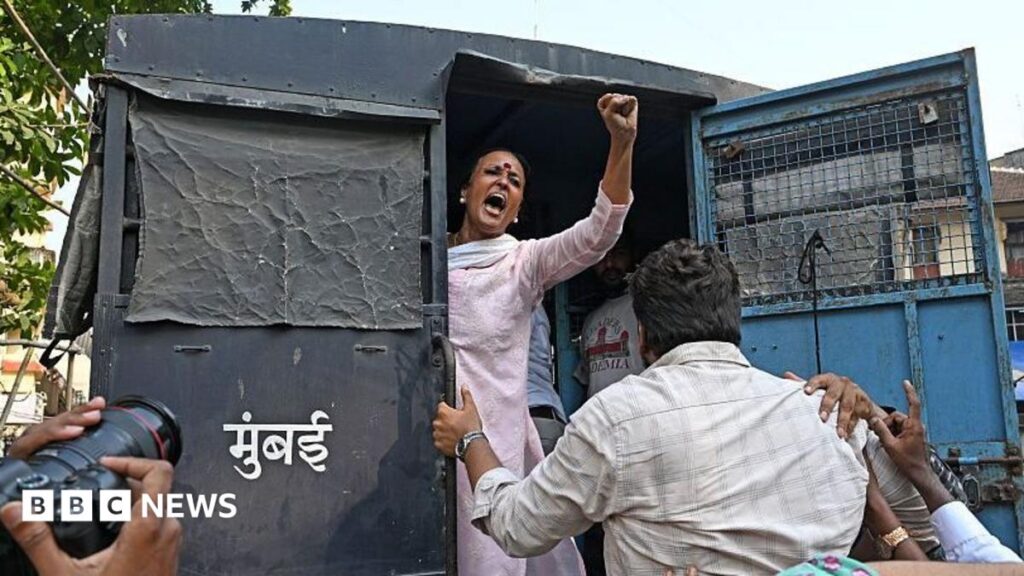
On Saturday, police said they detained about 7,000 people in a coordinated sweep of the city centre after a planned “cockroach” rally was announced on a messaging app. The operation, described by officials as a pre‑emptive security measure, involved roadblocks, temporary curfews and the deployment of over 3,000 uniformed officers. Detainees were held in temporary holding cells near Connaught Place and released by late evening after being questioned, according to a statement from the Delhi Police.
Human‑rights NGOs, including Amnesty International’s India chapter, criticised the scale of the crackdown, calling it “disproportionate” and warning that the mass arrests could violate constitutional guarantees of peaceful assembly. The police, however, maintained that the restrictions were necessary to prevent a potential “public order threat” that could have escalated into violence.
Implications for India’s Domestic Politics and Security
The episode underscores a broader shift in India’s internal security doctrine, which has increasingly blended traditional law‑enforcement tactics with digital surveillance. Analysts at the Centre for Policy Research note that the government’s willingness to detain thousands without formal charges signals a hardening stance that may alienate moderate opposition and push fringe elements further underground.
Politically, the incident is likely to become a rallying point for opposition parties ahead of the 2027 state elections. The Bharatiya Janata Party (BJP) has so far framed the crackdown as a victory against “anti‑national” agitators, but polls conducted by the Lok Sabha Research Institute show a slight dip in voter confidence among urban youth, a demographic that forms the core of the “cockroach” support base.
Ripple Effects on African Markets and the Indian Diaspora
India’s growing economic ties with Africa mean that domestic unrest can have indirect consequences for the continent. In 2025, Indian firms accounted for roughly $45 billion in direct investment across Sub‑Saharan Africa, with major players in telecom, renewable energy and pharmaceuticals. Investors watch Delhi’s stability closely because policy uncertainty can delay approvals for cross‑border projects, especially those linked to the “Make in India‑Africa” initiative launched last year.
For the sizable Indian diaspora in African nations—estimated at over 1.2 million people, many of whom work in the private sector—news of mass detentions raises concerns about the safety of overseas employees and the perception of India’s rule of law. Diaspora business councils in Nairobi and Lagos have issued statements urging the Indian government to respect civil liberties, warning that a tarnished human‑rights record could affect bilateral trade negotiations and visa regimes.
What Comes Next: Government Strategy and Civil Society Response
In the short term, officials have pledged to keep “strategic access points” around the city centre restricted until further notice, a move that will likely affect commuter traffic and small businesses operating in the area. The Delhi Municipal Corporation has already reported a 12 percent drop in footfall for local vendors near the protest zones, according to its latest commercial report.
Civil‑society groups are mobilising legal challenges against the mass arrests. A coalition of NGOs filed a petition with the Delhi High Court on Monday, seeking a declaration that the detentions violated Article 21 of the Indian Constitution. If successful, the case could set a precedent for how future protests are policed, potentially curbing the use of blanket curfews in Indian megacities.
Quick Answers
Why did Delhi police detain 7,000 people during the 'cockroach' protest?
Police said the arrests were a pre‑emptive measure to prevent a public‑order threat after the group announced a large rally in the city centre.
How might the crackdown affect Indian investments in Africa?
Heightened political risk could delay approvals for India‑Africa joint projects, as investors may view the crackdown as a sign of increasing domestic instability.
What legal recourse do detainees have after being released?
A coalition of NGOs has filed a petition with the Delhi High Court alleging that the mass detentions violated constitutional rights to peaceful assembly.
Source: www.bbc.co.uk




💬 Comments 0