Dmitry Muratov says Putin can’t claim victory in Ukraine, 2026 BBC interview
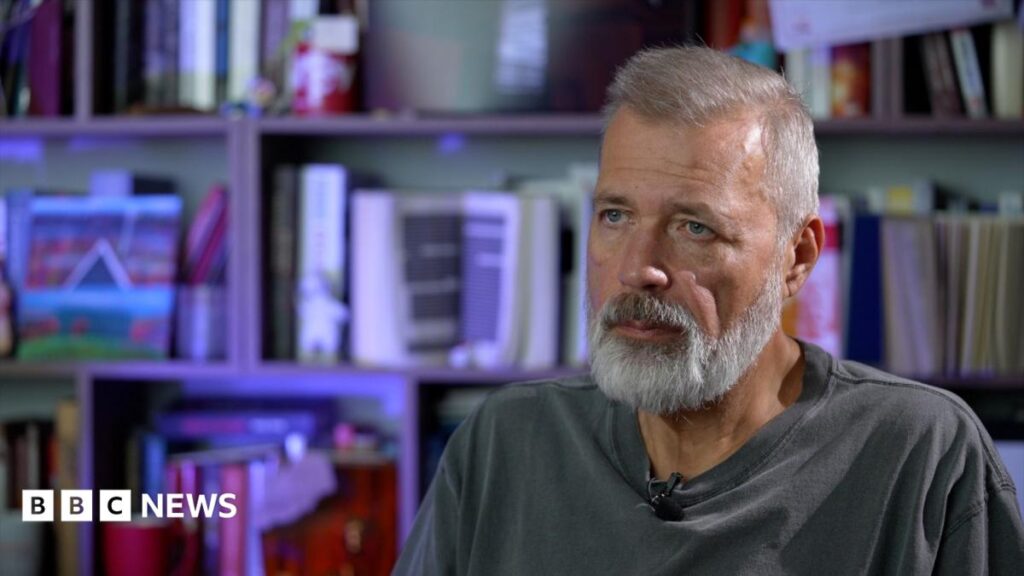
Muratov’s voice and the war’s fifth year
Dmitry Muratov, co‑founder of the Russian newspaper Novaya Gazeta and a 2021 Nobel Peace Prize laureate, has become an unexpected barometer of dissent inside Russia. His newspaper survived relentless pressure, legal threats and the murder of several journalists, cementing his reputation as a symbol of press freedom in a country where independent media is increasingly rare.
The war in Ukraine entered its fifth year in early 2022, and the Kremlin’s narrative of a swift, decisive conquest has eroded under the weight of battlefield setbacks, economic sanctions, and a growing humanitarian crisis. While Moscow continues to claim strategic gains, the reality on the ground shows a protracted conflict with no clear path to victory.
In a rare, candid interview with BBC journalist Steve Rosenberg, Muratov said the Russian president can “only destroy Ukraine, not conquer it.” The statement cuts through Kremlin propaganda, underscoring the dissonance between official rhetoric and the war’s grim outcomes.
What the interview reveals about Kremlin calculations
Muratov’s assessment suggests that the Russian leadership now recognises the limits of military force. He argued that the war has become a “campaign of destruction” aimed at weakening Ukraine’s infrastructure and morale rather than achieving a territorial annexation that would satisfy Putin’s original objectives.
The Nobel laureate also hinted that the Kremlin’s internal narrative is shifting. According to Muratov, Russian officials are increasingly framing the conflict as a defensive necessity to protect Russian speakers, a line that has lost credibility both abroad and among many Russians who have witnessed the war’s human cost.
By publicly stating that Putin can no longer claim victory, Muratov challenges the regime’s ability to rally domestic support. In a country where state‑controlled media dominate, such a high‑profile dissenting voice can influence public opinion, especially among younger, urban citizens who rely on social media for alternative news.
Why the world should pay attention
Muratov’s comments carry weight for Western policymakers who have struggled to find leverage over Moscow. If the Kremlin is indeed aware that a conventional victory is unattainable, it may be more receptive to diplomatic overtures that offer a face‑saving exit, such as negotiated settlements that preserve some strategic interests while ending active hostilities.
The statement also adds pressure on the sanctions regime. European and American officials have used the narrative of a “victorious” Russia to justify continued economic isolation. Acknowledging that Putin can no longer claim success could shift the discourse toward punitive measures aimed at reconstruction and accountability, rather than merely containing aggression.
Finally, the interview highlights the role of independent journalists as informal diplomats. Muratov’s stature gives his words a credibility that can bridge the gap between official channels and civil‑society movements, potentially opening back‑door tracks for peace talks.
African stakes in the Ukraine conflict
Africa’s connection to the Russia‑Ukraine war is often overlooked in Western coverage, yet the continent feels the ripple effects daily. Grain imports from Ukraine once covered roughly 30 % of the food basket for several African nations, including Egypt, Nigeria and Kenya. Disruptions have driven up staple prices, sparking protests and threatening food security across the Sahel.
At the same time, many African governments have deepened ties with Moscow for military hardware, energy deals and political support at the United Nations. Countries such as Sudan, the Central African Republic and Mali have welcomed Russian weapons and security advisers, creating a delicate balancing act between Western aid and Russian patronage.
Muratov’s admission that Putin cannot claim a decisive win could alter the calculus for African leaders. If the Kremlin’s position weakens, African states may feel less compelled to align with a regime that appears increasingly isolated, opening space for renewed engagement with European and American partners seeking to restore grain flows and investment.
What could happen next: scenarios for Moscow and beyond
One plausible scenario is a Kremlin‑led “limited‑objective” shift, where Russia focuses on consolidating control over occupied territories while seeking a negotiated ceasefire that freezes the front lines. Such a move would echo the 2022 Minsk agreements, but with a Russian‑favoured status‑quo that avoids outright defeat.
Another possibility is intensified repression at home to mask military setbacks. Muratov’s interview may prompt a crackdown on dissenting journalists, as the state attempts to re‑assert its narrative dominance. International watchdogs have already warned of a surge in arrests following any public criticism of the war.
For Africa, the most consequential outcome would be a de‑escalation that restores grain shipments and eases sanctions, allowing countries to diversify energy imports away from Russian oil and gas. Conversely, a prolonged stalemate could cement Moscow’s foothold in the continent, deepening the strategic competition between the West and Russia over African resources and influence.
Quick Answers
What did Dmitry Muratov say about Putin’s claims of victory in Ukraine?
Muratov told the BBC that Putin can only “destroy Ukraine, not conquer it,” indicating that a military victory is no longer realistic.
How does the Ukraine war affect African food security?
Ukraine supplied about 30 % of grain imports for several African nations; the conflict has disrupted shipments, raising food prices and threatening stability.
What are possible next steps for Russia after admitting defeat is unlikely?
Russia may shift to a limited‑objective strategy, seek a frozen‑front ceasefire, or increase internal repression to maintain its narrative.
Source: www.bbc.co.uk



💬 Comments 0