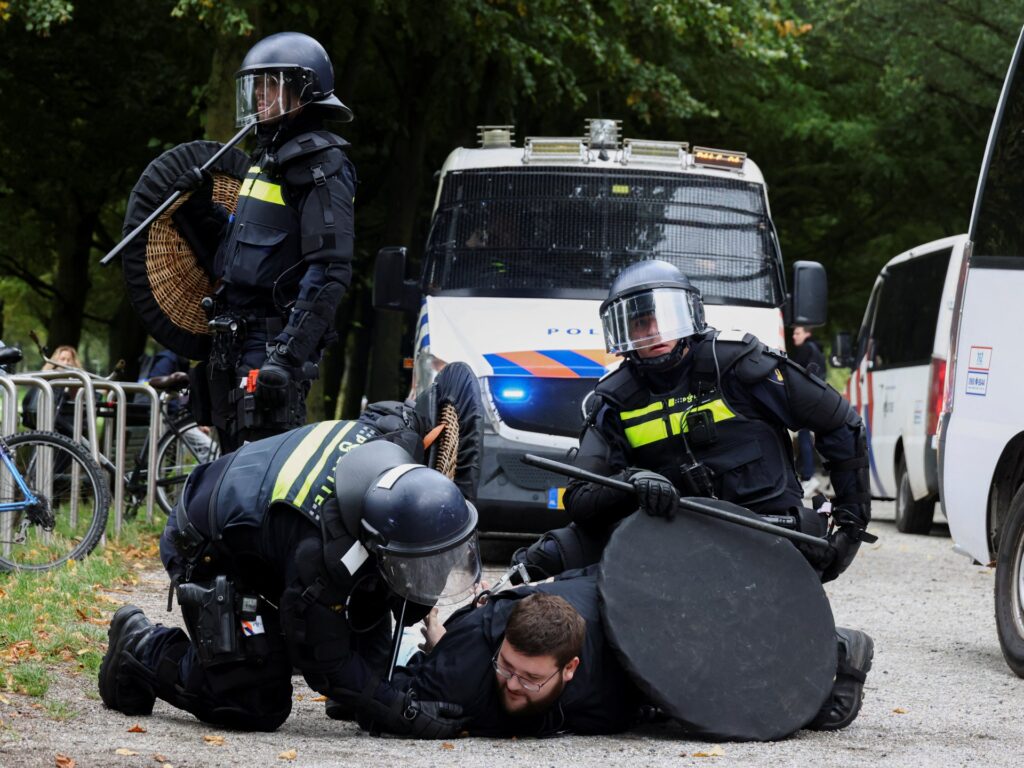
Dutch riot police break up far‑right protest in The Hague 2026 after Hitler salutes
Background: A volatile climate in Dutch politics
The Netherlands has long prided itself on liberal values, but recent elections have seen a surge in parties that exploit anti‑immigration sentiment. The rise of the far‑right Freedom Party (PVV) and smaller extremist groups has been fueled by concerns over housing shortages, perceived cultural erosion, and a wave of migrants arriving from war‑torn African nations such as Sudan, Nigeria and the Democratic Republic of Congo. These groups often stage rallies that blend nationalist rhetoric with overtly racist symbols, a trend that mirrors similar movements across Europe.
The Hague, home to the International Court of Justice and a sizable African diaspora, became a flashpoint in early September when a coalition of far‑right activists announced a protest against “mass immigration”. Organisers posted flyers promising a “defence of Dutch identity”, and social‑media posts featured Nazi‑style gestures. The event was scheduled for a Saturday afternoon, a time when families and community groups normally occupy the city’s public squares.
The protest and police response
Around 200 demonstrators gathered near the Binnenhof, chanting anti‑immigrant slogans and, according to eyewitnesses, performing Hitler salutes. The atmosphere quickly turned hostile as a subgroup began hurling stones at by‑standers and police officers. Riot police, equipped with shields and batons, moved in within minutes, deploying pepper spray and sound cannons to disperse the crowd. By 15:30 the protest was declared illegal and participants were arrested, with several detained for assault and hate‑speech offenses.
Justice Minister Dilan Yeşilgöz Zegerius condemned the “shockingly antisemitic and violent” display in a televised statement, calling the salute “a direct affront to the memory of Holocaust victims”. She announced a review of public‑order laws and pledged additional funding for anti‑extremism programmes. The minister’s swift reaction underscores the Dutch government’s intent to distance itself from extremist rhetoric, even as critics argue that legal measures alone cannot curb the underlying xenophobia.
Why it matters for Europe and Africa
The incident is more than a local law‑enforcement episode; it signals how European far‑right groups are targeting migrants from Africa, a continent that already supplies the bulk of asylum seekers to the EU. When extremist rallies feature Nazi symbols, they not only revive historic trauma but also send a chilling message to African diaspora communities living in the Netherlands and beyond. Such hostility can deter skilled migrants, students, and entrepreneurs, weakening the talent pipeline that European economies rely on for growth.
For African governments, the rise of anti‑immigration sentiment in the EU threatens diplomatic relations and development cooperation. Countries like Nigeria and Ghana have long negotiated bilateral agreements on student exchanges and labor mobility with Dutch institutions. A hostile environment could force these nations to reconsider their outreach strategies, potentially redirecting migration flows toward other regions or encouraging return migration, which would have ripple effects on domestic labor markets.
Reactions from the African diaspora and civil society
African community organisations in The Hague, including the African Diaspora Network and the Ghanaian Cultural Association, staged a counter‑rally the following day, holding candles and chanting for “unity and respect”. Their spokesperson, Kwame Mensah, warned that repeated far‑right provocations could push African residents into self‑segregation, eroding the multicultural fabric of Dutch cities. Similar protests have been reported in Rotterdam and Amsterdam, where diaspora groups have called for stronger hate‑crime legislation and better protection for minority journalists.
Human‑rights NGOs such as Amnesty International and the Dutch Centre for Equal Treatment have filed formal complaints, demanding that the police investigation be transparent and that any hate‑motivated offenses be prosecuted to the full extent of the law. International observers note that the Dutch response, while swift, must be accompanied by long‑term educational campaigns to counter the spread of extremist propaganda that often originates from online platforms popular among African youth.
What comes next: policy, security and community resilience
The government’s announced review of public‑order legislation is expected to tighten permit requirements for demonstrations that feature extremist symbols. In parallel, the Ministry of Justice is likely to increase funding for the National Counter‑Extremism Centre, a body that coordinates intelligence sharing between police, prosecutors and community leaders. Experts say that without a holistic approach—combining law‑enforcement, education and community outreach—any legal crackdown may only push extremist activity further underground.
For African diaspora groups, the incident underscores the need for stronger self‑organisation. Several NGOs are already drafting a joint “Safe Spaces” charter that will map safe public venues, provide legal assistance, and create rapid‑response networks during hate‑crime incidents. If successful, such initiatives could become a model for other European cities grappling with similar far‑right surges, reinforcing the idea that security is a shared responsibility between state actors and the communities they serve.
Quick Answers
What triggered the Dutch police to intervene at the far‑right rally in The Hague?
Police intervened after demonstrators performed Hitler salutes, shouted antisemitic slogans and began throwing projectiles, prompting a public‑order breach.
How does the protest affect African migrants living in the Netherlands?
The anti‑immigration rhetoric targets migrants from African nations, raising safety concerns for the African diaspora and potentially discouraging future migration and investment.
What steps is the Dutch government taking after the incident?
Justice Minister Dilan Yeşilgöz Zegerius announced a review of protest‑permit rules, increased funding for anti‑extremism programs, and pledged stricter enforcement of hate‑crime laws.
Source: www.aljazeera.com




💬 Comments 0