Emma Hayes to aid USMNT coach search after Mauricio Pochettino exit, 2026 outlook
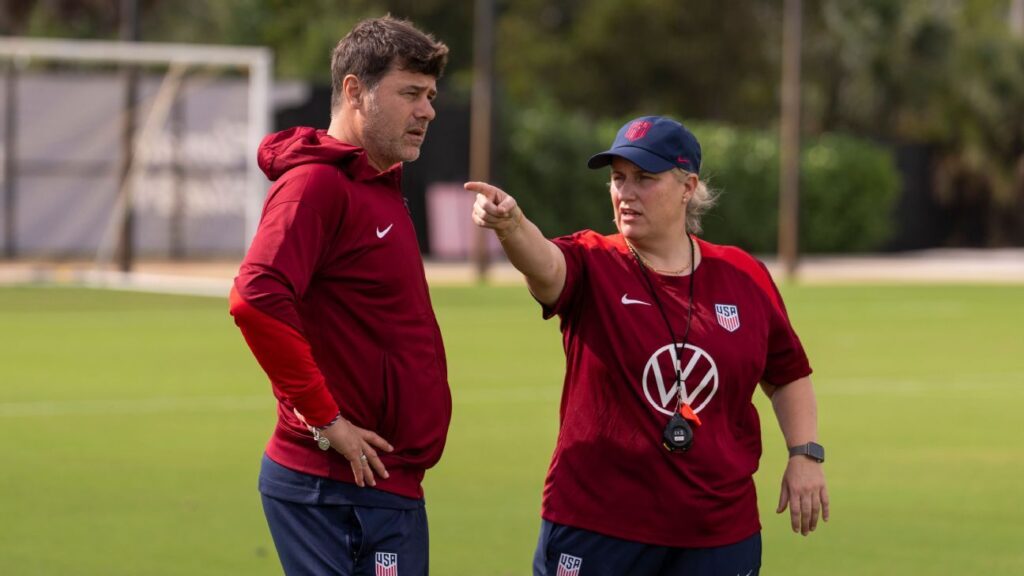
The USMNT’s coaching crisis after Pochettino’s exit
The United States men’s national team found itself in turmoil in early November 2026 when Mauricio Pochettino announced his departure just months before the 2026 World Cup that the country will co‑host with Canada and Mexico. The Argentine‑born coach had barely completed a single qualifying cycle, and the abrupt end left the federation scrambling for a replacement while the squad’s preparation window continues to shrink.
U.S. Soccer’s board quickly set up a search committee, but the process has been clouded by internal politics, fan pressure and the looming deadline of the tournament’s opening match in June 2027. In that context, the announcement that Emma Hayes, the long‑time head coach of the U.S. women’s national team, will assist the committee has added a fresh dimension to an already high‑stakes hunt.
Emma Hayes offers a ‘technical lens’ – what that means
Hayes, who guided the USWNT to two World Cup titles and a record‑breaking run of 35 consecutive wins, said she will contribute “through a technical lens” to the selection of the next men’s coach. By that she means she will focus on the tactical profile, player‑development philosophy and modern training methodologies rather than simply evaluating résumés or marketability.
According to a statement released by U.S. Soccer, Hayes will sit on a panel of former players, analysts and technical directors, reviewing video archives, scouting reports and performance data. Her experience in high‑pressure tournaments is expected to help the committee prioritize candidates who can blend possession‑based play with the physicality that American players traditionally bring.
Why a women’s‑team coach matters for the men’s side
The involvement of a women’s‑team coach in a men’s national team search is still rare on the global stage. Hayes’s participation signals a growing recognition that coaching expertise transcends gender, especially as the women’s game has pioneered data‑driven preparation and player‑centred culture. Her track record suggests she can spot gaps in the USMNT’s current setup, such as the need for a more fluid attacking structure and better integration of young dual‑national talents.
Industry insiders note that Hayes’s analytical approach could push the USMNT away from the “physical‑first” stereotype that has limited its tactical evolution. If the committee leans on her recommendations, the eventual hire may be a coach who embraces a hybrid style—combining the high‑pressing intensity of European systems with the versatility that American players have shown in recent CONCACAF tournaments.
African‑American and African diaspora players stand to gain
A subtle but important consequence of Hayes’s involvement is the potential boost for African‑American and African‑born players who have become core members of the USMNT. Stars such as Gio Brennan, a second‑generation Nigerian‑American, and the rising forward Jordan Piedmont, born to Ghanaian parents, have expressed a desire for a coaching environment that values cultural nuance and identity.
If the technical panel adopts Hayes’s inclusive philosophy, scouting and selection may place greater emphasis on players who bring a blend of African flair and American athleticism. Moreover, the visibility of a high‑profile female coach could encourage more African‑origin coaches in the United States to pursue senior roles, widening the pipeline for talent that often remains confined to youth or assistant positions.
A wider shift: women breaking into traditionally male coaching roles
Hayes’s advisory role fits into a broader, global trend where women are breaking into senior coaching positions traditionally held by men. In Europe, former women’s‑team coaches such as Sarina Wiegman have been linked to senior men’s jobs, while in Africa, former South African women’s‑team coach Desiree Mulder has taken charge of a men’s club side in the Botswana Premier League.
These developments challenge long‑standing stereotypes and suggest that federations are increasingly willing to prioritize competence over gender. For the US, Hayes’s involvement could become a case study for other national associations, especially those in Africa where the women’s game is rapidly professionalising and could supply a new generation of tactically adept coaches.
What’s next for the USMNT and the global coaching market
U.S. Soccer has set a tentative timeline: a shortlist of candidates will be presented by the end of December, with a final appointment expected in February 2027. During that window, Hayes will attend scouting sessions, review match footage from the CONCACAF Nations League and sit in on meetings with potential candidates to gauge their alignment with the technical brief she helped craft.
The outcome will reverberate beyond North America. A coach selected with Hayes’s input could become a benchmark for how federations integrate women’s‑team expertise into men’s programs, potentially influencing hiring practices in Europe, South America and Africa. For the USMNT, the right appointment could be the difference between a respectable showing at the 2026 World Cup and a deeper run that revitalises the sport’s domestic popularity.
Quick Answers
Who is Emma Hayes?
Emma Hayes is the head coach of the U.S. women’s national soccer team, renowned for winning two World Cups and a record 35‑match unbeaten streak.
What is the current status of the USMNT coach search?
The USMNT is forming a shortlist of candidates by December 2026, with a final appointment expected in February 2027.
How could this coaching search affect African‑American and African players in the US team?
Hayes’s technical focus may lead to a more inclusive scouting approach that highlights the unique skills of African‑origin players and could open pathways for African‑born coaches in the U.S.
Source: www.espn.com




💬 Comments 0