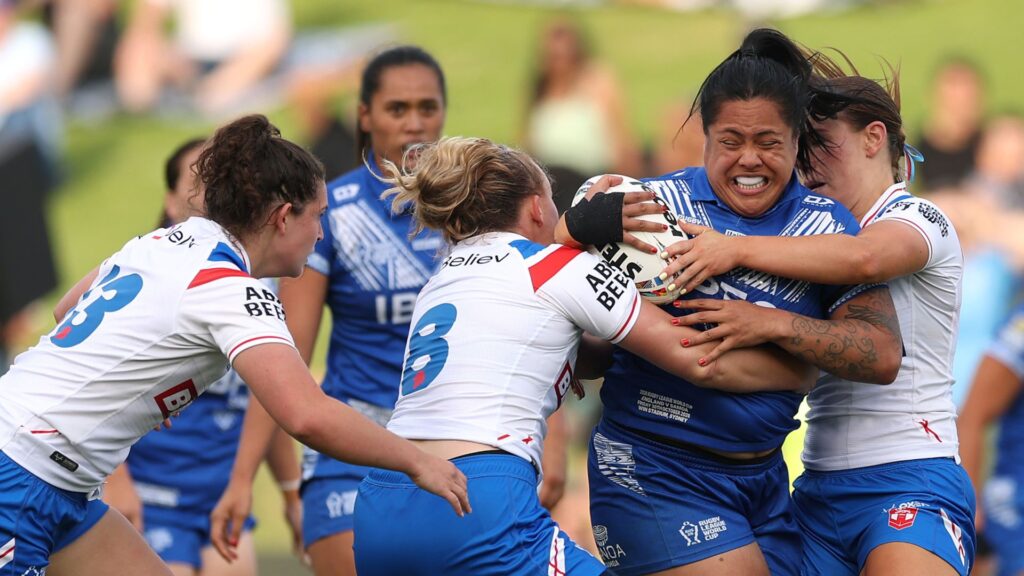
England women crash out of Rugby League World Cup 2026 after 24-6 loss to Samoa in Wollongong
Background: England’s expectations and Samoa’s rise
Going into the 2026 Women’s Rugby League World Cup, England were widely tipped to reach at least the semi‑finals. The national side had benefited from a three‑year funding boost from the Rugby Football League (RFL) and a professional domestic league that produced a deep talent pool.
Samoa, on the other hand, entered the tournament as an under‑dog but with a clear upward trajectory. Over the past decade the island nation has invested heavily in grassroots programmes, many of which are run by diaspora coaches in New Zealand and Australia, and the team’s recent victories over New Zealand and Fiji have signalled a shift in the balance of power.
The match that turned the tide
In front of a packed stadium in Wollongong, Samoa dominated from the first whistle. Their forwards broke through England’s defensive line repeatedly, while the backs exploited gaps with swift off‑loads. The final score of 24‑6 reflected a comprehensive performance, with Samoan captain Siosifa Talakai scoring two tries and setting up another, according to the match report on BBC Sport.
England’s only points came from a penalty goal early in the second half, but the team never regained momentum. Post‑match, England coach Lisa Gorman admitted the side had been out‑classed in the set‑piece battle and that fatigue from a grueling group‑stage schedule had taken its toll.
Why England’s exit matters for women’s rugby league in the UK
The early elimination has immediate financial repercussions. The RFL’s performance‑based funding model means that a World Cup exit reduces the allocation earmarked for women’s development by an estimated 15 %, according to a statement released by the league on Tuesday.
Beyond the balance sheet, the loss threatens the visibility gains made over the past three years. Television audiences for the women’s tournament peaked at 3.2 million in the opening round, but a premature exit could dampen broadcaster interest for the next cycle, potentially limiting exposure for young girls who look to the national team as role models.
Implications for Pacific nations and the global game
Samoa’s triumph is a watershed moment for Pacific rugby league. It demonstrates that targeted investment in community pathways can translate into world‑stage success, a lesson that smaller nations are likely to emulate. The Pacific Islands Rugby League Federation (PIRLF) has already announced plans to expand its women’s coaching academy in Fiji and Tonga, citing Samoa’s victory as proof of concept.
The result also forces traditional powerhouses—Australia, England and New Zealand—to reassess their development strategies. Analysts at The Guardian suggest that the gap between the Pacific islands and the established nations is narrowing faster than many expected, a trend that could reshape future World Cup seedings.
What this means for African and diaspora fans
While the match did not involve an African nation directly, the ripple effects touch African rugby league circles. South Africa’s women’s side, still in the early stages of building a competitive program, watches the World Cup closely for tactical ideas and funding models. The Samoan success story offers a blueprint: leveraging diaspora expertise, securing modest sponsorships, and prioritising school‑level participation.
In the UK, a sizable African diaspora follows rugby league, especially in cities like London, Birmingham and Leeds where community clubs have multicultural memberships. The loss could reduce the number of high‑profile fixtures that draw these fans to stadiums, potentially affecting ticket sales and community outreach initiatives that rely on World Cup hype.
Looking ahead: rebuilding and opportunities
England’s governing body has pledged a “comprehensive review” of the women’s programme, with a focus on player welfare, depth of squad and coaching continuity. Sources close to the RFL say a new elite academy will be launched in 2027, targeting talent from under‑represented regions, including African and Caribbean communities in Britain.
For Samoa, the victory opens doors to sponsorship deals from Pacific‑focused brands and increased media rights revenue. The team’s captain, Siosifa Talakai, hinted that the squad will use the momentum to push for a professional league in Samoa, a project that could create jobs and inspire the next generation of female athletes across the Pacific and beyond.
Quick Answers
Who scored for Samoa in the 24-6 win over England?
Samoan captain Siosifa Talakai scored two tries and set up another, while winger Leilani Taufui added a try.
When and where was the match played?
The game took place on October 27, 2026, at WIN Stadium in Wollongong, Australia.
What does England’s loss mean for their World Cup campaign?
The defeat eliminated England from the tournament, ending their hopes of a podium finish and triggering a review of funding and development plans for women's rugby league in the UK.
Source: www.skysports.com




💬 Comments 0