Ethiopia and Tigray blame each other for new offensive, seize airports after drone strikes
Background: A fragile peace after the 2022 cease‑fire
The war that erupted in November 2020 between Ethiopia’s federal government and the Tigray People’s Liberation Front (TPLF) left more than eight million people displaced and a humanitarian system on the brink of collapse. A 2022 peace accord, brokered by the African Union, halted large‑scale combat but left deep political mistrust and a patchwork of security arrangements across the region.
Since the cease‑fire, Addis Ababa retained control of key logistics hubs while the Tigray regional administration was allowed limited autonomy over local services. International donors, including the EU and the United States, tied aid disbursements to visible progress on disarmament and the safe return of refugees to their original homes.
Even before the recent accusations, sporadic clashes along the Amhara‑Tigray border and isolated artillery exchanges had kept analysts warning that the peace was more a truce than a durable settlement.
Escalation: Mutual accusations and the seizure of Tigray’s airports
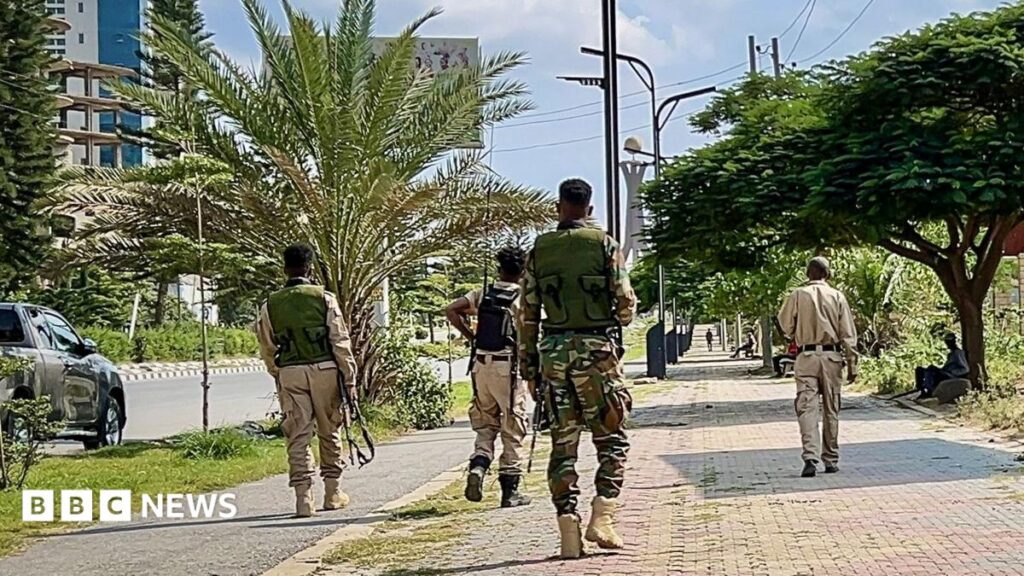
On September 22, 2026, the Ethiopian federal ministry of defense announced that it had seized the two main airstrips in Mekelle and Adigrat after what it described as “unauthorised drone strikes” targeting civilian infrastructure. The statement did not disclose the origin of the drones, but officials implied that the TPLF’s military wing was responsible.
Within hours, the Tigray regional authorities issued a counter‑statement accusing the federal forces of launching a coordinated ground offensive aimed at retaking control of the region’s capital. They claimed that Ethiopian troops had moved into the outskirts of Mekelle, triggering the alleged drone attacks as a defensive response.
Both sides released video clips on social media that appeared to show explosions near the airports, but independent verification was still pending, according to Reuters. The rapid back‑and‑forth has heightened fears of a full‑scale renewal of hostilities that could undo the limited stability achieved after 2022.
Regional ripple effects: Why the Horn of Africa watches closely
Ethiopia is the largest economy in the Horn of Africa and a key contributor to the Intergovernmental Authority on Development (IGAD). A resurgence of fighting in Tigray threatens cross‑border trade routes that link Djibouti’s port to landlocked neighbours such as South Sudan and Uganda, potentially inflating freight costs for a region already grappling with high inflation.
The conflict also risks drawing in neighbouring Eritrea, which has historically supported the Ethiopian federal army against the TPLF. Eritrean troops were reported to be stationed near the border in 2023, and any escalation could revive a proxy war that would destabilise both countries and the Red Sea shipping lanes.
The African Union, chaired by a former Ethiopian president, has warned that a new war would undermine the continent’s peace‑building credibility. In a statement on September 23, the AU called for an immediate cease‑fire and the re‑opening of humanitarian corridors.
Diaspora and humanitarian concerns
Ethiopia’s diaspora, estimated at over 2 million people across North America, Europe and the Middle East, has been vocal about the need for a lasting peace. Community organisations in Washington, D.C., and London have organised rallies urging the U.S. State Department to press Addis Ababa for an inclusive dialogue that includes Tigrayan representatives.
Humanitarian agencies warn that the seizure of airports could cripple aid deliveries that still rely on air transport to reach remote parts of Tigray. According to the United Nations Office for the Coordination of Humanitarian Affairs, more than 3 million people remain food‑insecure, and any disruption could push the region toward famine conditions.
Remittances from the diaspora account for roughly 30 % of Ethiopia’s foreign exchange earnings. A renewed conflict could prompt a wave of capital flight, as expatriates hesitate to send money amid uncertainty, further straining the national economy.
What could happen next: Scenarios and diplomatic moves
If diplomatic channels fail, analysts foresee three possible trajectories: a limited border skirmish that stalls the peace process; a rapid escalation into a conventional war involving both ground forces and aerial assets; or a mediated de‑escalation brokered by the African Union and the United Nations, which would likely require a new cease‑fire agreement and a joint monitoring mission.
The United States, which maintains a strategic partnership with Ethiopia for security and development, has signalled a willingness to convene a high‑level meeting in Addis Ababa, according to a source familiar with the talks. However, Washington’s leverage may be limited if Addis seeks to assert sovereignty over the Tigray region without external interference.
For the Tigrayan side, retaining control of the airports is both a logistical necessity and a political statement. Their ability to keep air access could influence future negotiations on reconstruction funds and the reintegration of Tigrayan soldiers into the national army.
Quick Answers
What triggered the seizure of Tigray’s airports in September 2026?
Ethiopian authorities said the airports were seized after unauthorised drone strikes that they blamed on Tigrayan forces.
How might renewed fighting affect the Horn of Africa’s economy?
A new war could disrupt trade routes through Djibouti, raise freight costs, and threaten regional stability, hurting economies that depend on cross‑border commerce.
What role does the Ethiopian diaspora play in the current crisis?
The diaspora provides significant remittances and advocacy, organising protests and lobbying foreign governments to push for an inclusive peace process.
Source: www.bbc.co.uk



💬 Comments 0