Ethiopia army says it repelled attacks in Amhara region, raising civil war fears in 2026
Background: Ethiopia’s fragile peace after years of war
Since the 2020 conflict that erupted in the northern Tigray region, Ethiopia has been walking a tightrope between uneasy cease‑fires and sporadic skirmishes. The 2022 peace accord between the federal government and the Tigray People’s Liberation Front (TPLF) halted large‑scale hostilities, but it left a patchwork of unresolved grievances in Amhara, Afar and Oromia. The federal army, now re‑branded as the Ethiopian National Defense Force (ENDF), has been tasked with keeping a volatile mix of ethnic militias, rebel groups and local security forces under control.
Prime Minister Abiy Ahmed’s reform agenda, which earned him a Nobel Peace Prize in 2019, has stalled under the weight of political infighting and economic strain. Inflation has surged, foreign exchange shortages have crippled imports, and the country’s once‑robust coffee and textile sectors are under pressure. These domestic stresses have amplified ethnic tensions, especially in the Amhara region where the Fano militia claims to protect “historic lands” from perceived encroachment.
The African Union, headquartered in Addis Ababa, has repeatedly warned that any slide back into full‑scale civil war would destabilise the Horn of Africa, a region already rattled by conflict in Sudan and the lingering fallout from the Ethiopian‑Eritrean border stalemate. International donors have kept aid flowing, but they have also signalled that renewed fighting could trigger a suspension of development financing.
The latest flare‑up: what the army says it repelled
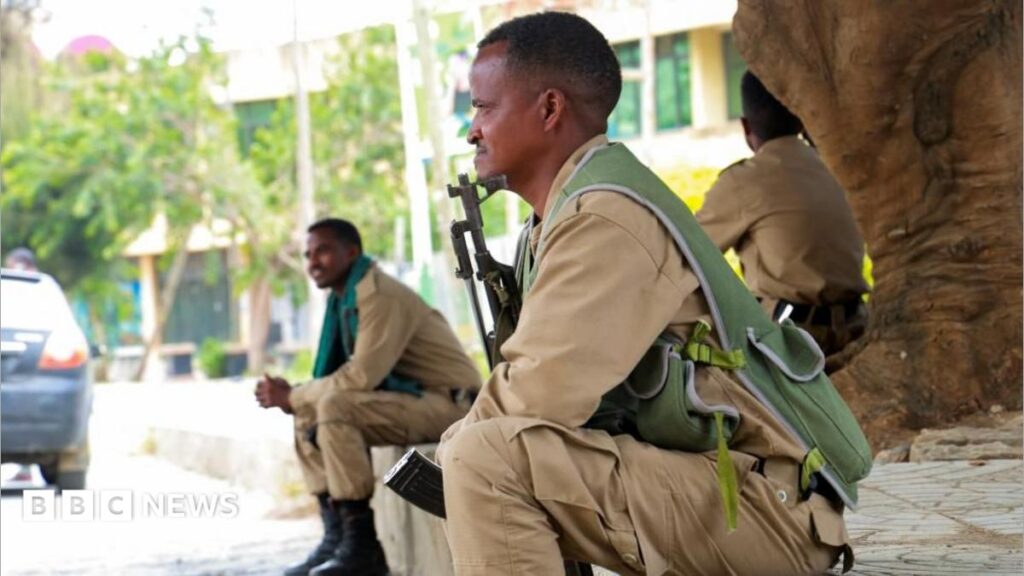
On 22 September 2026, the ENDF released a brief statement claiming that its troops had successfully repelled coordinated attacks on several outposts in the North Shewa zone of Amhara. According to the statement, the assaults were launched by “armed elements linked to the Fano militia” and resulted in at least twelve enemy combatants killed and three ENDF soldiers wounded.
Local witnesses, quoted by regional radio, described a sudden barrage of small‑arms fire followed by a brief ground assault that lasted under an hour before ENDF reinforcements arrived. The fighting reportedly took place near the town of Dessie, a strategic hub on the road linking Addis Ababa to the northern border. The army’s claim of “inflicted casualties” mirrors similar language used in earlier 2023 clashes, suggesting a pattern of tactical victories aimed at deterring further insurgent activity.
Humanitarian organisations on the ground, such as the International Rescue Committee, warned that the renewed violence could displace thousands of civilians already living in precarious conditions after years of conflict‑related displacement. While the ENDF’s statement did not mention civilian impact, satellite imagery released by an independent monitoring group showed smoke plumes over two villages in the vicinity, hinting at possible collateral damage.
Why the renewed fighting matters for Africa
Ethiopia is Africa’s second‑largest economy and a key grain exporter; any escalation threatens regional food security. A resurgence of civil war could choke the flow of coffee beans, which account for roughly 30 % of Ethiopia’s foreign‑exchange earnings, and disrupt the supply chains that feed markets in Europe and the Middle East. A World Bank briefing earlier this month warned that a 10 % drop in coffee output would shave $1.2 billion off Ethiopia’s GDP, reverberating across the continent’s trade network.
Security‑wise, Ethiopia’s stability underpins the African Union’s peace‑keeping missions in Sudan and the Sahel. A full‑blown conflict would likely force the AU to divert resources from its current operations, weakening the continent’s collective response to crises in Mali, Burkina Faso and the Democratic Republic of Congo. Moreover, the Horn of Africa sits on the Bab el‑Mandeb strait, a chokepoint for global oil shipments; heightened insecurity could prompt shipping companies to reroute vessels, inflating transport costs worldwide.
Politically, the fighting tests Abiy Ahmed’s waning legitimacy. His 2021 re‑election was marred by accusations of vote‑rigging, and his reformist image has eroded as the government leans on military solutions. Analysts at the African Development Bank note that prolonged instability could push Ethiopia into a “political deadlock” that stalls the implementation of the African Continental Free Trade Area (AfCFTA) protocols, slowing the continent’s broader integration agenda.
Regional ripple effects and diaspora concerns
Neighbouring Sudan, already grappling with its own civil war, could see a fresh wave of Ethiopian refugees crossing the border, adding pressure to camps that are operating beyond capacity. The United Nations High Commissioner for Refugees (UNHCR) estimates that an additional 200,000 displaced persons could strain humanitarian budgets already stretched thin by years of conflict in the region.
The Ethiopian diaspora, estimated at 2.5 million people across North America, Europe and the Middle East, monitors the situation closely. Remittances from abroad constitute roughly 30 % of Ethiopia’s foreign‑exchange inflows; any escalation that harms the banking system or prompts stricter capital controls could curtail these vital funds. Community organisations in Washington, D.C., and London have already issued alerts, urging expatriates to stay informed and consider temporary suspension of non‑essential transfers until the security situation clarifies.
On the cultural front, Ethiopia’s vibrant music and film industries have gained continental traction through streaming platforms. A prolonged conflict could disrupt internet infrastructure, limiting the reach of Ethiopian creators to African audiences and jeopardising the growing soft‑power influence the country enjoys across the continent.
What comes next: political and humanitarian outlook
The federal government has announced a “national dialogue” slated for early 2027, inviting representatives from the Amhara, Tigray and Oromo regions to discuss power‑sharing and security reforms. Critics, however, argue that without concrete disarmament of militias like Fano, dialogue may become a symbolic gesture. According to a senior analyst at the International Crisis Group, “any sustainable peace will require a clear roadmap for integrating armed groups into the national security apparatus, something Addis has struggled to deliver since 2020.”
Humanitarian agencies are scaling up contingency plans. The World Food Programme (WFP) has pre‑positioned grain stocks in Mekelle and Bahir Dar, while the Red Cross is training local volunteers to provide first‑aid in case of renewed clashes. These preparations aim to mitigate the worst‑case scenario of a mass displacement that could see over a million Ethiopians seeking shelter in neighbouring countries within months.
For investors and businesses, the immediate takeaway is caution. Companies with exposure to Ethiopian coffee, textiles or logistics are revisiting risk assessments, and some multinational firms are considering temporary suspension of new contracts until the security environment stabilises. Yet, as the ENDF claims a tactical win, there remains a window for diplomatic engagement that could prevent a slide back into full‑scale war, preserving Ethiopia’s role as a linchpin of East African growth.
Quick Answers
What triggered the recent attacks in Ethiopia’s Amhara region?
The attacks were attributed by the Ethiopian army to armed elements linked to the Fano militia, who say they are defending historic Amhara lands.
How could renewed fighting affect the Horn of Africa’s stability?
Escalation could increase refugee flows to Sudan and Kenya, strain regional peace‑keeping resources, and disrupt trade through the Bab el‑Mandeb strait.
What impact might the conflict have on Ethiopian diaspora remittances?
If the banking system faces disruptions or tighter capital controls, diaspora‑sent remittances—about 30 % of Ethiopia’s foreign‑exchange earnings—could decline.
Source: www.bbc.co.uk




💬 Comments 0