Ethiopia massacre: Over 60 Christians killed in Amhara ambush, June 2026, sparking regional tension
Background to Ethiopia’s sectarian violence
Ethiopia has been wrestling with a series of ethnic and religious clashes since the early 2020s, when a power vacuum emerged after Prime Minister Abiy Ahmed’s reforms failed to reconcile long‑standing grievances among the Amhara, Oromo and Tigrayan peoples. The conflict in the northern Amhara region, where the majority of the population is Orthodox Christian, has been especially volatile because armed groups claim to protect their communities while also pursuing political control.
The Ethiopian Orthodox Church, which claims about 43 % of the nation’s population, has historically acted as a stabilising force, but its clergy have increasingly become targets of militia attacks. According to a report by the International Crisis Group, attacks on churches rose by 27 % in 2025, reflecting a broader trend of weaponising religion to mobilise local support and intimidate rivals.
In addition to internal dynamics, Ethiopia’s strategic location in the Horn of Africa draws external interest from neighbouring Sudan, Eritrea and the Gulf states, each of which backs different factions. This geopolitical overlay fuels a climate where isolated incidents can quickly expand into wider confrontations, threatening the fragile peace that the African Union has been trying to broker.
Details of the recent attack
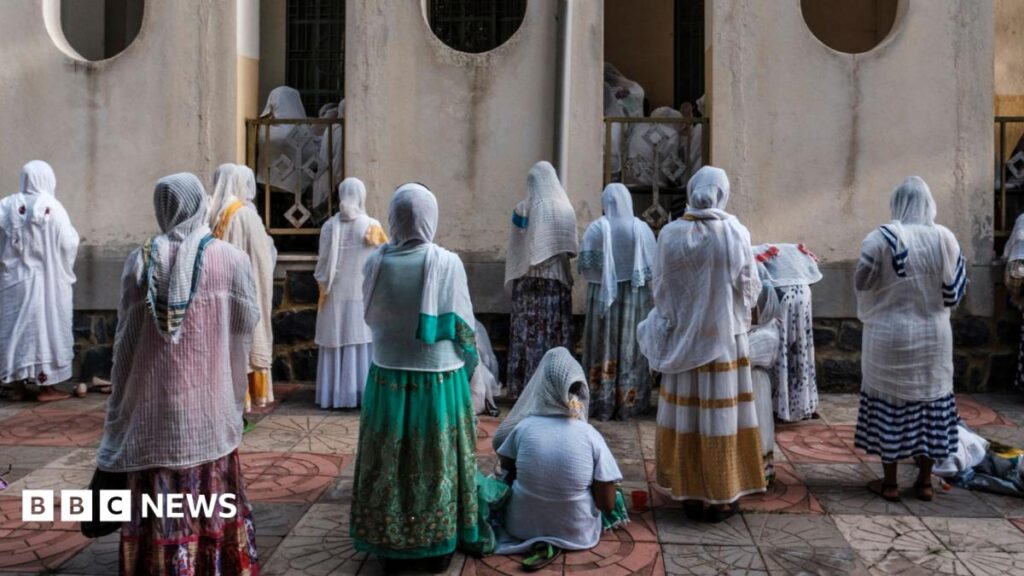
On 12 June 2026, residents of a small village near the town of Debre Birhan in the Amhara region reported an armed convoy surrounding the local church during an evening service. Witnesses said the attackers, believed to be a militia linked to the Fano movement, opened fire after the congregation had finished prayers, killing at least 62 people, including women and children.
One survivor, who asked not to be named, recounted that his 75‑year‑old father was shot as the gunmen entered the sanctuary. He described the scene as an ambush, with the militants blocking all exits and shouting slogans that referenced “defending the faith” while simultaneously demanding control over nearby farmland. The Ethiopian Orthodox Church’s spokesperson, Abune Mathias, confirmed the death toll and condemned the act as a “crime against humanity”.
Human Rights Watch, which sent investigators to the site, noted that the weapons used were military‑grade rifles, suggesting the involvement of organised armed groups rather than a spontaneous mob. The group also documented signs of looting, with personal belongings and church icons taken from the wreckage, a pattern that mirrors previous attacks in the region.
Why the death toll matters for Ethiopia’s stability
The loss of more than 60 Christians in a single incident is a stark reminder that Ethiopia’s internal security apparatus remains fragmented. The federal police have struggled to assert authority in remote Amhara districts, leaving local militias to fill the vacuum. This power gap emboldens groups that use religious identity as a rallying banner, potentially igniting retaliatory attacks against Muslim communities elsewhere in the country.
Economically, the massacre threatens to disrupt agricultural production in the Amhara highlands, a key breadbasket for Ethiopia. The United Nations World Food Programme warned that displacement caused by the attack could push an additional 150 000 people into food insecurity, compounding a crisis that already sees 22 % of Ethiopians classified as chronically hungry.
Politically, the incident puts Prime Minister Abiy Ahmed under renewed pressure to demonstrate control. Opposition parties, particularly the Ethiopian Citizens for Social Justice (EZEMA), have called for a national inquiry, arguing that the government’s failure to disarm militias violates the 2019 peace accord signed after the Tigray war. International donors are watching closely, as continued instability could jeopardise billions of dollars in aid earmarked for reconstruction.
Reactions across Africa and the diaspora
The African Union’s Peace and Security Council issued a brief statement condemning the “unjustifiable loss of civilian lives” and urged the Ethiopian government to “immediately protect all places of worship”. African media outlets, from South Africa’s Mail & Guardian to Kenya’s Daily Nation, highlighted the attack as a symptom of the continent’s growing religious‑based violence, prompting regional NGOs to call for a continent‑wide dialogue on faith‑linked conflict resolution.
In the Ethiopian diaspora, particularly in Washington D.C. and Toronto, community organisations organised vigils and fundraising drives for the victims’ families. The diaspora’s lobbying arm, the Ethiopian American Association, appealed to U.S. Congress members to press for a UN‑mandated fact‑finding mission, arguing that the lack of transparent investigations fuels impunity.
Social media trends across the continent show a surge in hashtags such as #ProtectOurChurches and #EthiopiaPeace, indicating that the incident resonates beyond Ethiopia’s borders. Analysts note that the rapid spread of these campaigns reflects a growing pan‑African consciousness about protecting religious minorities, a narrative that could shape future policy discussions at the African Union’s next summit.
What comes next: security and humanitarian responses
In the short term, the Ethiopian Ministry of Defense announced the deployment of an additional 2 000 troops to the Amhara region, pledging to “secure all religious sites”. However, observers caution that without a clear chain of command, the presence of federal forces may clash with local militias, risking further civilian casualties.
Humanitarian agencies are already mobilising. The International Committee of the Red Cross has set up a temporary field hospital near Debre Birhan, while Oxfam is distributing emergency food rations to displaced families. Aid groups stress that access will remain difficult until a reliable security corridor is established, a task that may require UN peacekeeping support that has not yet been authorised by the Security Council.
Long‑term solutions will likely involve a combination of judicial accountability and community‑based reconciliation. The Ethiopian Human Rights Commission has proposed a truth‑seeking commission that would allow victims to testify, a model similar to South Africa’s post‑apartheid process. If implemented, such a commission could help de‑escalate sectarian tensions and restore confidence in the rule of law.
Quick Answers
How many Christians were reported killed in the June 2026 Ethiopia attack?
Official church sources confirmed that at least 62 Christians were killed during the ambush.
Which region of Ethiopia did the massacre occur in?
The attack took place in the Amhara region, near the town of Debre Birhan.
What are the main motives behind the recent church ambush?
Analysts say the ambush was driven by a mix of territorial disputes, militia attempts to assert control, and the weaponisation of religious identity to intimidate rival groups.
Source: www.bbc.co.uk



💬 Comments 0