Ethiopian PM Abiy Ahmed Orders All Ministers to Complete Military Training in 2026
Background: Ethiopia’s Security Landscape
Ethiopia has been navigating a volatile security environment for more than a decade. The 2020‑2022 Tigray conflict, cross‑border skirmishes with Sudan, and recurring insurgencies in the Oromia and Amhara regions have strained the nation’s armed forces and tested civilian leadership. Even after the 2022 peace agreement, sporadic clashes and humanitarian crises persist, prompting the government to keep defence a top‑floor agenda.
Prime Minister Abiy Ahmed, who won the 2019 Nobel Peace Prize for his early reforms, has gradually shifted his rhetoric toward a more militarised vision of nation‑building. His 2023 “National Resilience” policy framed the army as the backbone of Ethiopia’s future, linking defence readiness to economic recovery and political legitimacy. This pivot reflects both domestic pressures from security‑focused constituencies and a desire to project strength to neighbouring states.
In the broader Horn of Africa, Ethiopia’s stability is a linchpin for regional trade corridors, especially the Lamu Port‑South Sudan‑Ethiopia Transport (LAPSSET) project and the Grand Ethiopian Renaissance Dam (GERD) negotiations with Egypt and Sudan. Any perception of internal weakness can embolden rival actors, destabilise markets, and trigger refugee flows that affect the entire basin.
The Decision: Ministers Sent to Military Drills
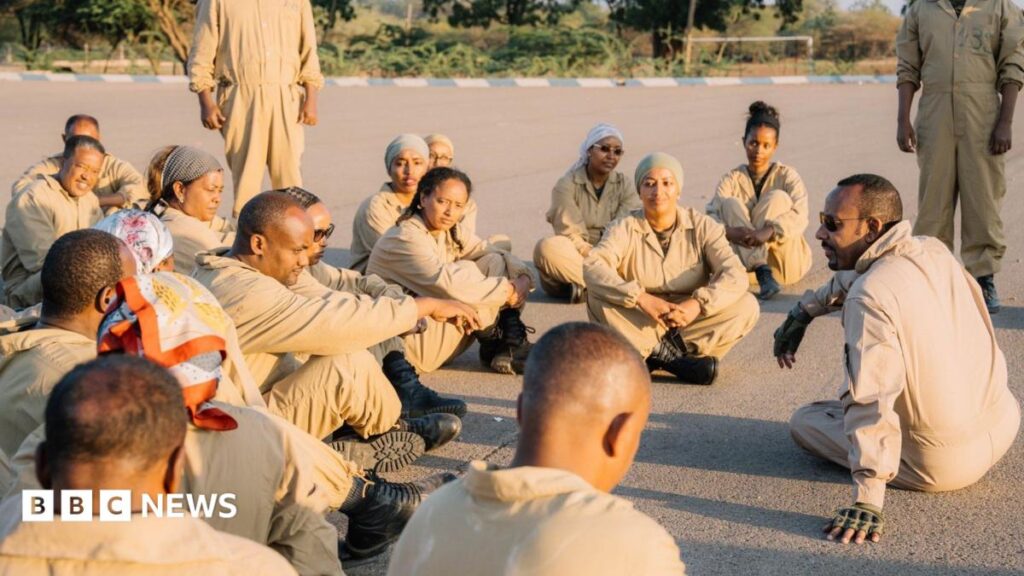
In early October 2026, the prime minister announced that every cabinet minister would undergo a month‑long basic military training program at the Ethiopian National Defense Force’s (ENDF) central academy in Addis Ababa. The order, delivered in a televised address, framed the exercise as “a rite of unity and preparedness” for the nation’s leaders.
The curriculum reportedly includes physical fitness tests, weapons handling, field navigation, and a short module on civil‑military cooperation. Sources close to the defence ministry say that senior officers will supervise the sessions to ensure that civilian officials gain a realistic appreciation of the army’s operational challenges.
Critics, including opposition parties and some civil‑society groups, have labelled the move a symbolic stunt aimed at consolidating Abiy’s grip on power. They argue that the training could blur the line between civilian oversight and military influence, a concern echoed by analysts at the African Centre for Strategic Studies.
Why It Matters: Civil‑Military Relations and Governance
Putting ministers through boot‑camp marks a significant departure from Ethiopia’s post‑1991 tradition of keeping the cabinet distinct from the armed forces. Historically, the ENDF has been under civilian control, albeit with occasional interference during crises. By embedding civilian leaders within military routines, the government may be reshaping the balance of authority, potentially normalising a culture where political legitimacy is measured by military credentials.
The move could also affect policy‑making. Ministers who have experienced frontline discipline might prioritize security spending, influencing budget allocations away from social programmes. Conversely, first‑hand exposure to soldiers’ hardships could foster more empathetic legislation on veterans’ welfare and post‑conflict reconstruction, a nuance that analysts such as Dr. Mulugeta Bekele note is not guaranteed.
Internationally, the decision signals a hardening stance that may raise eyebrows in Addis Ababa’s diplomatic circles. Western donors, who have tied aid to democratic reforms, could interpret the training as an encroachment on civil liberties, risking a slowdown in development assistance that Ethiopia still heavily relies upon.
Regional Ripple Effects and Diaspora Reactions
Neighbouring countries are watching the development closely. Sudan’s transitional government, still grappling with its own internal fractures, has warned that Ethiopia’s militarisation could spill over borders, especially in contested areas like Al‑Fashaga. Meanwhile, Eritrea’s leadership, which has recently engaged in limited diplomatic overtures with Addis Ababa, may see the training as a sign that Ethiopia is preparing for a more assertive regional posture.
The Ethiopian diaspora, particularly the sizable communities in the United States, Canada, and the Gulf, have expressed mixed feelings on social media. Some diaspora entrepreneurs view the training as a confidence‑boosting step that could stabilise the business climate, while human‑rights advocates fear it could pave the way for a more authoritarian governance model. A poll conducted by the Ethiopian Diaspora Forum in October 2026 showed 42% of respondents were “concerned” about the potential erosion of civilian oversight.
On the economic front, the Ethiopian Stock Exchange (ESE) saw a modest uptick in the week following the announcement, driven by speculation that a more secure environment could attract foreign direct investment. However, analysts caution that any perception of politicised militarisation could also deter risk‑averse investors, especially those from Europe and North America.
What Comes Next: Potential Scenarios
If the training program proceeds without major backlash, it could become an annual tradition, embedding a quasi‑militarised ethos within the highest echelons of government. Such a scenario might lead to a tighter coordination between the cabinet and the ENDF, potentially improving crisis response but also raising the spectre of a “military‑civic hybrid” governance model.
Alternatively, sustained criticism from opposition parties and civil‑society organisations could force the administration to scale back the initiative, perhaps limiting it to a symbolic “leadership retreat” rather than full‑scale drills. In that case, the episode would remain a political footnote, illustrating Abiy’s willingness to experiment with rhetoric without lasting institutional change.
A third, less predictable outcome involves external pressure. Should donor nations or regional blocs such as the African Union deem the training a step toward militarisation of politics, they could condition future aid on clearer separation of powers. Ethiopia’s response to such pressure would likely hinge on how the training impacts internal stability and whether it succeeds in rallying public support around a narrative of national resilience.
Quick Answers
What type of military training are Ethiopian ministers undergoing?
Ministers are enrolled in a basic boot‑camp that covers physical fitness, weapons handling, field navigation and a short civil‑military cooperation module.
How long will the training program last?
The program is scheduled for one month, with daily sessions at the Ethiopian National Defense Force’s central academy.
What impact could the training have on Ethiopia’s political stability?
It could tighten civil‑military coordination and boost national security confidence, but it also risks blurring civilian oversight and prompting concerns of authoritarian drift.
Source: www.bbc.co.uk




💬 Comments 0