China launches Shenzhou‑24 with first Pakistani astronaut, implications for African space ambitions in 2026
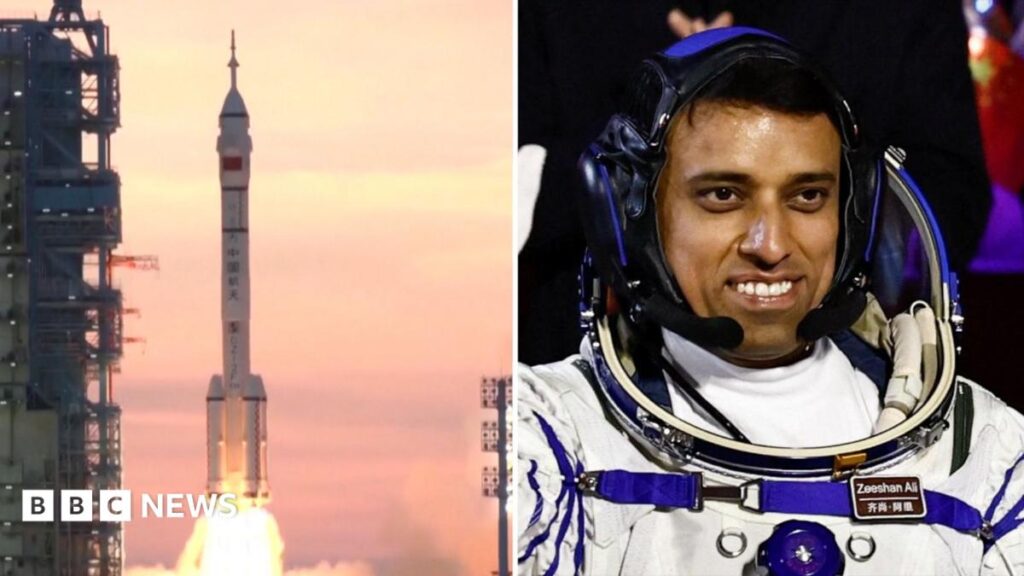
Background: China’s expanding crewed programme and the Shenzhou‑24 launch
Since the debut of its Tiangong space station in 2021, China has accelerated its crewed‑flight schedule, aiming to cement a permanent human presence in low‑Earth orbit. The Shenzhou‑24 mission, lifted off on 25 November 2026 from the Jiuquan Satellite Launch Center, marks the ninth crewed flight to the modular Tiangong complex and the first to carry a non‑Chinese astronaut.
The three‑person crew includes veteran commander Liu Yang, a veteran of two previous missions, flight engineer Tang Shengjie, and the historic guest astronaut from Pakistan. The launch follows a series of uncrewed cargo deliveries that have stocked the station with scientific payloads, life‑support supplies, and experimental modules focused on micro‑gravity research.
China’s space agency, the CNSA, framed the mission as a showcase of its “open‑door” policy for international cooperation. By integrating a foreign astronaut into a routine crew rotation, Beijing signals that its orbital platform is ready to serve as a hub for joint experiments, a move that mirrors the collaborative model of the International Space Station.
Pakistan’s first astronaut: who is it and why the partnership matters
The Pakistani astronaut, Dr. Namira Baloch, is a 38‑year‑old aerospace engineer who spent a decade at the Pakistan Space and Upper Atmosphere Research Commission (SUPARCO) working on satellite navigation and remote‑sensing projects. Her selection was announced by the Pakistan Ministry of Science and Technology in June 2026, after a competitive process that involved training at China’s Astronaut Training Center in Zhuhai.
Dr. Baloch’s flight is the culmination of a bilateral agreement signed in 2022 that grants Pakistan access to Chinese crewed‑flight opportunities in exchange for scientific data sharing and joint research on space‑based climate monitoring. Sources close to SUPARCO say the partnership also includes technology transfer clauses that could help Pakistan develop its own crewed‑flight capabilities within the next decade.
For Pakistan, the mission is a diplomatic win that elevates its profile on the global space stage. It also offers a tangible demonstration of how emerging space nations can leverage partnerships with established players to accelerate their own programmes, a model that many African countries are watching closely.
Implications for African space ambitions and South‑South cooperation
African nations have increasingly turned to China for launch services, satellite manufacturing, and training. In 2025, Kenya’s KiboSat‑1 and Nigeria’s NIGCOMSAT‑2 were both launched aboard Chinese rockets, and several African universities have enrolled students in joint programs with Chinese space institutes. The presence of a Pakistani astronaut on a Chinese mission underscores a broader trend of South‑South collaboration that could open doors for African scientists to fly on future missions.
Experts at the African Space Policy and Strategy Forum in Kigali note that the Shenzhou‑24 flight illustrates how China is positioning its Tiangong station as a low‑cost alternative to the International Space Station for research on agriculture, water management, and disease monitoring—areas of acute relevance to the continent. If African researchers gain access, the data could improve crop‑yield models for the Sahel or refine early‑warning systems for flood‑prone regions.
Moreover, the mission’s emphasis on shared scientific payloads may inspire regional initiatives such as the African Space Agency’s proposed “Pan‑African Micro‑Gravity Lab.” By partnering with China, African nations could negotiate slots for their own experiments, leveraging the cost efficiencies of a fully operational orbital laboratory.
Geopolitical ripple effects: competition, diplomacy and the satellite market
The launch arrives at a time when the United States, Europe, and Russia are each courting emerging space markets with their own commercial and diplomatic offers. Analysts at the Brookings Institution argue that China’s willingness to include foreign astronauts is a strategic move to counterbalance Western influence and to secure long‑term contracts for its launch industry, which generated roughly $2.8 billion in revenue in 2025.
For African countries, the competition translates into better pricing and more flexible terms. Ghana’s recent agreement with SpaceX for a constellation of broadband satellites, for instance, now faces a rival bid from China’s Hongyun Aerospace, which promises lower launch costs in exchange for data‑sharing agreements. The presence of a Pakistani astronaut, a key member of the China‑Pakistan Economic Corridor, signals that Beijing is extending its diplomatic playbook beyond South Asia into Africa’s growing market.
The satellite market itself stands to benefit. According to a 2026 report by Euroconsult, demand for Earth‑observation data in Africa is projected to double by 2030, driven by climate‑adaptation projects and mineral‑exploration ventures. China’s expanding constellation of Gaofen and Ziyuan satellites, already delivering imagery to African ministries, could see increased sales if Tiangong‑based experiments validate new sensor technologies.
What’s next: future missions, commercial prospects and African participation
The Shenzhou‑24 crew will spend roughly six months aboard Tiangong, conducting experiments ranging from protein crystal growth to plant germination in micro‑gravity. After the mission, the CNSA plans to rotate crews every six months, with at least two future flights earmarked for international participants from the Global South, according to a statement released by the agency in December 2026.
African space agencies are already drafting proposals to send payloads that monitor desertification in the Sahara and track malaria‑vector habitats in the Congo Basin. If approved, these projects could become the first African‑led scientific contributions to a Chinese space station, offering a high‑visibility platform for home‑grown research.
In the commercial arena, Chinese firms such as China Great Wall Industry are expanding their ground‑segment services to include data‑processing hubs in Nairobi and Lagos. This infrastructure could lower the barrier for African start‑ups to monetize satellite imagery, creating a new wave of space‑tech entrepreneurship that dovetails with the continent’s digital‑economy ambitions.
Quick Answers
Who is the first Pakistani astronaut to fly to space?
Dr. Namira Baloch, an aerospace engineer with SUPARCO, became Pakistan’s first astronaut on China’s Shenzhou‑24 mission in November 2026.
How could Africa benefit from China’s Tiangong space station?
African researchers may gain low‑cost access to micro‑gravity experiments, while satellite data from Chinese constellations can support climate‑adaptation, agriculture and mineral‑exploration projects on the continent.
What are the next steps for African participation in Chinese space missions?
African space agencies are preparing payload proposals for Tiangong experiments and are negotiating data‑sharing deals with Chinese launch providers to secure future flight slots.
Source: www.bbc.co.uk




💬 Comments 0