Ethiopia’s Tigray Stalemate 2026: What the Army’s Town Takeovers Mean for the Horn of Africa and the Diaspora
Background: A Decade‑Long Conflict and Its Fallout
The war that erupted in November 2020 between Ethiopia’s federal forces and the Tigray People’s Liberation Front (TPLF) has already claimed more than 500,000 lives, displaced millions and strained the country’s fragile federal system. After the 2022 cease‑fire brokered by the African Union, fighting simmered in remote border zones, but the core of Tigray remained a contested battlefield where both sides kept stockpiling weapons and rallying supporters. The conflict also spilled over into neighboring Eritrea, Sudan and Kenya, prompting a wave of refugees that reshaped migration patterns across the Horn of Africa.
International donors have repeatedly warned that prolonged instability could undo years of economic progress in Ethiopia, which had been Africa’s fastest‑growing economy before the war. The World Bank’s 2025 outlook projected a 4.2 % contraction in GDP, largely driven by disrupted agriculture, halted industrial projects and a collapse in tourism. Meanwhile, the Ethiopian diaspora – especially in the United States, Canada and the United Kingdom – has been sending remittances that fell by 18 % in 2023, tightening household budgets for families still in the country.
What Happened: Federal Troops Sweep Through Tigray’s Main Towns
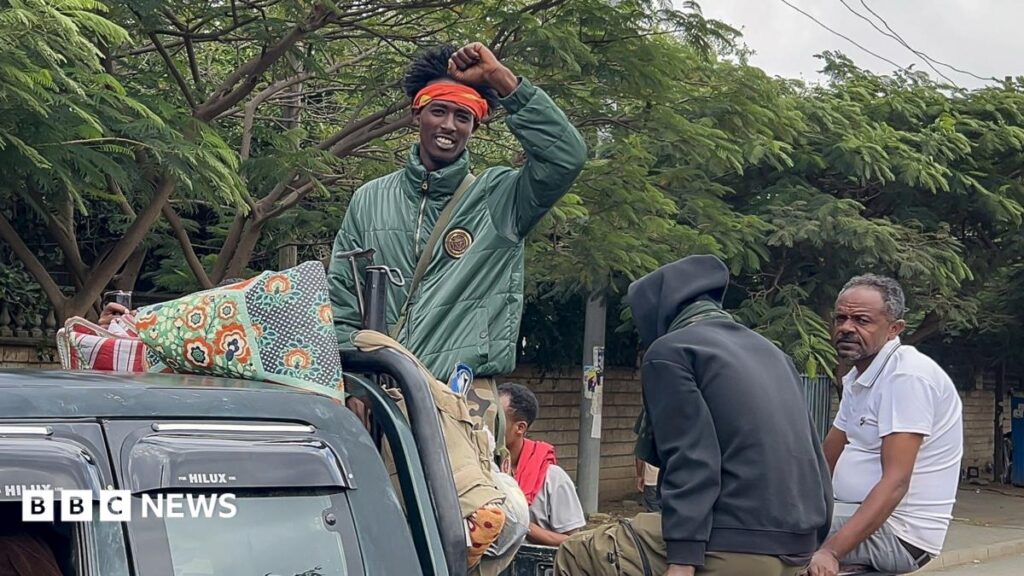
In early November 2026, Ethiopian federal forces announced that they had seized control of Mekelle, Adigrat and Axum, the three largest urban centres in the Tigray region. State media broadcast footage of soldiers raising the national flag over municipal halls, while the Ministry of Defense claimed that “the majority of Tigray’s strategic towns are now under government authority.” The announcement came after weeks of intense air‑strikes and artillery barrages that reportedly weakened TPLF strongholds in the highlands.
Independent observers on the ground, however, noted that the situation remains fluid. Human Rights Watch said that while the army holds key towns, “significant pockets of resistance persist in rural districts, where TPLF guerrilla units continue to launch hit‑and‑run attacks.” Moreover, the TPLF’s official communication channels have been largely silent, leaving analysts unsure whether the rebel group can muster enough fighters for a conventional counter‑offensive.
Why It Matters: Regional Security, Humanitarian Risks and Economic Ripples
The capture of Tigray’s urban hubs is more than a military milestone; it reshapes the security calculus of the entire Horn of Africa. Eritrea, which has backed the federal army since 2021, may see an opportunity to extend its influence over the Red Sea corridor, potentially affecting shipping lanes that handle over 10 % of global oil shipments. Sudan’s ongoing civil war could also be reignited if displaced fighters cross borders in search of safe havens, a scenario warned about by the International Crisis Group.
Humanitarian agencies are bracing for a new wave of need. The United Nations Office for the Coordination of Humanitarian Affairs (OCHA) warned that the displacement of up to 1.2 million civilians from the newly captured towns could overwhelm already stretched camps in the Gambela and Amhara regions. Food insecurity, already at crisis level in Tigray, may worsen as agricultural cycles are disrupted and market access remains limited.
Economically, the takeover could have mixed effects. On one hand, the re‑establishment of federal administration may allow the reopening of roads and the resumption of trade with the rest of Ethiopia, potentially reviving the region’s coffee export sector, which accounts for roughly 12 % of Ethiopia’s coffee output. On the other hand, investors remain wary; the World Bank’s 2026 risk assessment still lists Ethiopia as a “high‑political‑risk” environment, deterring foreign direct investment that could have jump‑started reconstruction.
Reactions: From Addis Ababa to the Diaspora and Global Powers
Inside Addis Ababa, Prime Minister Abiy Ahmed hailed the operation as a “defining step toward national unity,” promising reconstruction funds for Tigray’s war‑torn infrastructure. Opposition parties, however, accused the government of using the victory to justify a crackdown on dissent, a claim echoed by the Ethiopian Human Rights Commission, which called for independent investigations into alleged civilian casualties during the town assaults.
The Ethiopian diaspora has been split. Community leaders in Washington, D.C., organized a rally demanding an end to the fighting and a genuine political dialogue, citing the trauma experienced by families who lost loved ones. Conversely, some diaspora business groups in the United Arab Emirates welcomed the news, arguing that stability could revive cross‑border trade and open new investment pipelines for Ethiopian entrepreneurs.
Internationally, the United States and the European Union have urged restraint, urging the Ethiopian government to allow humanitarian access and to engage the TPLF in negotiations. The African Union, which mediated the 2022 cease‑fire, released a statement saying it will “monitor the situation closely and facilitate an inclusive peace process” – a pledge that many regional analysts view as increasingly symbolic given the limited leverage the AU currently holds.
What’s Next: Scenarios for Peace, Prolonged Conflict or a New Status Quo
If the federal army can consolidate control over the remaining rural districts, Ethiopia may move toward a de‑facto military victory, prompting the TPLF to either surrender or retreat into guerrilla warfare. Some experts, such as Dr. Hiwot Asfaw of Addis Ababa University, argue that “a negotiated settlement is still possible if both sides recognize the high cost of continued bloodshed and agree on a power‑sharing framework that respects regional autonomy.”
Conversely, a resurgence of TPLF insurgency could drag the country back into a protracted low‑intensity war, similar to the decades‑long conflicts in South Sudan and the Democratic Republic of Congo. In that scenario, humanitarian aid would need to scale up dramatically, and regional bodies like the Intergovernmental Authority on Development (IGAD) might be forced to intervene militarily or diplomatically.
For the diaspora and investors, the next few months will be decisive. Remittance flows are likely to rebound only if a credible peace deal emerges, while construction firms and agribusinesses are watching for clear signals from Addis Ababa about reconstruction timelines and land‑reform policies. Until then, the uncertainty surrounding Tigray’s future will continue to cast a long shadow over Ethiopia’s economic recovery and the Horn of Africa’s stability.
Quick Answers
Has the Ethiopian government fully defeated the TPLF in Tigray?
The army now controls the main towns, but pockets of TPLF resistance still exist in rural areas, making a complete defeat uncertain.
How will the takeover of Tigray’s towns affect humanitarian aid?
Displacement could rise to over a million people, straining camps and requiring increased UN and NGO assistance for food, shelter and medical care.
What impact could this have on Ethiopia’s economy and the diaspora?
Stability may reopen trade routes and revive coffee exports, but lingering risk and limited foreign investment could keep economic growth low, affecting remittance flows from the diaspora.
Source: www.bbc.co.uk



💬 Comments 0