Explosion on Russian ship in Tripoli port blamed on drone attack 2026, hits Libya trade
Background: Libya’s ports and Russian maritime interests
Libya’s eastern coast, especially the ports of Tripoli and Benghazi, has long been a crossroads for Mediterranean trade, handling a sizable share of Africa’s oil exports and bulk cargo. Since the 2011 civil war, the country’s fragmented authorities have struggled to secure its maritime infrastructure, making the ports vulnerable to smuggling, piracy, and now, drone‑borne threats.
Russia’s state‑linked shipping companies have increasingly used Libyan ports as refuelling stops for vessels returning from the Black Sea or the Gulf of Guinea. The ship involved in the recent blast was reportedly on a routine lay‑over to take on fuel and provisions before heading back to Russian waters, a pattern that reflects Moscow’s broader push to cement logistical links across the African continent.
The eastern government, based in Tobruk, claims jurisdiction over the Tripoli harbour area, but in practice control is shared with local militias and private security firms. This patchwork of authority complicates any coordinated response to maritime incidents, a fact that has drawn criticism from international shipping insurers.
The incident: what happened on the dock
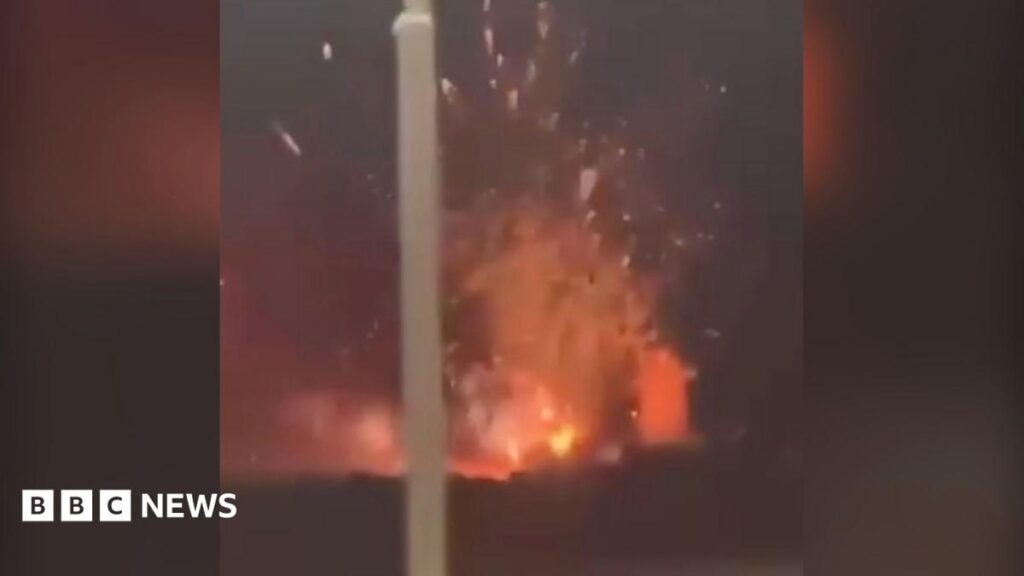
According to Libyan officials, the Russian‑flagged cargo vessel pulled into Tripoli’s main berth early on Thursday morning. Within minutes of docking, a loud explosion rocked the ship’s forward section, sending a plume of smoke into the sky and prompting an immediate evacuation of the crew.
Libyan authorities quickly blamed a “suspected drone attack,” a claim echoed by the ship’s operator who reported damage consistent with a high‑explosive payload. No group has claimed responsibility, but the use of a small, likely commercially‑available drone fits a pattern of low‑cost, asymmetric attacks that have surged in the Mediterranean since 2022.
Four crew members were injured, two of them seriously, and the vessel sustained a breach in its hull that forced it to be towed out of the harbour for emergency repairs. Port operations were halted for several hours, causing a backlog of ships waiting to load or unload cargo.
Why it matters: security, economics and geopolitics
The blast underscores a growing security gap in the southern Mediterranean, where state forces are stretched thin and non‑state actors can exploit weak surveillance. A successful drone strike on a foreign‑flagged ship signals that even well‑armed vessels are no longer safe in ports that lack integrated air‑defence systems.
Economically, the incident threatens Libya’s already fragile export revenues. The country relies on oil shipments that pass through Tripoli to reach European markets; any perception of heightened risk could push insurers to raise premiums, making it more expensive for Libyan producers to move their product abroad.
Geopolitically, the attack adds another layer to Russia’s tangled relationship with Libya. Moscow has supplied arms and advisers to rival factions, and the presence of a Russian vessel in a contested port could be interpreted as a signal of support for the Tobruk‑based government. A drone strike, whether carried out by a local militia or an external adversary, may be an attempt to curb that influence.
African and diaspora angles: ripple effects across the continent
For African traders, the incident raises the cost of doing business in the region. Many West and Central African exporters rely on Libyan ports as trans‑shipment hubs for goods bound for Europe. A spike in security costs could force them to reroute cargo through more distant ports such as Tunis or Algiers, lengthening supply chains and eroding profit margins.
A notable proportion of the crew on the damaged vessel were African nationals, including several Nigerians and Ghanaians. Their injuries highlight the human dimension of maritime insecurity, and diaspora communities in Europe have already begun lobbying their governments for stronger protections for African seafarers working on foreign‑flagged ships.
Insurance firms based in Lagos and Johannesburg have warned that repeated attacks could trigger a regional “risk premium” on maritime policies. This would raise freight rates for African exporters, potentially dampening trade growth at a time when the continent is seeking to diversify away from raw‑material dependence.
What’s next: investigations, policy responses and market impact
Libyan authorities have opened a joint investigation with Russian maritime officials, seeking to trace the drone’s origin and identify any external sponsors. Early reports suggest that satellite imagery is being reviewed to pinpoint the launch point, a step that could set a precedent for more technologically sophisticated investigations in the region.
In response to the attack, the eastern government announced plans to deploy additional coastal radar units and to partner with the European Union’s Mediterranean security mission for aerial patrols. Critics argue that without a unified national command, these measures may remain fragmented and insufficient to deter future strikes.
Global oil markets felt a brief tremor after news broke, with Brent crude edging up 0.3 % as traders priced in potential disruptions to Libyan exports. While the spike was modest, analysts at the African Development Bank warn that a series of similar incidents could erode confidence in the Mediterranean as a reliable oil corridor, prompting buyers to look toward alternative routes such as the Cape of Good Hope.
Quick Answers
Who was behind the drone attack on the Russian ship in Tripoli?
No group has claimed responsibility yet; Libyan officials suspect a locally‑based militia or an external actor using a commercially‑available drone.
How will the explosion affect African exporters using Libyan ports?
Higher security costs and possible insurance premiums could push African traders to use more distant ports, increasing shipping times and expenses.
What steps is Libya taking to prevent future attacks?
The eastern government plans to install extra coastal radars and seek EU maritime patrol assistance, though effectiveness depends on coordination among fragmented authorities.
Source: www.bbc.co.uk




💬 Comments 0