US Army to Detonate 4,000 Tons of Unstable Explosives in Iowa in 2026 Despite Court Order
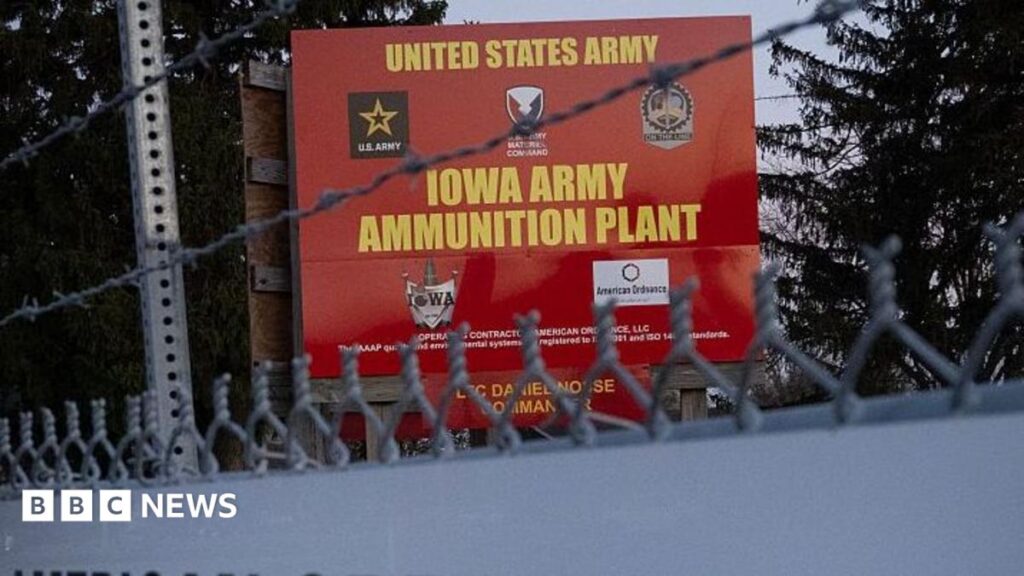
Background: The Iowa Ammunition Plant and Its Stockpile
The Iowa Army Ammunition Plant, located near Des Moines, has been a cornerstone of the U.S. munitions supply chain since the 1940s. Over decades, it accumulated more than 4,000 metric tons of legacy explosives, many of which are classified as “unstable” because they have degraded chemically and pose a heightened risk of accidental detonation. The plant’s remote location was originally chosen for safety, but nearby towns such as Knoxville and Bondurant have grown into sizable communities, raising concerns about potential exposure.
In recent years, the Department of Defense (DoD) has struggled to find a permanent solution for the aging stockpile. Traditional disposal methods—such as controlled burning or shipment to specialized facilities—have become cost‑prohibitive and logistically complex. The Army therefore proposed a series of on‑site detonations, arguing that a “swift action” is necessary to prevent a catastrophic failure that could threaten both personnel and civilians.
The Court Order vs. Army Decision
In March 2026, the U.S. District Court for the Southern District of Iowa issued an injunction that temporarily halted any large‑scale detonations until a comprehensive environmental impact assessment could be completed. Environmental groups, citing the National Environmental Policy Act (NEPA), argued that the Army had not adequately considered the long‑term effects on air quality, groundwater, and wildlife. The order was praised by local activists as a rare win for community‑level environmental justice.
Despite the injunction, the Army’s senior leadership released a statement in early October asserting that the risk of an uncontrolled explosion outweighs the legal constraints. The department filed an emergency motion to lift the court order, claiming that the explosives have become so unstable that waiting for a full review could endanger lives. A federal judge granted a limited stay, allowing the Army to proceed with a single controlled blast, while the rest of the stockpile remains under legal dispute.
Why It Matters: Safety, Legal Precedent, and Environmental Stakes
The immediate safety argument is straightforward: deteriorating munitions can spontaneously ignite, creating a blast radius that would devastate nearby neighborhoods. The Army’s risk‑assessment model predicts a 0.3% chance of such an event per year, but the potential loss of life and infrastructure makes even that low probability unacceptable to military planners. However, the decision to bypass a court order raises a constitutional question about the balance of executive authority and judicial oversight in matters of public safety.
Environmental implications are equally significant. Detonating thousands of tons of explosives releases heavy metals, nitrogen oxides, and particulate matter into the atmosphere, which can settle on crops and water sources. A 2022 study by the University of Iowa found that similar blasts in the Midwest led to measurable spikes in lead concentrations in soil for up to six months. Communities of color and low‑income residents—who already face higher exposure to industrial pollutants—are disproportionately vulnerable, a point highlighted by the Sierra Club’s Midwest chapter.
African Connections: Defense Supply Chains and Diaspora Concerns
While the Iowa blast appears to be a domestic issue, it reverberates through the global defense ecosystem, including several African nations that depend on U.S. munitions. The DoD’s Ammunition Production Program supplies weapons to partner forces in Kenya, Nigeria, and the Sahel region under the Foreign Military Financing (FMF) framework. Delays or cost overruns at the Iowa plant could tighten the supply pipeline, forcing African militaries to seek alternative, potentially less reliable sources.
Moreover, the diaspora community in the United States, particularly African immigrants living in Iowa’s surrounding counties, is watching the case closely. Many have family members serving in the U.S. armed forces and are concerned about the precedent set when military necessity overrides local judicial rulings. The incident also fuels broader debates about how U.S. defense policies affect African security cooperation, especially as the continent grapples with insurgencies that rely on timely ammunition deliveries.
Reactions and What’s Next: Oversight, Alternatives, and Community Action
Local officials, including the mayor of Knoxville, have called for an independent monitoring panel comprising EPA scientists, state health officials, and community representatives. Environmental NGOs are demanding that the Army adopt a “green disposal” method, such as chemical neutralization, even if it costs more. Congressional members on the Armed Services Committee have scheduled a hearing for December to scrutinize the Army’s compliance with NEPA and the Administrative Procedure Act.
The Army has indicated that after the initial controlled blast—scheduled for late November—it will reassess the stability of the remaining stockpile and explore off‑site recycling options. If the court ultimately reinstates a full injunction, the department may be forced to ship the explosives to the Pueblo, Colorado, facility, which has the capacity but also faces its own environmental challenges. The unfolding legal battle will likely set a benchmark for how future hazardous‑material clean‑ups at U.S. military installations are handled, with ripple effects for both domestic communities and overseas partners.
Quick Answers
Why is the US Army proceeding with an explosives detonation despite a court order?
The Army argues the explosives have become so chemically unstable that waiting for a full environmental review could trigger an accidental explosion, posing a greater risk to personnel and nearby residents.
How could the Iowa detonation affect African countries that receive US weapons?
Delays or increased costs at the Iowa plant could tighten the US ammunition supply chain, potentially slowing deliveries to African partners that rely on US‑provided munitions for security operations.
What oversight mechanisms exist for military detonations of hazardous materials?
Oversight includes federal environmental statutes like NEPA, court injunctions, EPA monitoring, and congressional hearings that can compel the Department of Defense to justify its disposal methods.
Source: www.bbc.co.uk




💬 Comments 0