Faleke Picks APC Presidential Forms for Tinubu Ahead of 2027 Presidential Election – What This Really Means
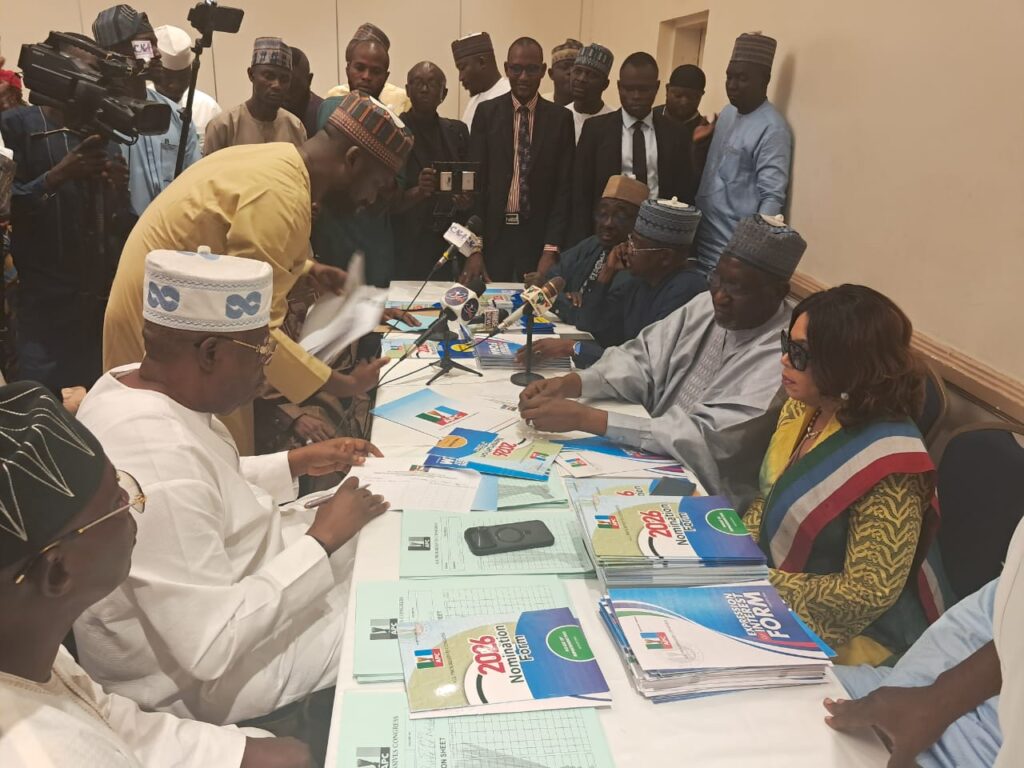
N100 million changed hands before most Nigerians had even settled into the idea of another election cycle. In Abuja on Tuesday, the paperwork that could shape the next presidential race quietly moved across a table, not from the President himself, but through one of his strongest political loyalists.
James Faleke, the lawmaker representing Ikeja Federal Constituency, stepped forward to collect the All Progressives Congress Expression of Interest and Nomination forms on behalf of President Bola Tinubu. It was not a rumour. It was not a whispered political plan. It was a public signal.
Faleke picks APC presidential forms for Tinubu ahead of 2027 presidential election, and with that single move, the campaign conversation has officially started years before Nigerians cast a vote.
Politics in Nigeria rarely waits for the perfect moment. The chessboard usually starts moving long before the audience notices. This article breaks down why Faleke’s move matters, what it says about Tinubu’s inner political circle, and why this early step could shape the tone of the 2027 election long before campaign posters flood the streets.
Before The Posters Go Up, The Real Campaign Already Starts
Election season in Nigeria does not begin when rallies start. It begins with signs. Quiet gestures. Carefully staged political moments that send messages to allies, rivals, and voters.
This is why the move where Faleke picks APC presidential forms for Tinubu ahead of 2027 presidential election carries more weight than some people may first assume. The paperwork itself is routine. The symbolism is not.
James Faleke is not just another APC figure showing support. He represents Ikeja Federal Constituency and also serves as the founder of the Tinubu Support Groups. That matters because he is closely linked to the political network that helped build Tinubu’s rise over the years.
On Tuesday in Abuja, the APC National Organising Secretary, Suleiman Argungu, officially declared the nomination process open and handed over the forms to Faleke. The forms include both the Expression of Interest and Nomination paperwork required for anyone seeking the APC presidential ticket.
What made this moment stand out was not just the collection of forms, but the fact that payment for the N100 million process was completed on behalf of the President.
That is where things shift from political speculation into something more concrete. Nigerians have spent months wondering whether Tinubu would formally position himself for another run. This action answers that question without needing a lengthy speech or a national broadcast.
There is also timing to think about. The Independent National Electoral Commission has already fixed dates for the next election cycle. Presidential and National Assembly elections are scheduled for Saturday, January 16, 2027. Governorship and State Houses of Assembly elections will follow on February 6, 2027.
The calendar is no longer distant. It is already moving.
The Real Tea: Why Faleke Stepping Forward Matters More Than People Think
Politics is rarely about paperwork alone. It is about who shows up, who speaks first, and who gets trusted with symbolic moments.
When James Faleke stepped forward to collect Tinubu’s APC nomination forms, he was not simply acting as a messenger. He was playing a political role that carries meaning inside Nigeria’s power structure.
Faleke has remained one of Tinubu’s visible allies for years. That makes his appearance more than a routine errand. In Nigerian politics, the person trusted to make public moves on behalf of a sitting President often tells you something about loyalty and access.
The APC National Organising Secretary, Suleiman Argungu, officially presented the forms to Faleke during the opening of the nomination process in Abuja. That public handover gave the event weight. It was not handled quietly behind closed doors.
The collection and payment of N100 million for the forms instantly transformed political speculation into an active re-election signal.
That amount is not just a number. In Nigerian political culture, money tied to nomination forms often becomes part of the public conversation because it reflects how serious a campaign intends to be.
This is also happening against a carefully structured electoral calendar announced by the Independent National Electoral Commission. Party primaries and related disputes are scheduled to run between April 23, 2026, and May 30, 2026.
Campaigns for presidential and National Assembly elections will begin officially on August 19, 2026. Governorship and state assembly campaigns are expected to start from September 9, 2026.
Those dates matter because they reveal something many people miss: the public campaign has not begun, but the political preparation already has.
There is another layer here too.
Tinubu’s supporters may view this as a show of confidence, a message that the President is already positioning himself for continuity. Critics, however, may see the early movement as evidence that political machinery never really rests in Nigeria.
Either way, Faleke’s action pushed the conversation into a new phase.
Nobody can honestly say the 2027 race feels far away anymore.
The move also tells party insiders something important. Political structures inside major parties often respond to momentum. Once nomination forms are picked up publicly, it can influence who aligns early, who waits quietly, and who starts calculating their own ambitions.
In politics, perception often becomes reality long before voting day arrives.
And that may be the real story underneath this headline.
What Nobody Is Saying About This Early Move
Here is what a lot of mainstream political coverage tends to miss: early political gestures are rarely aimed at ordinary voters first.
They are aimed at insiders.
When Faleke picked up Tinubu’s forms, the audience was not just Nigerians watching headlines scroll by. The audience included party stakeholders, governors, loyalists, and people quietly deciding where to stand before internal power struggles begin.
This moment feels less like a campaign launch and more like a signal flare sent into the political sky.
In Nigerian politics, timing can be as powerful as policy. Making an early move gives supporters confidence. It tells the political base that there is direction and planning.
There is also a cultural side to this that deserves attention.
Nigerians are deeply familiar with political loyalty networks. Relationships matter. Public gestures matter. Showing who stands beside a political figure can shape how influence is interpreted.
Faleke did not just appear as a lawmaker. He appeared as a trusted figure from Tinubu’s support structure. That matters because politics in Nigeria is rarely only about institutions. It is also about relationships built over years.
Another thing people may not say openly is this: early moves like this sometimes discourage potential challengers before they even step fully into the ring.
A public display of organisation can quietly send a message, the machine is already running.
At this moment, Tinubu’s possible re-election journey has moved from speculation to visible preparation.
The APC nomination process has officially opened. James Faleke has collected and paid for the Expression of Interest and Nomination forms on behalf of the President. Election dates are already fixed by the Independent National Electoral Commission, and the broader political calendar is in motion.
Campaign season may still be months away, but the mood has changed.
The biggest shift is psychological: Nigerians are no longer talking about 2027 as a distant event. It now feels like a race quietly warming up in real time.
What stays the same is uncertainty. Collecting forms is not the election itself. Party dynamics can shift. Political alliances can change. Public sentiment can move fast.
Still, this moment matters because it shows how early political positioning works in Nigeria.
My honest take? This was not just paperwork. It was strategy. And whether people support Tinubu or not, it is hard to ignore how quickly the next political chapter is already being written.
FREQUENTLY ASKED QUESTIONS
Who is James Faleke in Nigerian politics?
James Faleke is the lawmaker representing Ikeja Federal Constituency in the House of Representatives. He is also known as the founder of the Tinubu Support Groups, which places him close to President Bola Tinubu’s political network. Over the years, Faleke has remained visible within APC politics, especially in conversations tied to party loyalty and political mobilisation. His role often places him near major moments involving Tinubu’s political strategy.
Why did James Faleke pick APC presidential forms for Tinubu?
James Faleke collected the APC Expression of Interest and Nomination forms on behalf of President Bola Tinubu ahead of the 2027 election cycle. The move happened after the APC National Organising Secretary officially opened the process in Abuja. Faleke picks APC presidential forms for Tinubu ahead of 2027 presidential election as a formal signal that the President’s re-election plans are moving into a public phase. It is not just a paperwork process, it is also a political statement.
How much did Tinubu’s APC presidential forms cost?
The APC Expression of Interest and Nomination forms collected for Tinubu were valued at N100 million. According to the details released during the process, the payment was completed on behalf of the President. In Nigerian politics, nomination form costs often become part of public debate because they highlight how major parties structure entry into presidential contests.
Does picking up nomination forms mean Tinubu has officially won the APC ticket?
No, collecting forms does not automatically guarantee a party ticket. The APC still has a process that includes primaries and internal party decisions. Faleke picks APC presidential forms for Tinubu ahead of 2027 election, but other developments inside the party could still shape what happens next. Politics often changes quickly, especially when internal alliances begin to shift.
What happens next after Faleke picked APC forms for Tinubu?
The next major stage will involve party primaries, which are expected to run between April 23, 2026, and May 30, 2026. After that, official campaigns for presidential elections are expected to begin in August 2026. Nigerians will likely start seeing more political positioning, endorsements, and public messaging as parties prepare for the January 2027 election date.
Politics has a funny way of telling you what is coming long before it arrives.
A form picked up in Abuja may look small on paper, but moments like this usually carry bigger meaning. The people who understand Nigerian politics know that campaigns often begin with signals, not speeches.
And this signal was loud enough for everyone to hear.
💬 Comments 0